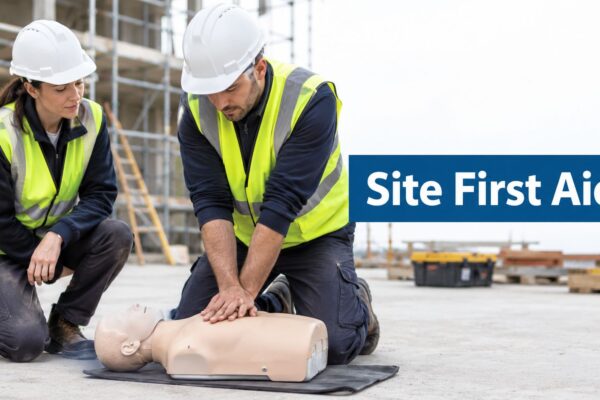

5 Vocational Training Courses for Career Skills
Which vocational training courses can build a useful, recognised skill set without sending you into unnecessary study? That's the practical question for career changers, job seekers and current workers comparing a fast compliance credential with a longer career pathway. Australia's VET system reached 5.1 million students in 2024, and 69.9% undertook stand-alone subjects rather than complete qualifications, showing how often learners choose targeted training for a specific work requirement or skill gap. NCVER's national training data supports a flexible approach, not a one-course-fits-all answer.
This roundup organises the decision around five practical needs: finding a construction starting point, understanding specialist safety training, building high-risk work capability, meeting workplace compliance needs, and choosing a pathway that matches a target role. The options include construction entry, civil construction and machinery, traffic control, hospitality and first aid, and high-risk licences. Compare the course purpose, intended workplace, practical assessment requirements and location before enrolling. TP Training delivers training through centres in Penrith, Burwood, Auburn, Parramatta and Sydney CBD. For a broader planning perspective, you can also find your data strategy playbook, then apply the same habit of matching evidence to the decision in front of you.
Table of Contents
- 1. Courses
- 2. 10830Nat 11084Nat Crystalline Silica Exposure Prevention Asbestos Awareness Combo Courses
- 3. Cpccldg3001 Perform Dogging Licence Course And Training In Sydney
- 4. White Card Training Course
- 5. 10830Nat Silica Awareness Training
- 5-Course Vocational Training Comparison
- Choose the Course That Matches the Work
1. Courses
The right starting point isn't always the course with the most recognisable title. A new construction worker may need an entry credential first, while an experienced civil operator may need a machinery unit, licence pathway or additional safety training. Someone moving into hospitality may be better served by food safety, responsible service or barista training than by a construction-focused course.
TP Training's Courses catalogue brings together practical, nationally recognised training with experienced trainers and hands-on learning across NSW. The useful feature is breadth. Learners can compare options across construction, civil construction, traffic control, hospitality, first aid and workplace safety instead of treating every vocational training course as interchangeable.
Practical rule: Start with the duties you want to perform, then identify the credential or competency those duties require.
Match the first course to the worksite
A worker aiming for a civil construction crew may need to compare roller, backhoe loader, excavator, skid steer, front-end loader or articulated haul truck operations. A warehouse or logistics worker may need forklift training. A person seeking roadwork may need traffic control or traffic management training, while a hospitality applicant may need RSA, food safety or customer-facing skills.
The catalogue is most useful when you treat it as a pathway map rather than a list of isolated products. Ask whether the course leads to a statement of attainment, supports a licensing requirement, satisfies an employer's site rule, or just builds a useful introductory skill. Those outcomes aren't identical, and a short course won't automatically replace supervised workplace experience or a full trade qualification.
TP Training also publishes practical guidance on vocational training in Australia, which can help learners understand why nationally recognised training, short courses and workplace requirements need to be considered together. Its centres in Penrith, Burwood, Auburn, Parramatta and Sydney CBD give Sydney-area learners a location choice, but the best campus still depends on travel time, course delivery and the equipment or practical environment required.
What works and what doesn't
A broad catalogue works well for a learner who knows the target industry but hasn't selected the exact role. It also helps employers compare complementary training for different workers. It doesn't solve the decision by itself. Before booking, confirm prerequisites, assessment arrangements, identification requirements, licensing steps and whether the training suits the actual work environment.
The strongest choice is usually the smallest useful step that moves you towards a defined job duty. If that step exposes a larger gap, use it to plan the next credential rather than collecting unrelated certificates.

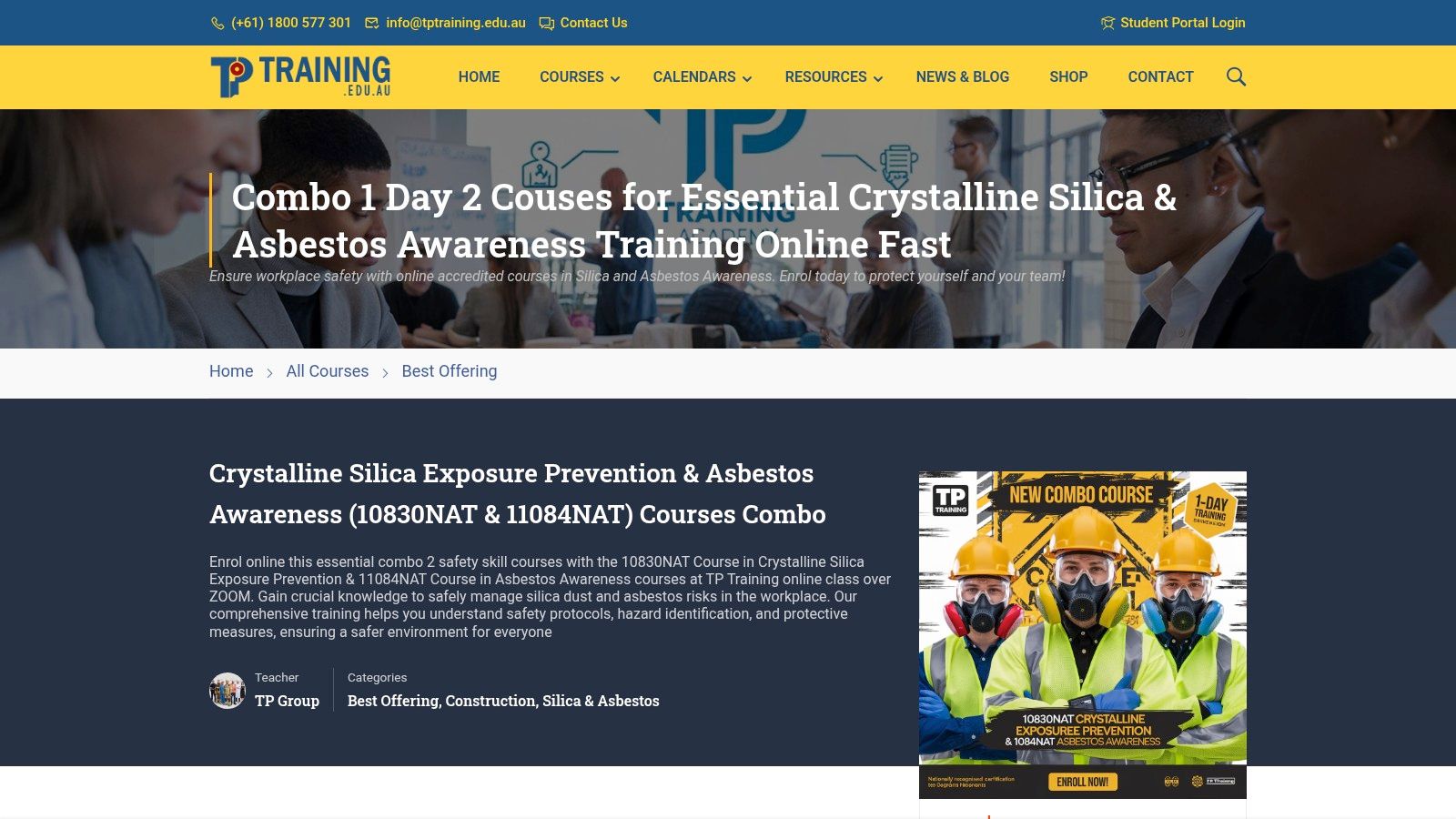
2. 10830Nat 11084Nat Crystalline Silica Exposure Prevention Asbestos Awareness Combo Courses
Some training decisions begin with a hazard, not a job title. Construction, civil works, demolition, renovation and maintenance workers may encounter airborne dust or materials that require stronger controls than general site induction provides. The 10830Nat 11084Nat Crystalline Silica Exposure Prevention Asbestos Awareness Combo Courses option is designed for learners who need to understand both silica exposure prevention and asbestos awareness in a connected safety context.
The combination makes practical sense where workers may move between tasks or sites and employers want safety discussions to cover more than one serious hazard. It can be particularly relevant to construction and civil construction teams, trades, labourers, supervisors and people entering environments where cutting, drilling, grinding, demolition or disturbance of materials may occur. It isn't a substitute for every specialised licence, asbestos removal requirement or site-specific control. Those obligations still depend on the work being performed and the applicable rules.
Why the hazard context matters
Safe Work Australia reports that 13.6% of Australian workers, about 2.04 million people, were exposed to silica, including 5.0% exposed at a high level. In construction, 71.8% of workers were exposed, and the figure reached 86.2% among construction trades workers. Apprentices and trainees also recorded silica exposure of 35.7% and asbestos exposure of 13.7%. Safe Work Australia's exposure data shows why hazard awareness belongs early in a worker's pathway, not only after an incident or employer reminder.
Good safety training should help learners recognise where exposure can occur, understand the hierarchy of controls, use suitable respiratory protection and follow safe work procedures. The value isn't in memorising a hazard name. It's in connecting the hazard to the task, the material, the equipment and the control that must be applied before work begins.
When a combo course is the better fit
A combined course can suit a worker who needs both topics for a construction role or wants one training decision to address two related workplace risks. Separate courses may be more appropriate where an employer has a narrowly defined requirement, where a learner already holds one awareness credential, or where the role involves a specialist activity requiring additional authorisation.
TP Training provides practical, nationally recognised training with experienced trainers and hands-on learning across NSW. Its guidance on silica and asbestos course costs can help learners frame the decision around the training scope rather than choosing solely on the word “combo”. Confirm the current course content and workplace requirements before enrolling.
3. Cpccldg3001 Perform Dogging Licence Course And Training In Sydney
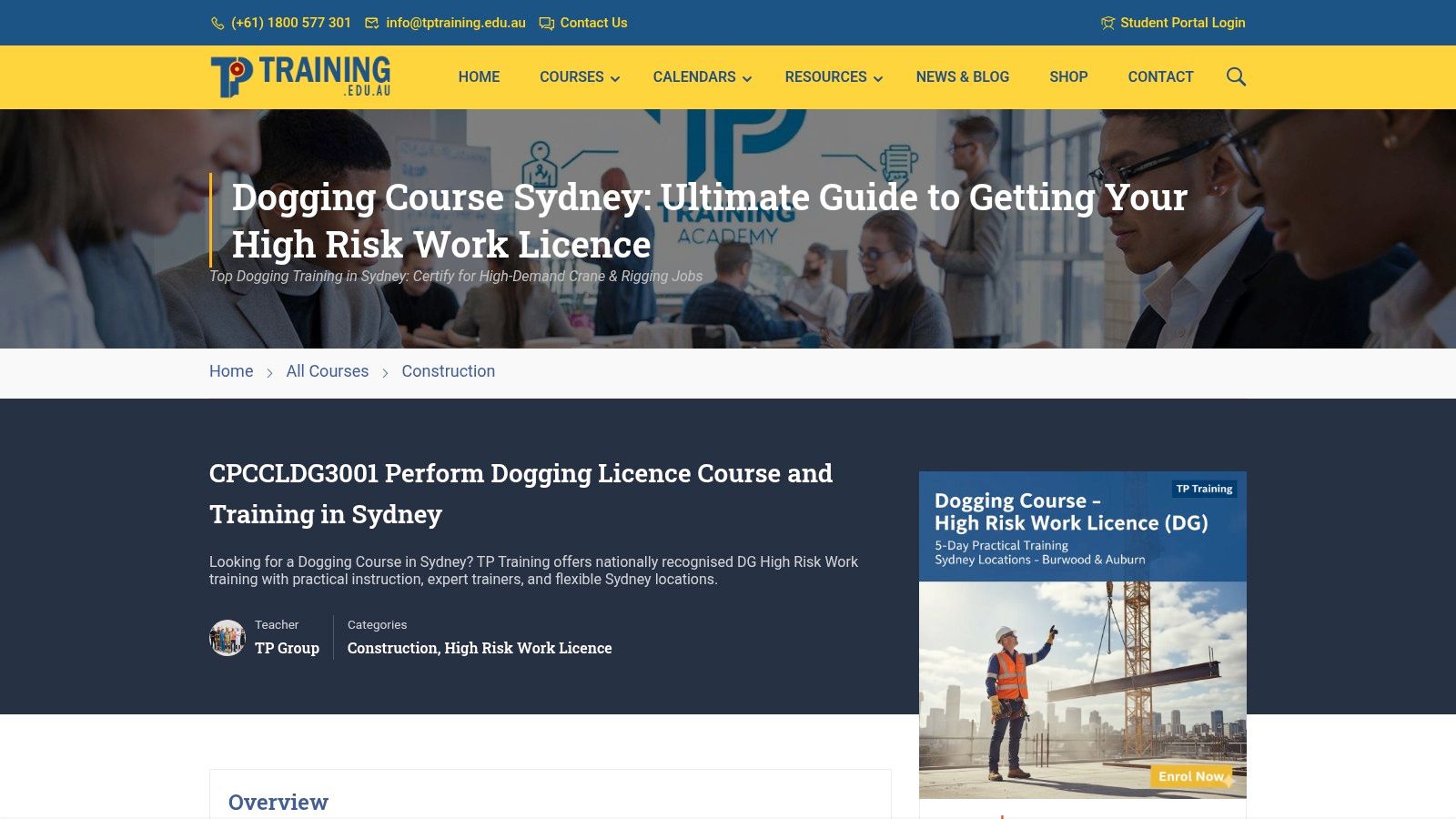
Dogging is a different decision from general construction entry. It suits workers whose duties involve directing crane or hoisting operations, selecting and inspecting lifting gear, attaching loads and communicating safely with operators. The Cpccldg3001 Perform Dogging Licence Course And Training In Sydney course is therefore most relevant to people targeting lifting, rigging support, crane operations or load-handling responsibilities.
The practical trade-off is clear. Dogging training can open a pathway towards more specialised work, but it carries a higher responsibility than just entering a construction site. Learners need to be comfortable with load assessment, communication, exclusion zones, equipment selection and the disciplined use of procedures. A certificate alone doesn't make someone ready for every lift. Employers still need to verify competence in their equipment, site conditions and lifting plans.
A capability decision, not a title decision
Construction and civil construction employers often need workers who can contribute to a coordinated worksite rather than perform one isolated task. Dogging may complement a broader pathway that includes construction induction, rigging, crane-related work or machinery operations. It may also be unnecessary for a worker whose duties never involve directing or attaching loads.
The useful question isn't “Will this licence look good on my resume?” It's “Will my planned duties require me to control or direct lifting work?”
Training should give learners a clear understanding of both the theory and practical assessment expectations. Pay attention to communication methods, load-control decisions, lifting gear, signals and the boundaries of the role. If you're changing careers, ask an employer or trainer which duties are common in the target position before selecting the course.
Plan the next step carefully
Jobs and Skills Australia has reported that construction-trade occupation groups were mostly in shortage because of a training gap, while apprenticeship commencements in the relevant subgroup fell 16.0% from 2023 to 2024. The 2025 Occupation Shortage Drivers report supports faster, worksite-relevant capability building, but it doesn't mean every short course guarantees employment.
TP Training's Sydney-focused dogging training is a sensible option for learners who have identified lifting and load-handling as their target responsibility. Its related guidance on dogging and rigging tickets can help clarify how dogging differs from basic rigging. Confirm the licence process, eligibility requirements and the type of work you intend to perform before booking.
4. White Card Training Course
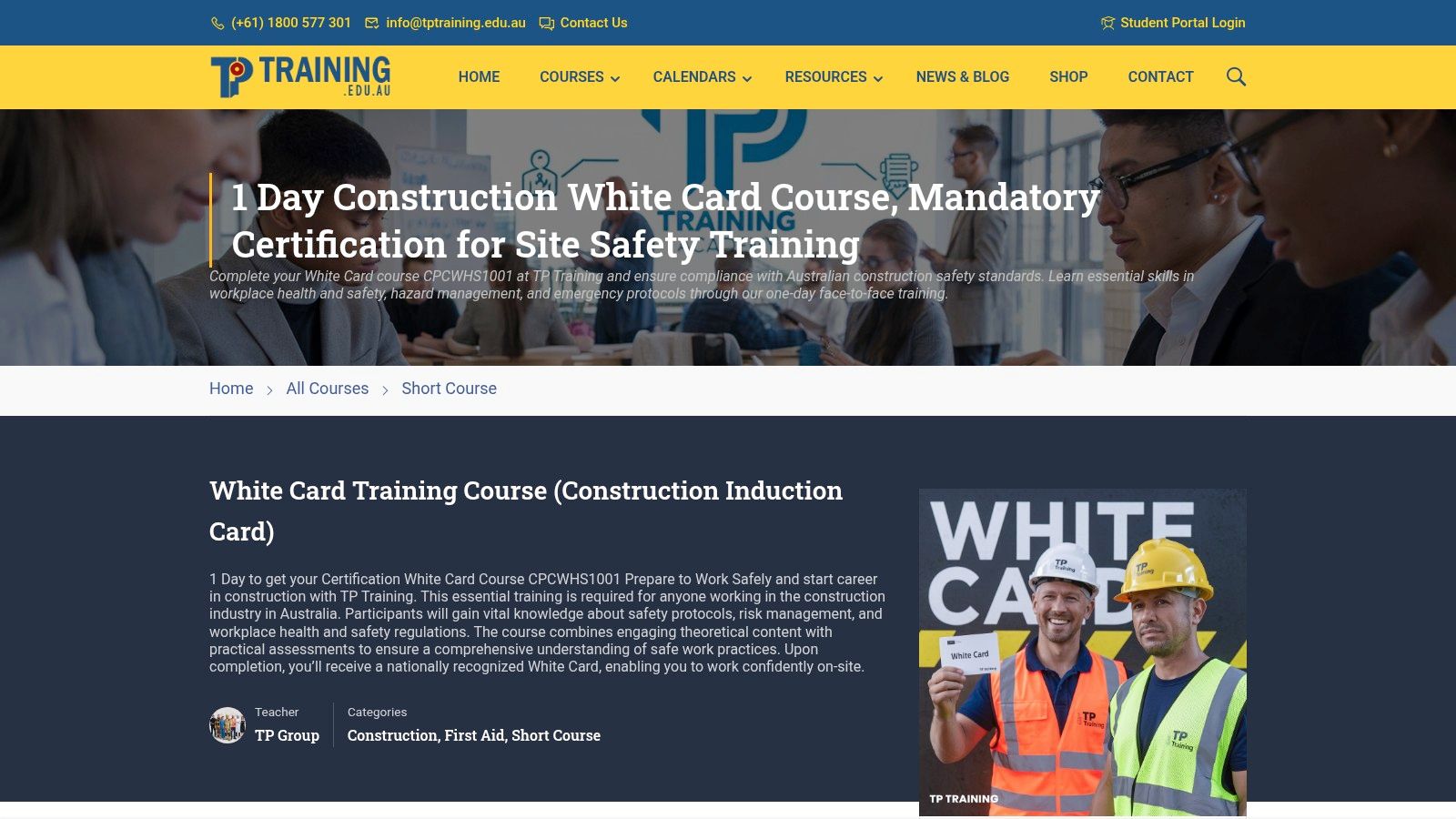
For many people, the construction entry decision is straightforward. If you want to work on a construction site in NSW, start by checking the construction induction requirement rather than enrolling in a more specialised course that you may not yet need. The White Card Training Course is the relevant starting point for construction induction training and introduces core site safety expectations.
It's suitable for job seekers applying for entry-level construction roles, workers moving from another industry, subcontractors who need site access, and people preparing for further training in civil construction or high-risk work. It doesn't qualify someone as a carpenter, plant operator, traffic controller or crane worker. Instead, it provides an entry foundation that can sit before more specific vocational training courses.
Use the White Card as a first step
Construction induction should help learners understand common hazards, basic control measures, consultation, reporting and safe conduct on site. The practical value comes from applying those principles consistently. A worker still needs task-specific instruction, supervision and any additional licence or competency required for the work.
A White Card can make sense before comparing civil machinery, traffic control, EWP, dogging or other options. It may also help a career changer decide whether the construction environment is a good fit before committing to a longer qualification. That's a better use of entry training than treating the card as proof of broad trade competence.
Entry-point test: If you can't yet name the construction duties you want to perform, begin with induction and use the experience to refine your next course choice.
Check validity and workplace expectations
Learners should confirm the current NSW requirements, how the card is issued, what identification is needed and whether their employer or principal contractor has additional site rules. TP Training's explanation of White Card validity in NSW is useful when checking what happens after training. Requirements can change, so confirm current details with the provider and relevant regulator before attending.
The campus choice can also affect the experience. TP Training offers centres in Penrith, Burwood, Auburn, Parramatta and Sydney CBD, allowing Sydney-area learners to consider travel, scheduling and the practical arrangements for the course. Choose the location you can attend reliably, because missed training or incomplete assessment can delay the next step.
5. 10830Nat Silica Awareness Training
Not every worker needs the full silica and asbestos combination. A person whose role, workplace or employer requirement focuses specifically on crystalline silica may need a narrower training decision. The 10830Nat Silica Awareness Training option fits learners who need to recognise silica-related risks and understand prevention measures relevant to their work.
This can include workers in construction, civil works, stonemasonry-related environments, renovation, cutting and drilling operations, supervisors and people who coordinate tasks involving silica-containing materials. The course is also relevant to employers building a stronger safety baseline for teams that may encounter respirable dust. It doesn't replace a complete risk assessment, engineering controls, respiratory protection program or task-specific supervision.
Choose specific awareness when the exposure is specific
A focused silica course works when the learner needs a clear understanding of one major risk. It can be easier to connect the training to daily tasks such as cutting concrete, drilling masonry, grinding surfaces or handling dust-generating materials. The learner should leave knowing what creates exposure, which controls should come first and when work must stop or be reassessed.
A combo course may be better where asbestos is also a realistic workplace concern. A focused silica course may be more efficient where asbestos isn't part of the learner's duties and the employer has specified silica prevention only. The decision depends on the environment, materials, tools and responsibilities, not on which course title sounds more all-inclusive.
Turn awareness into site behaviour
Awareness training has limited value if workers don't apply it at the point of work. Employers and supervisors should reinforce safe procedures, check that controls are available and make sure workers understand how to use them. Learners should ask how the course relates to their actual equipment and whether they need additional instruction before performing a task.
TP Training's practical, nationally recognised training is delivered with experienced trainers and hands-on learning across NSW. Its advice on an online crystalline silica exposure prevention course can help learners compare delivery and course scope. Confirm whether the selected format meets the employer's requirement and whether practical or workplace-specific components apply.
5-Course Vocational Training Comparison
| Course | 🔄 Implementation complexity | ⚡ Resource requirements | 📊 Expected outcomes | 💡 Ideal use cases | ⭐ Key advantages |
|---|---|---|---|---|---|
| Courses (TP Training catalog) | Variable, low to medium depending on chosen course | Flexible, choose courses to match time/equipment availability | Range of nationally recognised units and certificates; broad employability 📊 ⭐⭐ | General upskilling, workforce training, multiple industries | Wide course selection; first‑party provider; practical/hands‑on 💡 |
| 10830Nat + 11084Nat (Silica + Asbestos combo) | Medium, combined curriculum increases scope 🔄 | Moderate, classroom, demonstrations, safety equipment ⚡ | Compliance-focused certificates; improved site safety and regulatory readiness 📊 ⭐⭐⭐ | Construction, demolition, trades needing joint silica/asbestos awareness | Efficient combined compliance training; reduces repeat sessions ⭐ |
| CPCCLDG3001 Perform Dogging (Dogging licence) | High, practical rigging skills and assessments 🔄 | High, rigging gear, practical sites, experienced assessors ⚡ | Licence eligibility and competency for dogging tasks; higher job access 📊 ⭐⭐⭐ | Crane/rigger support roles, heavy lifting operations | Licence-targeted training with hands‑on assessment; industry‑recognised ⭐ |
| White Card Training Course | Low, basic construction induction 🔄 | Low, short course, minimal equipment, classroom or online ⚡ | White Card for site access; basic WHS awareness 📊 ⭐⭐ | Anyone entering construction sites or workplaces requiring induction | Fast, mandatory compliance training; widely recognised 💡 |
| 10830Nat Silica Awareness Training | Medium, focused safety topic with practical elements 🔄 | Low–moderate, training materials, demos, PPE for practicals ⚡ | Silica awareness competency; reduced exposure risk and compliance evidence 📊 ⭐⭐ | Trades working with concrete, masonry, cutting/grinding tools | Targeted silica risk reduction and regulatory alignment 💡 |
Choose the Course That Matches the Work
The best vocational training course is the one that matches the duty, worksite and next realistic step. Start with White Card training if you need a construction entry point or want to test whether site work suits you. It provides induction knowledge, but it isn't a trade qualification or a substitute for task-specific licensing.
Consider silica awareness when your work involves dust-generating activities or your employer needs targeted exposure-prevention training. Choose the silica and asbestos combination when both hazards are relevant to the workplace. If asbestos isn't part of your duties, a focused silica course may be the clearer fit. In either case, awareness training should sit alongside suitable controls, supervision and safe work procedures.
Review dogging training when your target role involves lifting, load-handling responsibilities, crane communication or directing hoisting work. It's a specialised capability, so check the role before enrolling. A dogging course won't replace the other licences, competencies or experience required for broader crane, rigging or construction work.
Use TP Training's broader Courses catalogue to compare civil construction, traffic control, hospitality and first aid options. Civil machinery training may suit someone targeting plant operations, while traffic control can support roadwork responsibilities. Hospitality and first aid courses address different workplace needs, including customer service, food safety, emergency response and care settings.
National VET outcomes also show why course selection should go beyond enrolment. Among qualification completers surveyed in 2024, 87.4% achieved their main training goal, 89.5% were satisfied with their training, 64.4% reported improved employment status and 33.3% progressed to further study. NCVER's National Student Outcomes Survey provides useful context, but these figures don't guarantee a job after an individual short course. Course completion, licensing approval, workplace readiness and employer recruitment remain separate stages.
Contact TP Training to confirm the most suitable course, campus and current requirements. Its Penrith, Burwood, Auburn, Parramatta and Sydney CBD centres give Sydney learners practical location options, but the final choice should be based on the duties they intend to perform, not the course title alone.
TP Training offers practical, nationally recognised vocational training across construction, civil construction, traffic control, hospitality, first aid, workplace safety and high-risk work. Visit TP Training to compare the course categories, review Sydney campus options and confirm the requirements for your next career step.

You may also like

FAA Part 61 vs 141: A Practical Pilot Training Guide

Asthma and Anaphylaxis Training in NSW