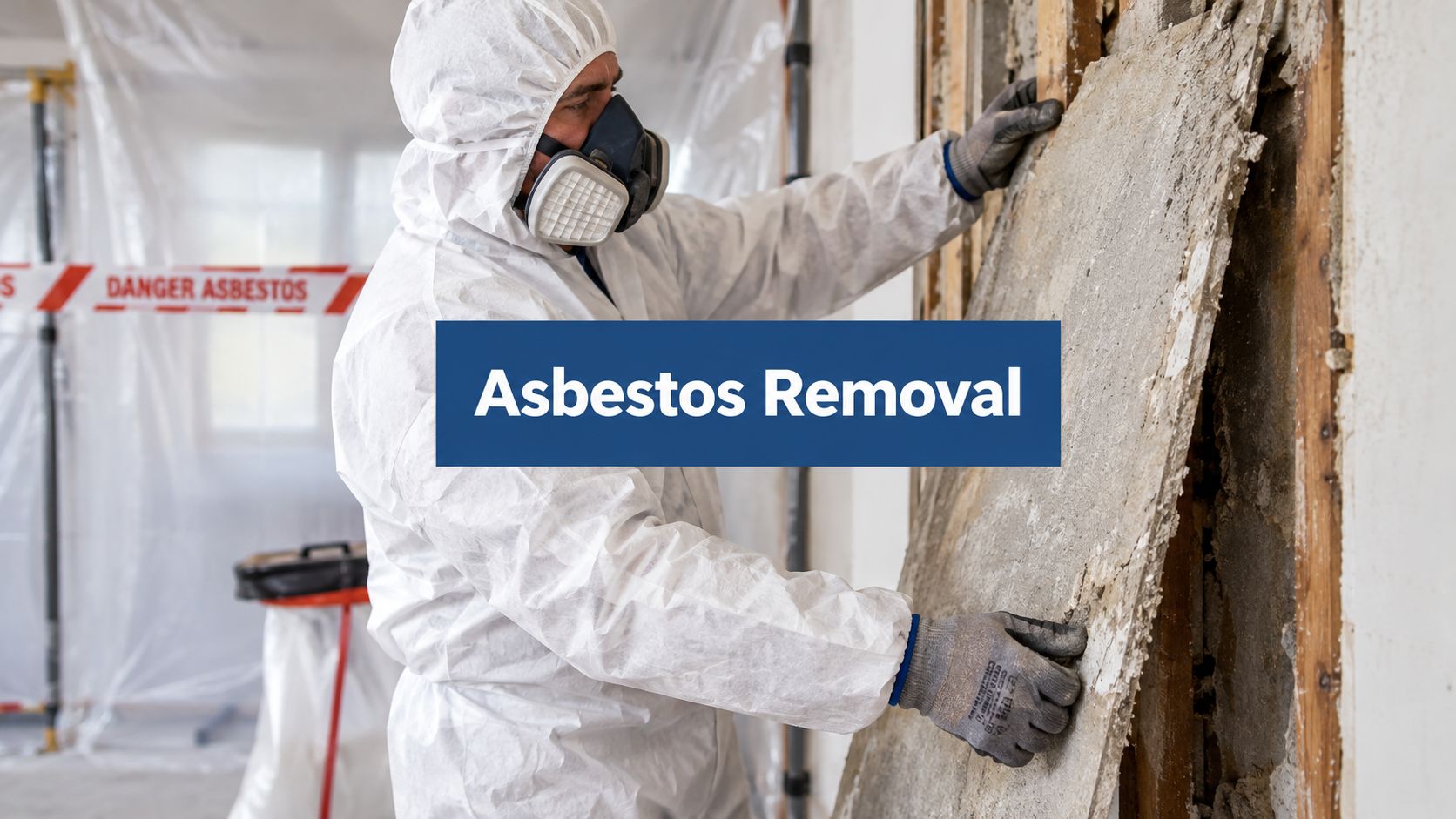
Asbestos Removal Requirements in NSW: The Complete Guide
You're halfway through opening an old wall during a renovation when the crew finds a cement sheet they can't identify. The temptation is to treat it as a small delay, cut around it and keep going. In NSW, that decision can turn a manageable job into a serious exposure and compliance problem.
The practical question is what the material is, whether it's damaged, how much the job involves and which rules apply at the worksite. Don't rely on appearance alone or split a larger job into smaller tasks to stay under a threshold. Use this guide to decide when limited unlicensed removal may be allowed, when a licensed removalist is needed, and what must be documented before work starts. For wider construction risk planning, see risk management in construction.
Table of Contents
- Why Asbestos Removal Requirements in NSW Need Their Own Playbook
- Licensing Classes and the 10 Square Metre Threshold
- Notification, Asbestos Registers and the Removal Control Plan
- Safe Removal Procedure on Site
- Air Monitoring, Clearance Certificates and Reoccupation
- Transporting and Disposing of Asbestos Waste
- Training and Competency for Workers and Supervisors
- Compliance Checklist for PCBUs, Contractors and Homeowners
- Quick Reference for Asbestos Removal Requirements
- Frequently Asked Questions About Asbestos Removal
Why Asbestos Removal Requirements in NSW Need Their Own Playbook
On a NSW renovation or construction site, asbestos can turn up in legacy building materials just when another trade is ready to start. Australia banned asbestos in December 2003, but buildings and infrastructure constructed before the ban can still contain it. The long delay between exposure and illness means the ban didn't remove the risks posed by materials already in place. The Australian Institute of Health and Welfare recorded 617 mesothelioma cases diagnosed in 2023, as recorded by the Australian Mesothelioma Registry by 1 May 2024. (AIHW mesothelioma data)
That history is why asbestos removal requirements are more than a general workplace-safety issue. They set out when work needs a licensed removalist, what the removal team must do to contain exposure, and what evidence must exist before the area can be used again. NSW requirements also sit alongside general work health and safety duties, so a contractor can't treat compliance paperwork as a substitute for safe work.
Make the classification before the first cut. If you can't establish what the material is, its condition or the total amount involved, stop and get competent advice instead of assuming an exemption applies.
This guide follows the job from identification through licensing, notification, site controls, training, clearance and waste. Start with the licensing threshold if you're deciding whether a householder exemption could apply. If you're commissioning commercial work, focus first on the removalist's licence, asbestos register, control plan and notification.
NSW is the working jurisdiction here, but the rules aren't identical across Australia. For example, the ACT requires a licence for removal of any asbestos, so check the local regulator before work that crosses state or territory borders. (Safe Work Australia asbestos removal guidance)
Licensing Classes and the 10 Square Metre Threshold
The licence decision starts with material type, condition and total quantity. Non-friable, or bonded, asbestos has fibres bound within a solid material. Friable asbestos can be crumbled, pulverised or reduced to powder by hand when dry, making airborne fibre release more likely.
Assess the material as it stands. Bonded asbestos can become friable through damage or deterioration. A cracked, broken, sanded or weathered sheet needs its current condition assessed rather than being classified solely by its original form. Stop work if that classification is uncertain.
The licensing framework provides Class A licences for friable and non-friable asbestos and Class B licences for non-friable asbestos only. NSW requires a licence for any amount of friable asbestos or more than 10 square metres of non-friable asbestos. The exemption for up to 10 square metres covers only non-friable material; safe-work duties still apply. (SafeWork NSW asbestos requirements)
| Licence class | Asbestos type and quantity | NSW controls |
|---|---|---|
| Class A | Any amount of friable asbestos, or more than 10 square metres of non-friable asbestos | Licensed removalist; applicable controls, notification and clearance requirements apply |
| Class B | More than 10 square metres of non-friable asbestos | Licensed removalist; applicable controls and notification requirements apply |
| No licence may be required | Up to 10 square metres of non-friable asbestos, if the exemption applies | WHS duties and safe work procedures still apply |
Class A also permits smaller non-friable jobs; the table identifies the work that requires licensed removal.
Count the job as a whole. Add the area of all material within the removal scope, rather than treating each panel or task separately. Splitting a larger scope into smaller jobs does not establish an exemption. If condition changes during removal, stop and reassess.
For friable material, engage a Class A removalist. For non-friable work above the threshold, either licence class can cover the job. Before engaging a contractor, inspect the licence and check its class against the assessed material and scope. Keep that assessment clear: a quote or experience claim does not establish licence coverage. A householder considering the exemption needs the material's condition and total scope established before work begins.
Notification, Asbestos Registers and the Removal Control Plan
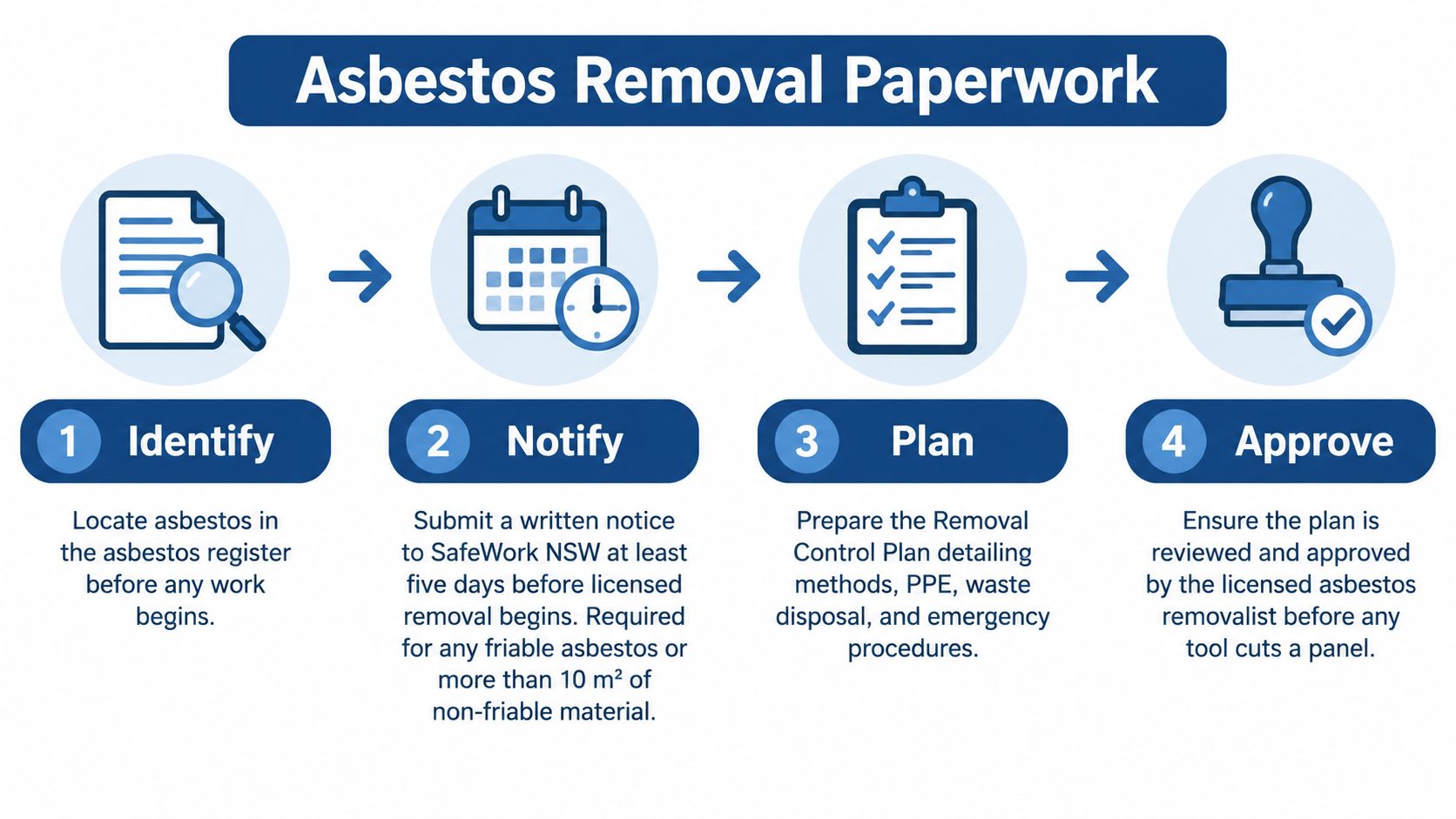
Before licensed removal starts in NSW, the removalist must give SafeWork NSW written notice at least five calendar days in advance for any amount of friable asbestos or more than 10 square metres of non-friable asbestos. The notice needs to reflect the actual job, including the estimated asbestos quantity, the workers involved and their competency. For friable work, it must also describe how the removal area will be enclosed. (SafeWork NSW asbestos removal duties)
If the work can't safely wait, there's an urgent pathway. The licensed removalist must contact SafeWork NSW by telephone on 13 10 50 and lodge the required notification within 24 hours. This is not a shortcut for avoiding advance notice on planned work. Record why the work was urgent and make sure the required follow-up is completed.
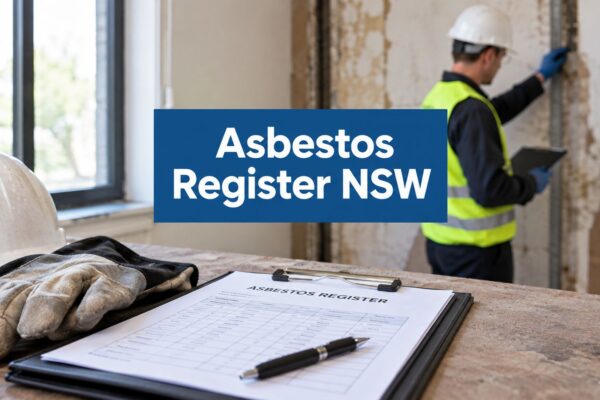
For workplaces where an asbestos register is required, the register helps the PCBU and removalist identify known asbestos before anyone disturbs it. Check it against the planned work area, and address suspected material that isn't recorded rather than treating an empty entry as proof that no asbestos is present. A practical overview of asbestos registers in NSW can help with that pre-start check.
The licensed removalist must prepare a written asbestos removal control plan before work begins. It should cover the work area, asbestos type and condition, isolation and exclusion controls, decontamination, PPE and respiratory protection, waste handling, emergency procedures and clearance arrangements.
The paperwork gap to catch early: a notification, register and plan that describe different quantities or work areas. Compare them before tools come out, and document who checked the licence scope and disposal pathway.
Safe Removal Procedure on Site
The removal control plan becomes the site method, not a document to leave in the office. Before removal, isolate the work area, restrict access and put up warning signage. Consider nearby workers, residents and other trades when setting the exclusion zone, and shut down ventilation that could spread contamination beyond the work area.
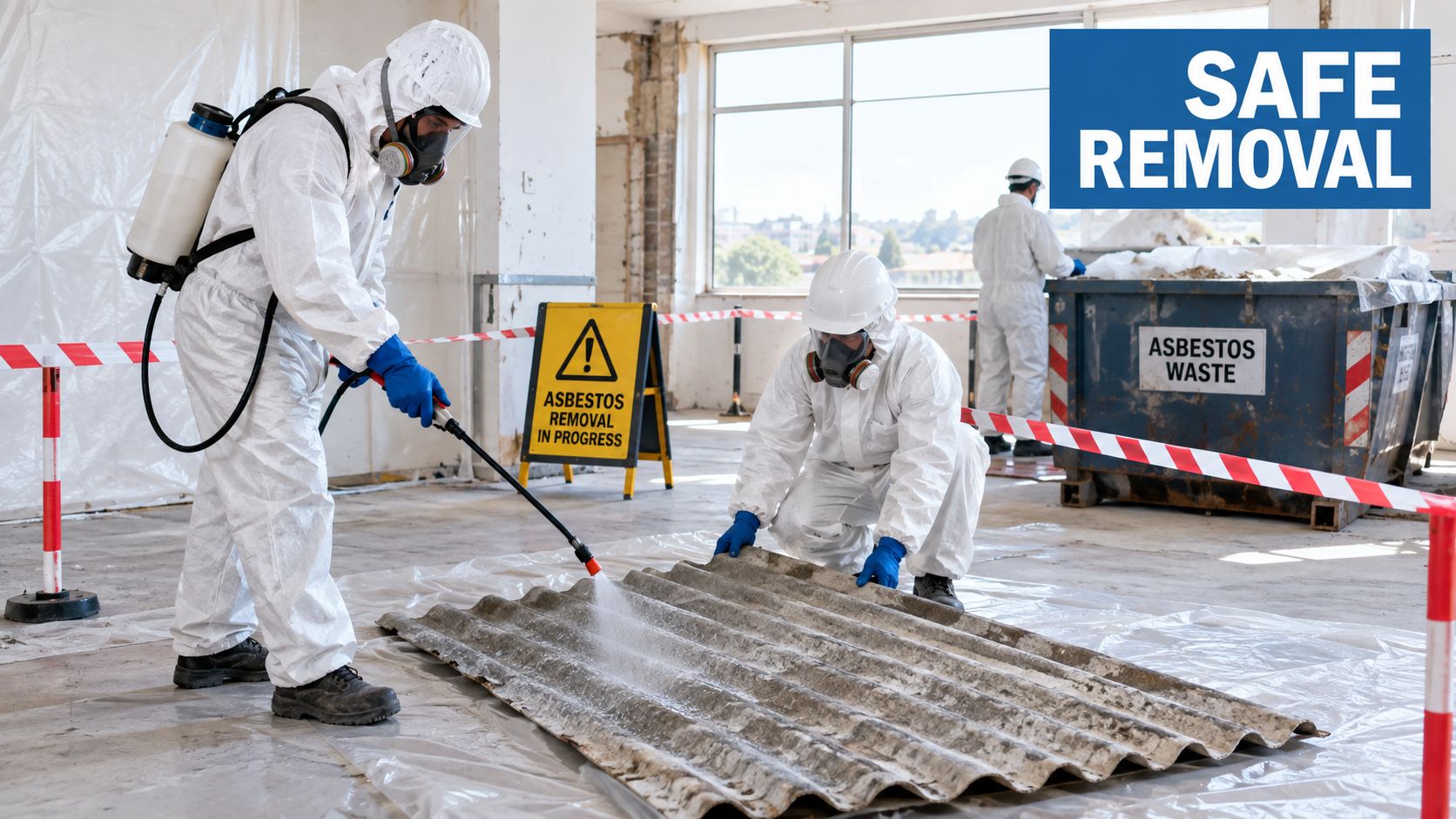
Use the removal method and equipment specified for the material and job. For suitable work, wet methods and hand tools can reduce dust, while cutting or grinding with power tools can release fibres and should not be treated as a routine shortcut. Keep material intact where possible, and package waste securely at the point it's generated so contaminated debris isn't carried through clean areas.
Workers need the PPE and respiratory protective equipment required by the risk assessment and control plan. That can include a suitable P2 or P3 respirator, disposable coveralls and gloves. Fit, use and removal matter: workers should follow the site's decontamination procedure, clean or dispose of equipment as required, and avoid carrying contaminated clothing or tools into vehicles and clean spaces.
If the material breaks down or its condition changes, stop. Reassess the risk and scope, and don't resume until the work has been reclassified and the correct controls and licence arrangements are in place.
The plan should also say what to do after an accidental release: stop work, keep people out, prevent further disturbance and follow the emergency response and notification procedures. Don't dry sweep or use an ordinary vacuum on suspected asbestos debris. For a practical example of how a roof job can involve these same controls, see Commercial Roofers NSW roof replacement. If a crew discovers suspected asbestos unexpectedly, follow a clear stop-work response for asbestos found on site.
Air Monitoring, Clearance Certificates and Reoccupation
A clean-looking work area is not enough to authorise reoccupation. After removal, the removalist must ensure the work area and immediately surrounding area are cleaned and visually inspected for asbestos dust, debris and residue. Where Class A removal is required, an independent licensed asbestos assessor must conduct the clearance inspection and issue the certificate.
Class A work also requires air monitoring, including control monitoring immediately before and during removal. Monitoring must use the membrane-filter method specified in NOHSC:3003 (2005). If air monitoring is carried out for clearance, results must show an airborne asbestos concentration below 0.01 fibres per millilitre (f/mL), in line with the Safe Work Australia asbestos removal code.
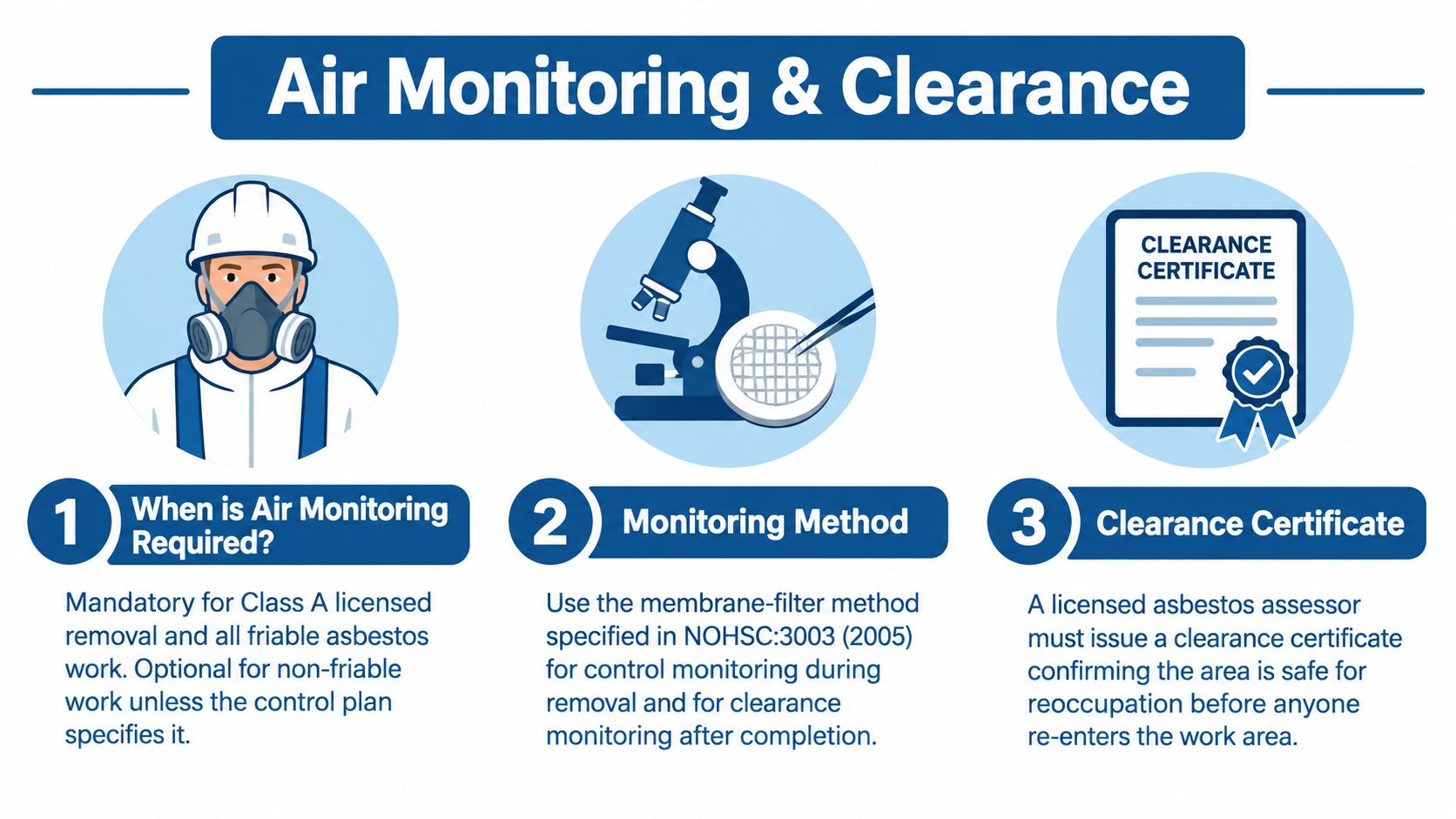
In NSW, written clearance is required before the workplace or residential property is reoccupied or further work starts. For friable asbestos removal, the assessor must be independent and licensed. The PCBU or property owner arranging the next stage should have the certificate on hand. Keep other trades out until the required clearance has been issued.
Retain monitoring records with the project documents. Where asbestos exposure monitoring is involved, records must be kept for 40 years. Missing records can leave the business unable to demonstrate that monitoring and handover requirements were met.
Transporting and Disposing of Asbestos Waste
The removal job is not finished when asbestos leaves the work area. Contain and label the waste, prevent dust or debris escaping, and send it to a facility lawfully able to receive asbestos waste. Confirm acceptance before transport. A general landfill or waste contractor may not be authorised to take the load.
In NSW, commercial asbestos waste loads may require waste tracking documentation under the state's environmental protection requirements. Before the job starts, confirm the tracking and disposal requirements with the NSW Environment Protection Authority (EPA) and the receiving facility. Requirements can depend on the waste and the consignment, so do not assume one paperwork process applies to every load.
The PCBU and removalist should agree who will arrange transport, complete any required tracking records and retain disposal evidence. Keep the documentation with the project file. Household quantities may have different local arrangements from commercial consignments, but they still need compliant containment and disposal.
Check the full chain before removal: who packages the waste, where it will be held, who transports it, which facility will accept it, and what evidence will be returned. If any part remains uncertain, resolve it before work begins.
Training and Competency for Workers and Supervisors
Training needs depend on the work being performed. Workers who could disturb asbestos should have appropriate asbestos awareness training, while workers performing removal work must complete the specified vocational education and training course where required. In NSW, work involving more than 10 square metres of non-friable asbestos, or any quantity of friable asbestos, requires workers to complete the specified training before performing the work. Licensed Class A and Class B work also requires the relevant competency for the task.
The licence holder and PCBU should be able to show who is working, what training and competency they hold, and how the work will be supervised. Keep competency evidence with the job documentation and ensure it matches the actual scope, especially where a discovery changes the material classification or removal method. Training doesn't replace supervision, suitable controls or the correct licence.
For workers who need an awareness foundation, TP Training provides practical, nationally recognised 11084NAT Asbestos Awareness Training with experienced trainers and hands-on learning across NSW. Read more about asbestos awareness training when checking what preparation suits a worker's role.
Compliance Checklist for PCBUs, Contractors and Homeowners
Use this self-audit before removal begins. A PCBU or principal contractor should be able to produce the job records, not just confirm verbally that the contractor has them.
- Licence and scope: Verify that the removalist holds a licence covering the asbestos type and quantity, as outlined in the licensing section.
- Register and assessment: Check the asbestos register and resolve suspected or unrecorded materials before disturbance.
- Control plan and notification: Confirm the written plan matches the work area and quantity, and that any required SafeWork NSW notification has been lodged.
- People and protection: Check worker competency records and the arrangements for PPE and respiratory protection.
- Waste pathway: Confirm packaging, transport, receiving facility and the disposal records that will be kept.
- Clearance and handover: Obtain the required written clearance before reoccupation or the next trade's work.
A householder considering unlicensed removal must establish that the material is non-friable and the total removal area is no more than 10 square metres. The exemption is narrow: it doesn't remove safe-work duties, and it doesn't apply to friable asbestos. If you can't confidently establish material type, condition and total quantity, stop and get an assessment rather than relying on a visual guess.
For the wider employer context, see employer responsibilities for workplace safety. Three clear red flags are friable material, a scope exceeding the non-friable threshold, or missing or inconsistent job documentation. Don't proceed until the relevant requirements are addressed.
Quick Reference for Asbestos Removal Requirements
Use this check before work starts, then confirm the job-specific details in the relevant sections above.
- Friable asbestos: A licensed removalist is required for any amount in NSW. Confirm the licence class against the material and scope.
- Non-friable asbestos: A licence is required if the total area exceeds 10 square metres. Unlicensed removal is limited to cases that meet the householder exemption.
- Notification: Licensed removal of friable asbestos, or more than 10 square metres of non-friable asbestos, requires written notice to SafeWork NSW at least five calendar days before work.
- Training: Workers must meet the training requirements for the removal work before starting.
- Controls and records: Check that the written removal control plan fits the site, workers have suitable PPE and respiratory protection, and a waste-disposal pathway is confirmed.
- Clearance: Obtain the required written clearance before reoccupation or further work.
Stop if the material type, quantity, licence, notification or job records are uncertain. Resolve the gap before work begins. NSW thresholds do not necessarily apply in other states or territories, so check the regulator where the work will take place.
Frequently Asked Questions About Asbestos Removal
What most affects asbestos removal cost in NSW?
The main practical cost drivers are the material type and condition, the quantity, site access, containment needs, monitoring and clearance arrangements, and the waste-disposal pathway. Request a scope that identifies these items rather than comparing headline prices alone. A quote can't establish that a contractor holds the right licence; verify the licence separately.
When is emergency removal allowed?
If licensed work can't safely wait, the removalist must contact SafeWork NSW by telephone on 13 10 50 and lodge the required notification within 24 hours. This is an urgent pathway, not a way to avoid advance notice for planned work.
What changes if a NSW crew works in Queensland or the ACT?
The crew must check the jurisdiction where the work occurs. Licensing rules and exemptions vary, and the ACT requires a licence to remove any asbestos. A NSW licence or exemption shouldn't be assumed to satisfy another regulator's requirements.
How do I know whether a homeowner is inside the 10 m² exemption?
The material must be non-friable, the total area removed must be no more than 10 square metres, and the work must still meet applicable safety requirements. If the material is damaged or its classification or total quantity is uncertain, don't assume the exemption applies. Check the local regulator's guidance before starting.
TP Training provides practical, nationally recognised safety and vocational courses across NSW, including asbestos awareness training with experienced trainers and hands-on learning. If you need to build awareness before work that could disturb asbestos, visit TP Training to find out more.

You may also like
What to Do if You Find Asbestos on Site
What Is Forklift Training and How Does It Work in Australia