Vehicle History Check Australia: 2026 Buyer’s Guide
You meet a private seller in western Sydney after work, the ute looks clean, the test drive goes well, and the price is just low enough to feel like a bargain. Then the pressure starts. Another buyer is supposedly on the way, the seller wants a deposit tonight, and the paperwork is kept light. That is the point where a vehicle history check stops being a box-ticking exercise and starts protecting your money.
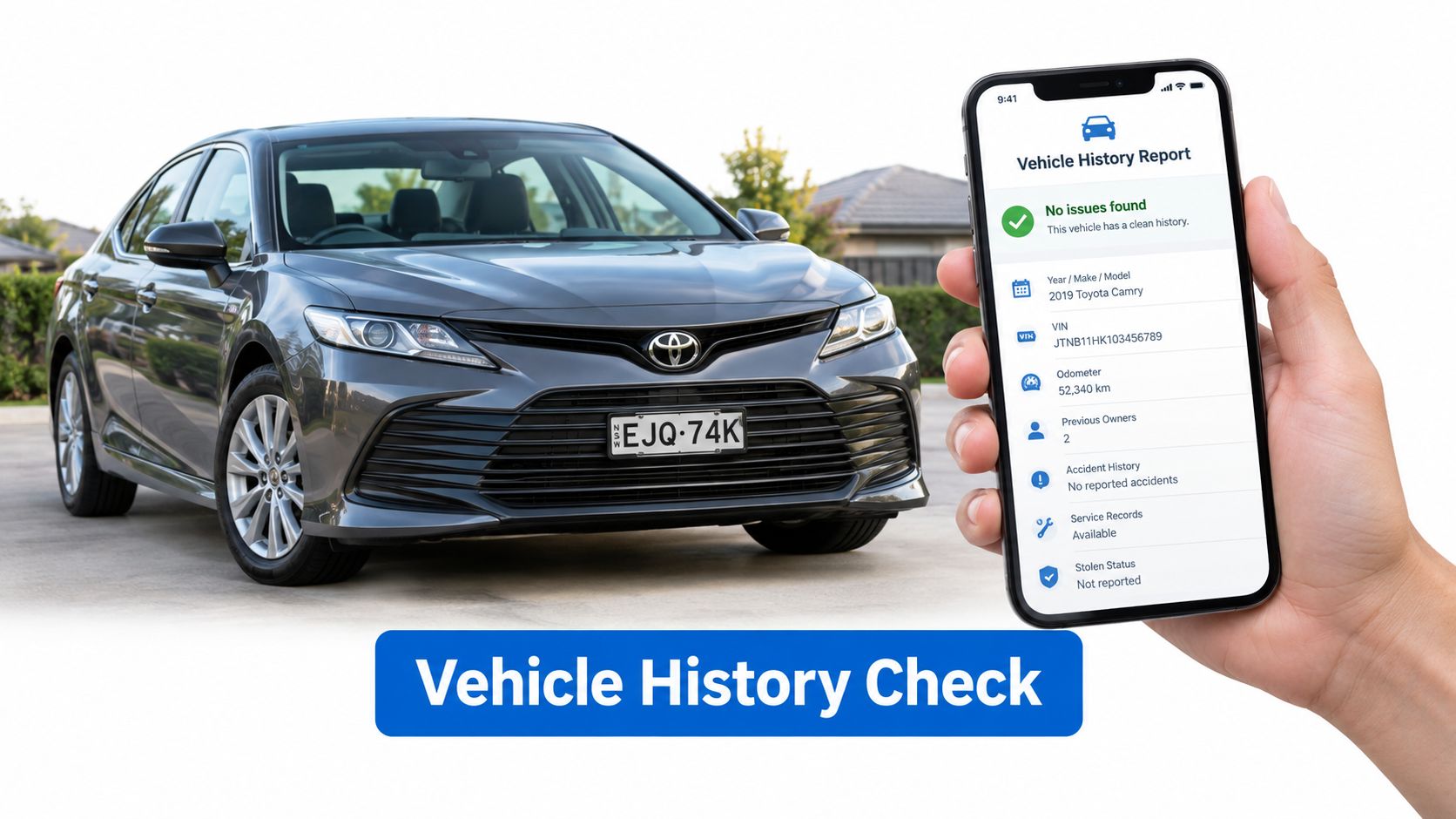
In NSW, I have seen buyers focus on the bodywork and miss the part that causes significant loss later. A vehicle can present well and still carry a record that affects registration, insurance, resale value, or whether it should be on the road at all. A proper vehicle history check helps you confirm identity details, pick up written-off history, and compare what the seller says against the official record.
Timing matters as much as the report itself. In private sales, one check done days before payment is not enough if the deal is still live. The safer sequence is to run a vehicle history check when the car first makes the shortlist, then run it again just before you hand over money and sign anything. That second check can catch a late finance issue, a discrepancy in identifiers, or information the buyer did not notice the first time because they were still deciding whether the vehicle was worth pursuing.
Written-off status is where many buyers get caught. Some people see "repairable write-off" or an older write-off entry and assume it is only a bargaining point. In practice, the classification affects registration pathways, insurer appetite, and the risk you are taking on if repairs were done poorly or documentation is thin. On work vehicles, that matters even more, because downtime costs money and hidden structural damage can turn into a safety problem on site.
That is one reason buyers looking at utes, trays, and specialist work vehicles should treat history checks with the same caution they would use when assessing a used elevated work platform for sale. Presentation is one thing. Serviceability, legal status, and fit for purpose are what decide whether the purchase holds up after the handover.
A seller who is genuine should not have a problem with you taking the time to verify the details properly. If they push you to skip the check, rely on screenshots, or accept a story that does not match the identifiers on the vehicle, walk away. In private sales, the cheapest car upfront can become the expensive one fast.

You may also like

Asbestos Removal Requirements in NSW: The Complete Guide

What to Do if You Find Asbestos on Site