Yellow Card Requirements in NSW: A Practical Guide
You've been offered a kerbside traffic job, or a plant operator has asked whether you hold a Yellow Card, and suddenly one short phrase seems to cover several different things. A school leaver might hear “Yellow Card” and think traffic control, while an experienced worker may mean an EWP operator card. In NSW, choosing the wrong pathway can leave you with training that doesn't match the task, even if the course itself was completed properly.
The practical answer is simple. Yellow Card requirements in NSW depend on the work you'll perform. Traffic Management Implementer training and under-11-metre EWP training are separate pathways, with different competencies and different workplace uses. You also need to understand age, White Card, USI, identification and supervision requirements before you book.
Table of Contents
- What a Yellow Card Actually Means in NSW
- Who Is Eligible Before You Even Enrol
- Traffic Implementer vs EWP Yellow Card
- What Happens on the Course Day
- Validity, Renewal and the Under-18 Rule
- Why the Card Itself Is Not a Licence
- Your Pre-Enrolment Checklist and Common Pitfalls
What a Yellow Card Actually Means in NSW
A Yellow Card in NSW isn't one universal government-issued licence. It's an industry term used for evidence that a worker has completed competency-based training for a particular type of work.
The phrase mainly points to two pathways:
- Traffic Management Implementer, associated with the RIISS00055 and RIISS00060 skill sets.
- EWP operator training, commonly associated with RIIHAN301E for elevating work platforms under 11 metres.
These are different credentials. A traffic implementer may set up traffic signs, signals, boom gates or similar devices under an approved traffic guidance scheme. An EWP operator card relates to safe operation of equipment such as scissor lifts, vertical lifts and eligible boom-type elevating work platforms.
The training is delivered through registered training organisations, not issued by Transport for NSW or SafeWork NSW as a general Yellow Card licence. The card or training evidence forms part of an employer's WHS evidence chain, alongside site induction, supervision, risk controls and task-specific authorisation.
Practical rule: Don't book a course because a job advertisement says “Yellow Card”. Ask which task, unit or skill set the employer means.
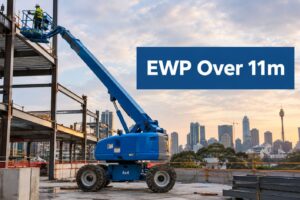
The legal boundary matters particularly for EWPs. SafeWork NSW's elevating work platforms code of practice states that a boom-type EWP with a boom length of 11 metres or more requires a current high-risk work licence. Equipment under that threshold is commonly covered through the industry Yellow Card competency pathway.
That distinction sends you in one of two directions. If you'll install signs and traffic devices beside NSW roads, investigate Traffic Management Implementer training. If you'll work from a scissor lift or eligible boom lift below the high-risk licensing threshold, investigate EWP training. The eligibility gates come before either booking.
Who Is Eligible Before You Even Enrol
Most NSW providers won't let you arrive empty-handed and sort the paperwork later. They'll check basic entry conditions before training or assessment begins, and the exact provider process can affect whether you're admitted on the day.
The four checks providers usually make
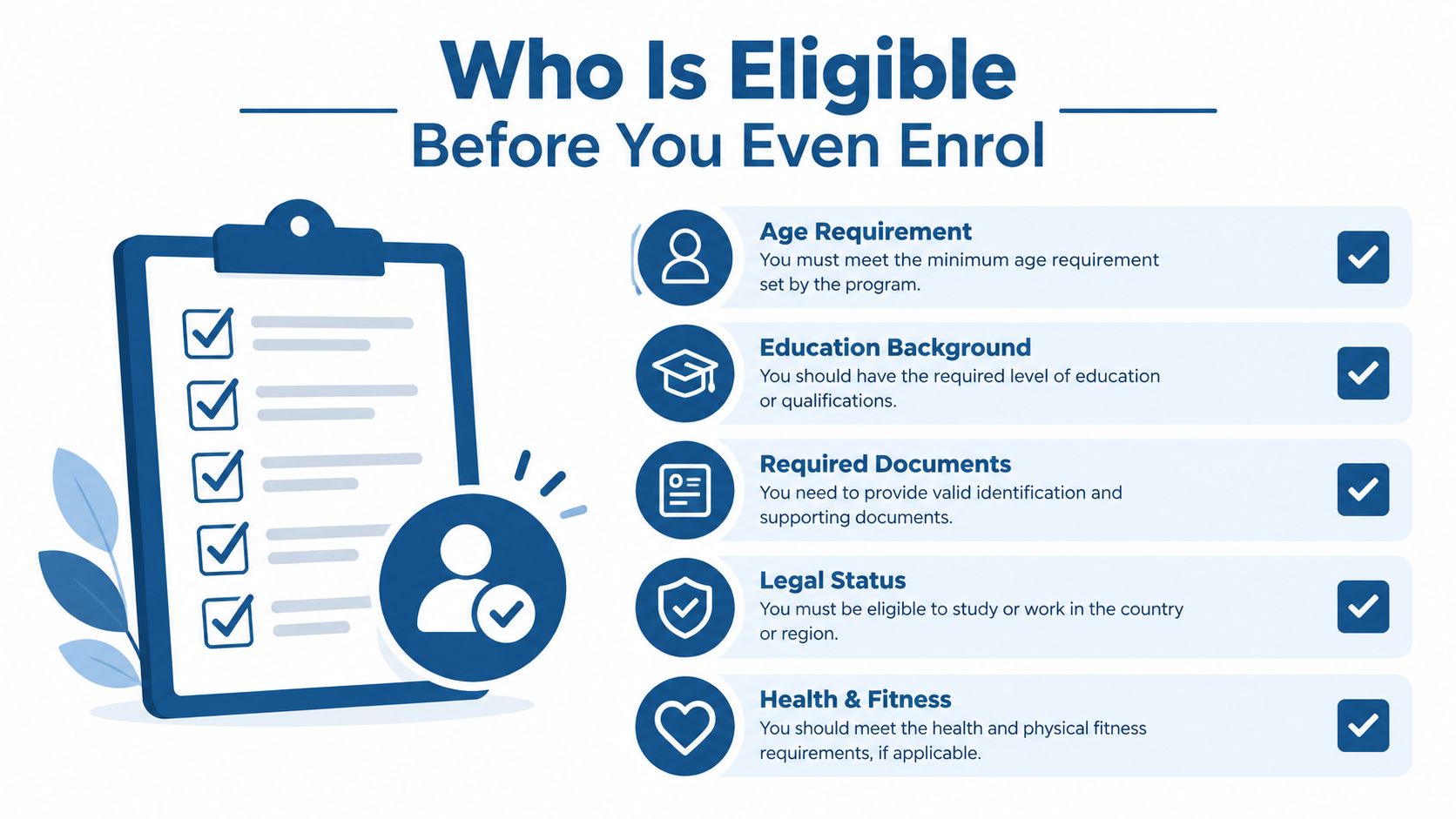
Age comes first. Traffic Management Implementer enrolment typically requires candidates to be at least 17 years old, while EWP Yellow Card applicants may enter training from 16 under the restricted pathway described by EWPA training material. Anyone under 18 must expect restrictions rather than a full unrestricted operator card. That rule is often missed by young workers and their parents.
You'll generally need a current White Card, also known as the general construction induction card. Providers commonly ask to see it at enrolment, because the practical work takes place in construction, civil or industrial environments. If you still need one, TP Training provides practical, nationally recognised White Card Training Course training with experienced trainers and hands-on learning across NSW.
A Unique Student Identifier, or USI, is another routine gate for nationally recognised training. The name on your USI must match your enrolment details. Creating or checking it online before booking is sensible, and TP Training's USI creation and management guide can help you complete that step before course day.
Finally, prepare 100 points of original Australian identification. Providers commonly require identification showing photo, date of birth, signature and residential address, and they may refuse attendance if the complete combination isn't presented. A photo licence supported by other accepted documents is usually more practical than trying to improvise at reception.
The USI step causes many preventable delays. Create it online the day before, save the confirmation email and check the spelling of your name. Meeting the entry requirements only means you're eligible to participate and be assessed. It doesn't guarantee that you'll demonstrate competency.
Traffic Implementer vs EWP Yellow Card
Choose by the worksite, not by the colour printed on the card. A traffic implementer works with traffic guidance arrangements, while an EWP operator works with access equipment and height-related controls.
The NSW traffic pathway is associated with the earlier RIISS00055 Implement Traffic Control Plans Skill Set and the newer RIISS00060 Traffic Management Implementer Skill Set. The current pathway is used for workers who set up signs, signals, boom gates and similar traffic devices under an approved traffic guidance scheme.
The EWP pathway uses RIIHAN301E Operate Elevating Work Platform. It's commonly used for scissor lifts, vertical lifts and boom-type EWPs under 11 metres. Course content generally deals with pre-start checks, controls, emergency lowering and harness use where applicable. It doesn't authorise you to drive the EWP on a public road, and it doesn't replace a high-risk work licence for boom operation at or above the NSW threshold.
| Element | Traffic Management Implementer | EWP Yellow Card under 11m |
|---|---|---|
| Main work | Set up traffic signs, signals and devices | Operate eligible elevating work platforms |
| Typical evidence | RIISS00055 or RIISS00060 pathway | RIIHAN301E competency |
| Practical setting | Traffic guidance scheme or simulated roadwork | Scissor, vertical or under-11m boom equipment |
| Core focus | Correct implementation of an approved traffic arrangement | Safe equipment operation, checks and emergency procedures |
| Doesn't cover | Designing every traffic plan or granting site access | Boom operation requiring a high-risk work licence |
If the job is kerbside traffic control, the implementer stream is the logical choice. If you'll work at height from a scissor lift or smaller boom lift, the EWP stream fits. Some plant operators complete both because employers may ask for traffic and access-equipment capability on the same project.
Before enrolling, read the provider's EWP information for elevated work platforms and confirm the equipment class your employer expects. A card that covers one MEWP class shouldn't be treated as blanket permission to operate every machine on a site.
What Happens on the Course Day
A well-run course moves between explanation, demonstration and observed practice. You're not listening to a presentation and collecting a card. You're expected to apply the control measures in a practical setting.
Theory gives the practical work its order
The classroom component usually covers relevant legislation, signs, traffic control plans, risk assessment and the logic behind a traffic guidance scheme. You need to understand why signs are sequenced in a particular order, where workers should stand and how motorists should receive clear instructions.
For the traffic pathway, trainers commonly use a simulated worksite. You may plan a lane closure, review the relevant traffic arrangement and decide where signs, cones and other devices belong before touching the equipment.
Practice exposes the mistakes
The yard or simulated roadwork area is where assessors see whether you can translate instructions into safe action. Expect tasks involving:
- Worksite setup, including signs, cones, barriers and traffic devices.
- Pre-start planning, where you identify hazards and confirm the intended arrangement.
- Toolbox communication, with workers briefed on roles, hazards and escalation.
- Radio communication, using concise, unambiguous instructions.
- Vehicle interaction, where you manage movement without stepping into an unsafe position.
Assessors watch the details. They look for correct signage sequence, accurate spacing, safe worker positioning and confident direction of motorists. Rushing the setup, standing where a driver can't see you or giving vague radio instructions can undermine an otherwise strong theory result.
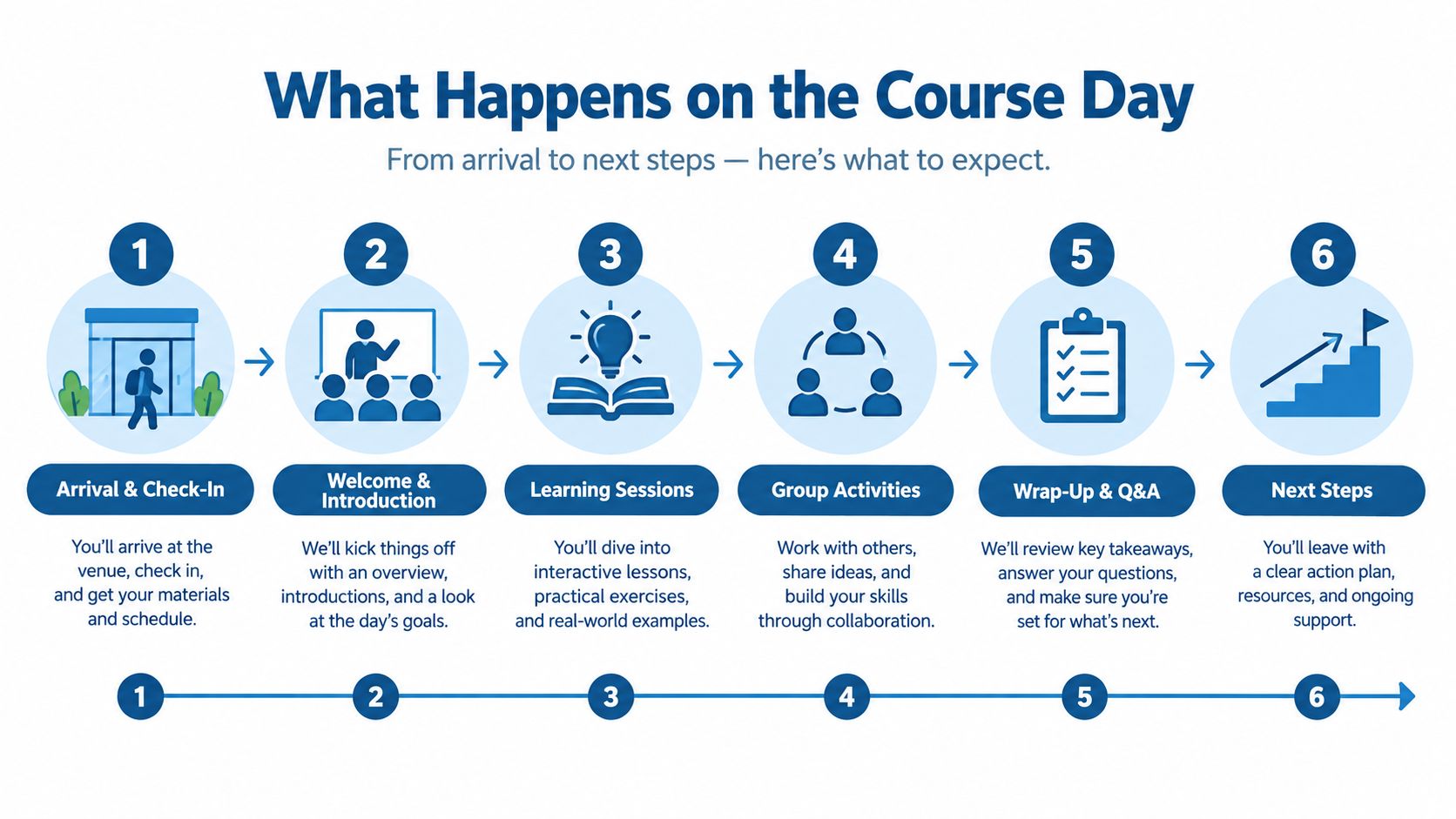
Not every task you complete during training is the final decision. Trainers may use formative exercises to correct technique, then conduct a summative assessment that determines whether you're competent. Arrive in suitable PPE, including enclosed footwear and high-vis clothing if required by the provider, and allow enough time for both classroom and practical activities.
A Traffic Control Combo Course may suit workers who need both traffic controller and implementer competencies, but check precisely what the course includes before paying. The right course is the one that matches the duties your employer has assigned.
Validity, Renewal and the Under-18 Rule
A Yellow Card does not follow one universal expiry rule in NSW. The pathway matters. EWP operators, Traffic Management Implementers and their employers may assess currency differently, so confirm the requirement before enrolling or accepting work.
For EWP operators, current EWPA guidance states that the Yellow Card is valid for five years. Older cards were phased out, and existing operators have been encouraged to update their MEWP training. Keep workplace currency in view throughout that period. An employer may still require recent experience, site familiarisation or refresher training before permitting operation.
Traffic Management Implementer training is linked to nationally recognised VET documentation and the current skill-set framework. Providers and employers may expect workers to remain current with the latest RIISS release, even though the statement of attainment does not function like a simple operator-card expiry date. If your employer specifies a current unit code, follow that requirement rather than relying on an old card. Review the traffic control refresher course information when checking whether your skills and documentation remain current.
| Pathway | Validity | Renewal trigger | Under-18 note |
|---|---|---|---|
| Traffic Management Implementer | Check the current skill-set and employer requirements | Unit or framework updates, employer currency expectations | Confirm the provider's age rule before enrolment |
| EWP Yellow Card | Five years, according to current EWPA guidance | Card renewal, updated training or employer currency requirements | Restricted card applies to under-18 operators |
The under-18 rule is easy to miss. EWPA material says applicants can be as young as 16, but an operator under 18 receives a restricted Yellow Card marked with an R. Operation is permitted only under direct supervision of an unrestricted Yellow Card holder for the same MEWP class. After turning 18, the operator must arrange an unrestricted card before the restriction is removed.
For young workers: Completing the course does not remove the supervision requirement. Tell the trainer and employer your age before the assessment is arranged.
Store your card, statement of attainment and employer training records together. Ask the supervisor how currency is checked, whether your machine class matches the training and whether a refresher is expected after a long break from operation. A formal expiry date helps, but it does not settle the workplace safety decision.
Why the Card Itself Is Not a Licence
A Yellow Card doesn't give you automatic permission to work anywhere in NSW. It shows that you've completed relevant training or demonstrated competency, but the principal contractor or site manager still controls access, induction and task authorisation.
That distinction matters on both pathways. A Traffic Management Implementer may have the relevant skill set, but still needs to work under the approved traffic guidance arrangement and the site's instructions. An EWP operator may hold RIIHAN301E, but the employer must still confirm the machine, site hazards, ground conditions, exclusion zones, rescue arrangements and supervision.
The documents can also be different:
- Statement of attainment, which records nationally recognised VET achievement.
- Industry operator card, such as an EWP Yellow Card, used as practical evidence of training.
- Local or road authority approvals, which may apply to particular traffic work, councils or classified roads.
A high-risk work licence is a separate issue. SafeWork NSW identifies the 11-metre boom threshold for the relevant EWP licensing requirement, so an under-11m Yellow Card shouldn't be presented as permission to operate a boom above that boundary. Read the NSW high-risk work licence information before accepting a task that involves a larger boom.
There's another source of confusion. Queensland uses Blue Card Services for a separate disability screening and worker-clearance system, where the Yellow Card terminology refers to an entirely different credential. That Queensland screening card isn't an NSW traffic or EWP training outcome. Always identify the sector and state before assuming the phrase means the same thing.
Your Pre-Enrolment Checklist and Common Pitfalls
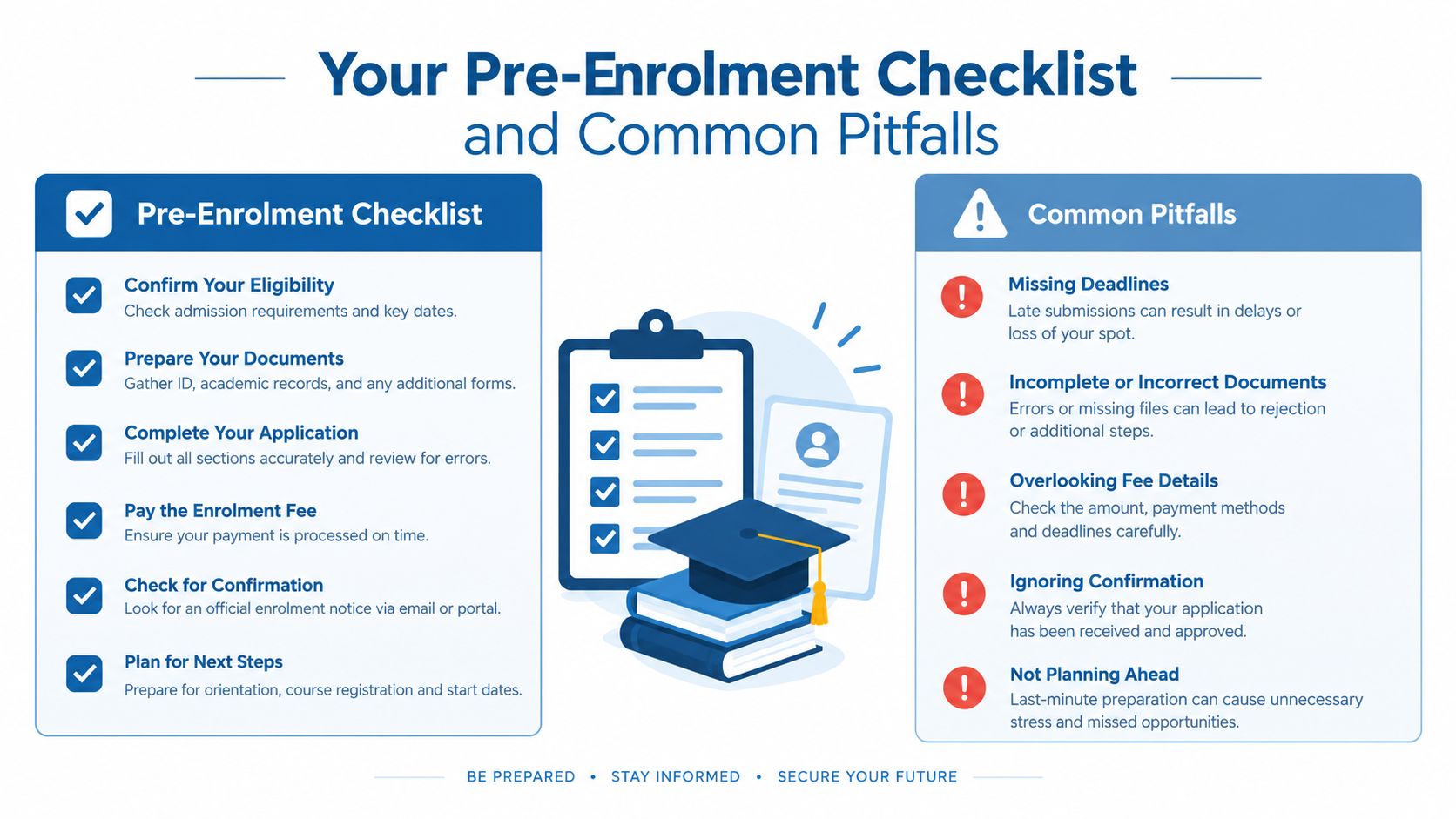
Book only after you've matched the course to the job. If the employer wants traffic devices installed under a traffic guidance scheme, ask about the Traffic Management Implementer pathway. If the work involves a scissor lift, vertical lift or eligible boom under 11 metres, ask about RIIHAN301E and the MEWP class being assessed.
Assemble the documents
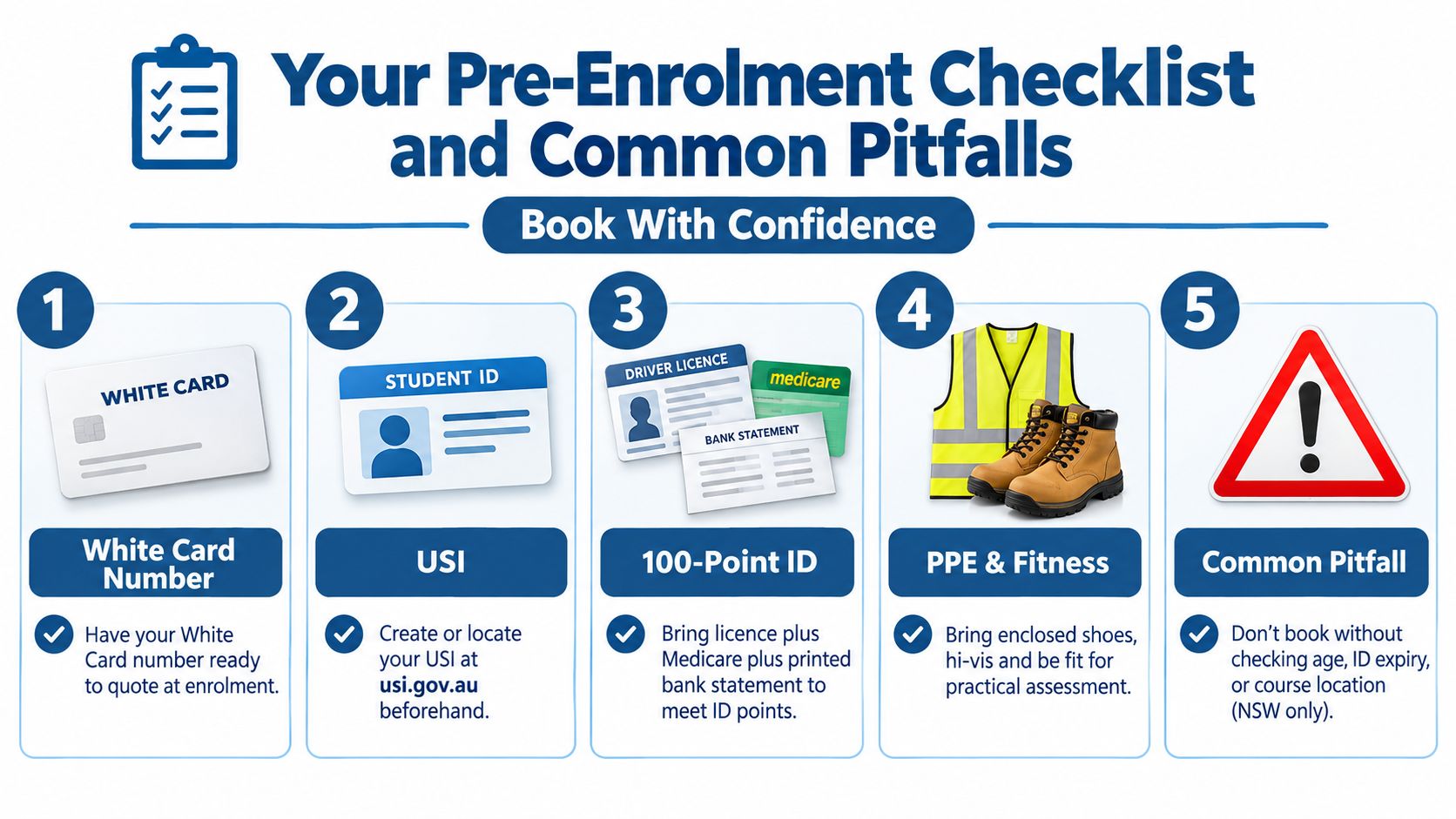
Have your White Card number, current USI details and original identification ready. For the 100-point check, a driver's licence plus a Medicare card and printed bank statement is a practical combination, but confirm that the provider accepts each document under its own identity matrix.
Bring practical clothing too. Enclosed footwear and high-vis clothing are sensible minimums for a yard-based assessment, and the provider may specify additional PPE. You need to be physically and mentally ready to participate in practical work, follow instructions and communicate clearly.
Ask these questions before paying
- Trainer and RTO details: Confirm the organisation is registered and check its details on training.gov.au.
- Practical environment: Ask whether setups occur in a yard, on a closed road section or in another simulated area.
- Assessment policy: Clarify reassessment arrangements and any applicable resit fees.
- Outcome timing: Ask whether the Statement of Attainment is issued electronically, on the day or posted later.
- Age restrictions: If you're under 18, confirm whether the outcome is restricted and what supervision will apply.
Common mistakes are avoidable. Don't assume an old or expired White Card will be accepted, and check that your USI name matches the enrolment record. Arriving in thongs or a singlet can stop you from taking part in practical activities, while an under-18 candidate who expects an unrestricted EWP card may leave disappointed.
Pack morning tea and lunch as well. Many NSW providers run classroom and yard activities back to back, and on-site catering isn't guaranteed.
TP Training provides nationally recognised traffic control, Traffic Management Implementer, White Card and EWP training options across NSW, with practical learning delivered by experienced trainers. Visit TP Training to compare the pathway that matches your intended work and confirm the documents you'll need before enrolment.

You may also like
LV Rescue Training Explained What It Covers and Who Needs It

On Site Safety Guide for Construction and Civil Works