
First Aid Training Penrith: Courses, Costs and Booking
A lot of people in Penrith look for first aid training when something practical forces the issue. A site supervisor needs enough trained staff on a roster. A retail manager realises nobody on the late shift feels confident with an emergency. A parent working in childcare needs the right qualification for a role change. The search often starts with a course date, but the question is usually bigger than that.
First aid training in Penrith isn't only about getting a certificate for the drawer. It's about making sure someone nearby can stay calm, respond properly, and use the equipment on hand while help is on the way. In workplaces across Western Sydney, that turns first aid into both a personal skill and a compliance system.
Table of Contents
- Introduction to First Aid Training in Penrith
- What First Aid Courses Cover and How They Work
- Who Should Attend First Aid Training in Penrith
- Course Schedule Duration and What to Expect on the Day
- Certification Validity and Workplace Compliance in NSW
- Pricing Booking Information and Trainer Credibility at Penrith
- Next Steps to Get First Aid Qualified in Penrith
Introduction to First Aid Training in Penrith
On a busy Penrith worksite, things move fast. Deliveries arrive, people change tasks, contractors come and go, and nobody expects an incident until one happens. The same is true in a shop during a rush, in a childcare room during outdoor play, or in a warehouse loading area when a worker slips or cuts a hand.
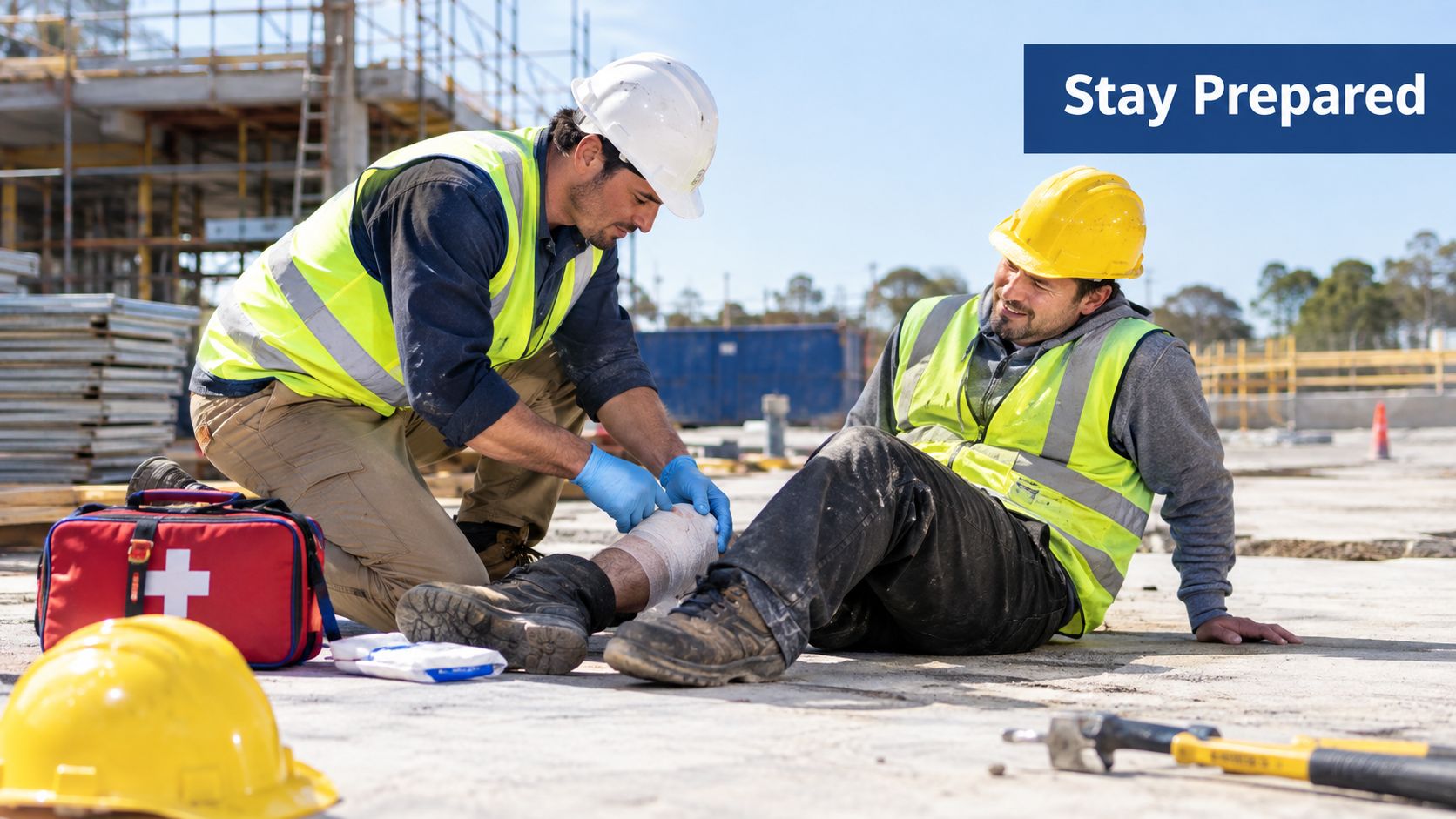
That's why first aid training matters here. Penrith sits in a part of Sydney where construction, logistics, retail, hospitality, and community services all operate side by side. These aren't settings where “someone will probably know what to do” is a safe plan. People need recognised training, clear workplace coverage, and a simple way to keep skills current.
A good starting point is understanding the difference between CPR-only training and broader first aid training. If you want a plain-English overview before comparing course types, this guide to CPR and first aid training near me is useful background reading.
First aid works best when it's treated like a system. People, equipment, and refreshers all need to line up.
first aid training Penrith options help people solve one of these problems:
- A job requirement: You need recognised first aid for a new role or induction.
- A workplace gap: Your business has trained people on paper, but not enough coverage on the actual shift.
- A renewal issue: Your certificate or CPR update is due, and you need to stay current without confusion.
Those are sensible concerns. The tricky part is that local course pages often stop at booking details. They don't explain what the training covers, who needs which level, how renewal works, or how an employer should plan coverage across teams. That's where most of the confusion starts.
What First Aid Courses Cover and How They Work
A worker slips in a warehouse lunchroom. They hit the floor hard, another staff member freezes, and someone else runs for the first aid kit. In that moment, the useful question is not who has a certificate somewhere in a drawer. It is who can assess the scene, start the right response, and give a clear handover when help arrives.
First aid training works like a workplace response system. The training teaches a sequence people can follow under pressure, and that matters for Penrith employers who need more than a booking confirmation. They need staff who can respond on shift, use the kit properly, and stay current through refresher cycles.
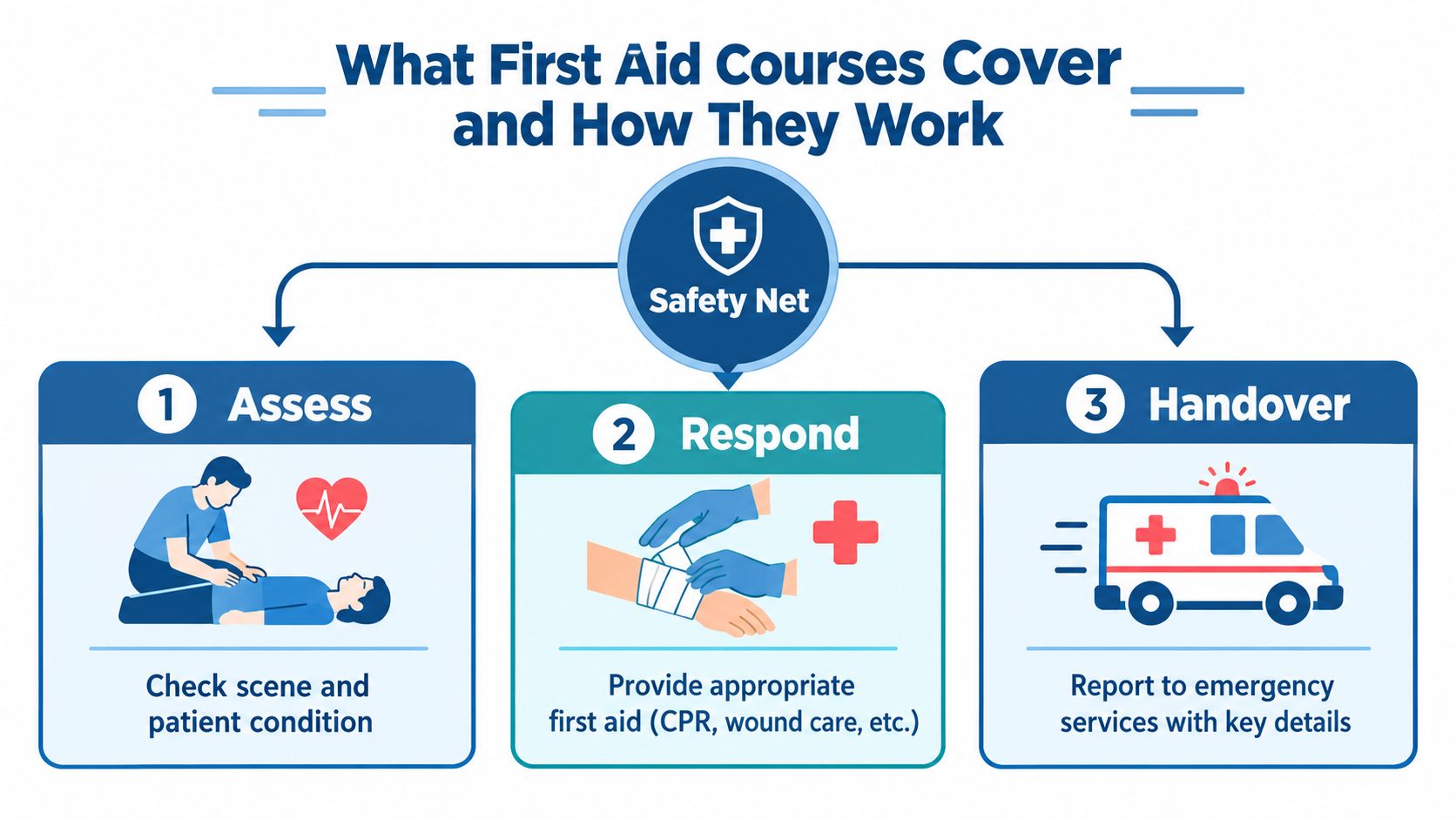
Assess respond and hand over
The nationally endorsed unit commonly required for general workplace first aid is HLTAID011 Provide First Aid. It is marked current on the national training register and supersedes HLTAID003, and it covers recognition and response to life-threatening injuries and illnesses, including CPR and other first aid procedures through the national training register entry for HLTAID011.
In plain English, that means the course teaches people to work through an emergency in order. Check for danger first. Check the person. Call for help. Start CPR if needed. Manage common injuries and medical events. Then pass on clear information to paramedics or the next responder.
That order matters because first aid can go wrong when people skip steps. A bit like following a shutdown procedure on a machine, the sequence protects both the injured person and the worker giving aid.
A more detailed explanation of the unit sits in this article on the first aid course HLTAID 011.
Why hands-on assessment matters
First aid is practical. Reading CPR instructions is like reading how to reverse a trailer. The words help, but skill comes from doing it with correction while someone qualified watches your technique.
That is why assessment includes practical tasks. Learners need to show they can position their hands correctly, keep rhythm, follow prompts, and respond calmly enough to complete the basic actions in the right order. For employers, this is the difference between having names on a training spreadsheet and having people who can step in during an incident.
Here's a simple comparison:
| Course focus | Best for | What it usually emphasises |
|---|---|---|
| CPR-focused training | People who need an annual CPR update or a narrower requirement | Resuscitation response and immediate emergency action |
| Provide First Aid | Workers and job seekers who need broader workplace first aid capability | CPR plus first aid procedures, assessment, and response across a wider range of incidents |
For learners comparing options, a Provide First Aid Course can fit when a workplace or role requires practical, nationally recognised Provide First Aid training delivered by experienced trainers with hands-on learning across NSW.
Practical rule: A useful first aid course includes supervised practice, correction, and a clear assessment of competence.
Where people often get confused
The main confusion is treating all first aid training as the same. It is not. CPR-only training suits some renewals and narrower role requirements. Broader workplace first aid training suits roles where a person may need to manage the situation until ambulance crews arrive.
Another point employers in Penrith often miss is that training is only one part of compliance. A certificate helps show a worker has completed recognised training, but workplace coverage depends on more than that. You still need enough trained people across the right shifts, first aid kits that staff can access quickly, and a refresh plan so skills do not go stale.
The certificate records the training. The system around it makes that training useful at work.
Who Should Attend First Aid Training in Penrith
Some roles make first aid obvious. Construction crews, traffic control workers, and warehouse teams know they're in environments where injuries can happen quickly. Other roles are less obvious, but still just as important. A receptionist may be the first person near a visitor who collapses. A retail worker might respond before an ambulance arrives. A support worker may be the only trained person with a client at the time.

Matching the course to the role
Penrith has a mixed workforce. That matters because the right training choice depends less on suburb and more on role, risk, and workplace duties.
A quick way to think about it is this:
| Role or setting | Typical need | Why it matters |
|---|---|---|
| Construction, civil, logistics, traffic control | Broader workplace first aid capability | Higher-risk environments usually need stronger on-site response capability |
| Retail, hospitality, offices | Often first aid coverage based on staffing and shift patterns | Lower risk doesn't mean no risk |
| Educators, support workers, carers | Training suited to public-facing or care settings | You may need to respond before clinical help arrives |
| Job seekers | Qualification that employers recognise | First aid can strengthen readiness for work |
| Employers and supervisors | Coverage planning, not just individual enrolments | Compliance depends on enough trained people being present |
If you want a simple primer before deciding, this piece on a basic life saving course helps people understand the entry point.
Low-risk and high-risk aren't the same
An office and a roadwork crew don't present the same hazards. That seems obvious, but it's where many employers make poor assumptions. They send one person to a course and feel finished. In practice, the right answer depends on what work is done, where it is done, and who is on site at the same time.
Here's a useful rule of thumb:
- Office or admin team: Coverage may be about ensuring enough trained people are spread across shifts, lunch breaks, and leave.
- Warehouse or loading area: The environment often demands stronger practical readiness because incidents may involve movement, lifting, vehicles, or delayed access to the casualty.
- Construction or civil work: Training decisions should reflect the site's higher-risk profile, not the business's head office profile.
- Childcare or support work: The right qualification should match the care setting, not just general employment needs.
If your workplace changes by shift, the safest number to plan around is the people actually present, not the total names on payroll.
A better question to ask
Instead of asking, “Do I need first aid training?” ask, “What kind of incidents am I likely to face, and who will respond first?” That question usually leads to a better course choice.
For individual learners, that means choosing training that matches your job path. For employers, it means building coverage around the workplace, not a generic template.
Course Schedule Duration and What to Expect on the Day
For many learners, the hardest part isn't the assessment. It's not knowing what the day will feel like. Once you know the flow, first aid training usually feels much more manageable.
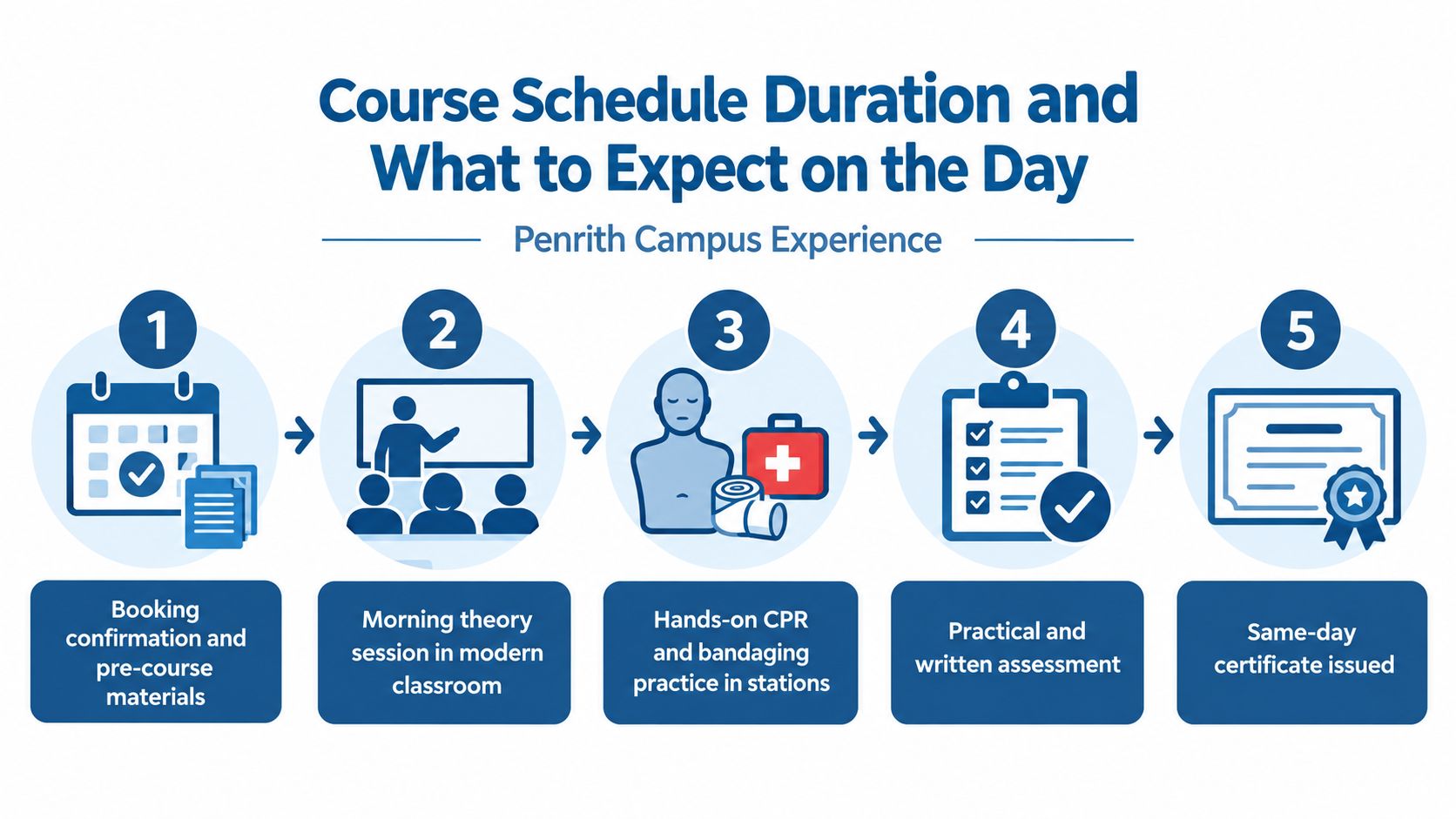
What the day usually looks like
Most first aid training days follow a clear sequence. You book, receive confirmation, complete any required pre-course steps if your provider uses them, arrive on time, settle into the room, and then move between explanation, demonstration, and hands-on practice.
During the practical part, learners usually work through CPR, casualty response, and first aid scenarios using training equipment. Trainers watch how you perform the skill, not just whether you remember the words. That's reassuring for beginners because you're guided through the process rather than expected to know everything from the start.
If you're unsure how long certification lasts once completed, this article on how long does first aid training last clears up the common timing questions.
What to bring and how to prepare
People often overthink this part. You don't need to arrive like you're going to a hospital shift. You need to arrive ready to participate.
A practical checklist helps:
- Wear comfortable clothing: You may need to kneel, move, and practise CPR on the floor.
- Bring your ID and any booking details: It saves time at sign-in.
- Plan your travel properly: Arriving rushed makes everything feel harder than it is.
- Ask early if you have concerns: If kneeling, literacy, or confidence worries you, tell the training team before the session.
What learners usually notice
Most students say the day becomes easier once the practical work starts. Watching a trainer demonstrate a response step by step removes a lot of anxiety. It's similar to learning to use a fire extinguisher or a new machine. Once your hands do the sequence, your brain settles.
Don't aim to be perfect on arrival. Aim to be coachable. First aid is a practical skill, and practical skills improve by doing.
A few things also surprise first-time learners:
- The training is structured: It's not random emergency trivia.
- Assessment is integrated into the day: You're usually demonstrating skills as you learn them.
- Questions are normal: Trainers expect people to ask about real workplace situations.
For employers releasing staff to attend, the useful mindset is to treat the day like any other safety-critical training. It needs time, attention, and a learner who isn't being interrupted every few minutes by phone calls from site.
Certification Validity and Workplace Compliance in NSW
A Penrith employer can do everything right on booking day and still fall short later. One staff member gets certified, then changes shifts. Another lets CPR lapse. The first aid kit ends up in the office while the incident happens in the warehouse. On paper, training happened. In practice, coverage broke down.
That is why certification needs to be treated as part of a workplace system. In NSW, the question is not only whether someone passed a course. The question is whether your business has current first aiders, the right number of them, and equipment people can reach during work.
What counts as compliant training
Safe Work Australia says first aiders should hold nationally recognised Statements of Attainment from a registered training organisation, with CPR refreshed every year and first aid qualifications renewed every three years under the First aid in the workplace model code.
For employers, that works like a service schedule on a work vehicle. You do not check it once and assume it stays current forever. Training dates need review, renewal, and records that can be shown if asked.
If you want a plain-English explanation of recognition and renewal timeframes, this guide to first aid certification in Australia is a useful starting point.
How many first aiders a workplace may need
The model code also gives practical guidance on coverage. It recommends one trained first aider for every 50 workers in low-risk workplaces, one for every 25 workers in high-risk workplaces, and one for every 10 workers in remote high-risk workplaces, as outlined in the Safe Work Australia code of practice.
Those numbers matter because headcount alone does not solve the problem. A Penrith business may have office staff, warehouse staff, drivers, and mobile workers all under one company name. A ratio that looks fine across the whole business can still leave one area exposed during part of the day.
Here is the quick planning view:
| Workplace type | Recommended first aider coverage |
|---|---|
| Low-risk workplace | 1 first aider per 50 workers |
| High-risk workplace | 1 first aider per 25 workers |
| Remote high-risk workplace | 1 first aider per 10 workers |
The same code also recommends first aid rooms for low-risk workplaces with 200 or more workers and high-risk workplaces with 100 or more workers. For larger sites, compliance becomes a facilities and access issue as much as a training issue.
Kit access and real coverage
SafeWork NSW states that workers must be able to access a first aid kit, which means at least one kit must be provided at the workplace according to SafeWork NSW first aid guidance.
That sounds simple, but access is where many workplaces slip. A kit in a locked room, a first aider who is off-site, or a roster with no trained person on the late shift can each leave a gap.
A practical compliance check usually comes down to three questions:
- Are the qualifications current?
- Are trained first aiders present across the shifts that operate?
- Can workers reach the kit quickly from the places where injuries are most likely?
A workplace becomes safer when those three pieces line up. Training is one part. Rosters and kit placement are the other two.
A final point on scale. A NSW Parliamentary submission from St John Ambulance stated that it provided first aid training to over 55,000 NSW residents each year in its submission to the NSW Parliament%20130918.pdf). That figure illustrates the scale of annual first aid training delivery in NSW.
Pricing Booking Information and Trainer Credibility at Penrith
A common Penrith booking mistake looks harmless at first. A business finds the lowest course price, sends two staff members, files the certificates, and assumes the first aid requirement is sorted. A month later, one of those staff members moves to another shift, the other goes on leave, and the site still has a coverage gap.
That is why price should be checked in context. First aid training for work is not only a purchase. It is part of a compliance system that needs to match staff numbers, shift patterns, kit access, and refresher dates.
What to check before you book
A good booking process should answer a simple question. Will this course help you meet the role or workplace requirement you have?
Use this checklist:
- Recognition: Check that the training leads to a nationally recognised outcome if your job or workplace requires one.
- Course match: Confirm you are booking the correct unit or course type for the role, industry, or care setting involved.
- Delivery format: Ask whether there is online pre-course study, face-to-face practical work, or in-person assessment on the day.
- Rescheduling options: Find out what happens if a worker is sick, unavailable, or needs to move to another date.
- Group bookings: If you are booking for a team, ask how the provider handles workplace sessions or staggered attendance.
For employers, this works a bit like planning fire wardens on a roster. The certificate matters, but coverage matters just as much. If too many staff attend at once, you can create a different safety problem by stripping a shift of experienced workers. If you book people one by one with no record system, renewals can drift out of date.
Why trainer credibility matters
A credible trainer does more than read slides and supervise a practical task. They help people connect the unit of competency to the decisions they may need to make under pressure.
That difference shows up fast in class.
Learners in Penrith often come from logistics, construction support, hospitality, community services, and education. Each setting has a different risk profile, different reporting expectations, and different practical examples that make the training stick. A good trainer explains the same first aid principle in language that suits each group, much like a driving instructor changes the lesson for city traffic, rain, or a quiet back street.
Trainer credibility also matters for employers who may need clear attendance records, competent assessment, and training evidence that stands up if a regulator, client, or auditor asks questions later.
Some roles need a more specific pathway than general first aid. In care settings, for example, the Childcare First Aid Course may be the better fit where a role requires nationally recognised childcare-focused first aid with hands-on learning across NSW.
A practical way to compare providers
Before you book, ask three direct questions:
- Does this course match the job requirement or workplace duty I need to cover?
- Will the provider give clear evidence of training, assessment, and certification?
- If I am booking for a business, does this plan support shift coverage, refresher cycles, and the specific risk profile of the site?
Those questions usually lead to a better decision than price alone. A cheaper booking can cost more later if it leaves the wrong staff trained, creates renewal gaps, or fails to support workplace coverage in practice.
Next Steps to Get First Aid Qualified in Penrith
The best way to approach first aid training in Penrith is to treat it like a practical safety decision, not an admin chore. Start with your real need. Are you trying to improve employability, meet a role requirement, or build proper workplace coverage?
Once that's clear, the path gets simpler.
A straightforward action plan
Use this order:
- Choose the right course: Match the training to your role and workplace risk.
- Check compliance needs: If you're an employer, work out how many trained people you need on the shift that operates.
- Plan refreshers early: Annual CPR updates and broader renewals are easier when they're scheduled before they become urgent.
- Book locally: A convenient Penrith option reduces disruption and makes follow-up training easier.
A lot of confusion disappears when you stop thinking only about the day of training and start thinking about the full cycle. The course is the start. Competence, evidence, coverage, and currency are what make the training useful over time.
The strongest first aid system is the one people can actually maintain. Clear records, realistic rosters, accessible kits, and current skills beat a folder full of old certificates every time.
For individual learners, first aid can also be a quiet career advantage. It shows you can step into responsibility, stay calm, and meet a recognised workplace expectation. For employers, it strengthens both safety and daily readiness.
If you've been putting it off, don't wait for the next near miss, staffing gap, or expired record to make the decision for you. Get the right training in place, keep it current, and make sure your workplace can rely on it when it counts.
TP Training offers nationally recognised, practical first aid training in NSW, including Penrith, with hands-on learning designed for workers, job seekers, and employers who need compliant outcomes. If you're ready to sort out the right course, plan refreshers properly, or build stronger workplace coverage, visit TP Training and take the next step.

You may also like
Yellow Card Requirements in NSW: A Practical Guide
LV Rescue Training Explained What It Covers and Who Needs It