Online Crystalline Silica Exposure Prevention and Asbestos Awareness Course
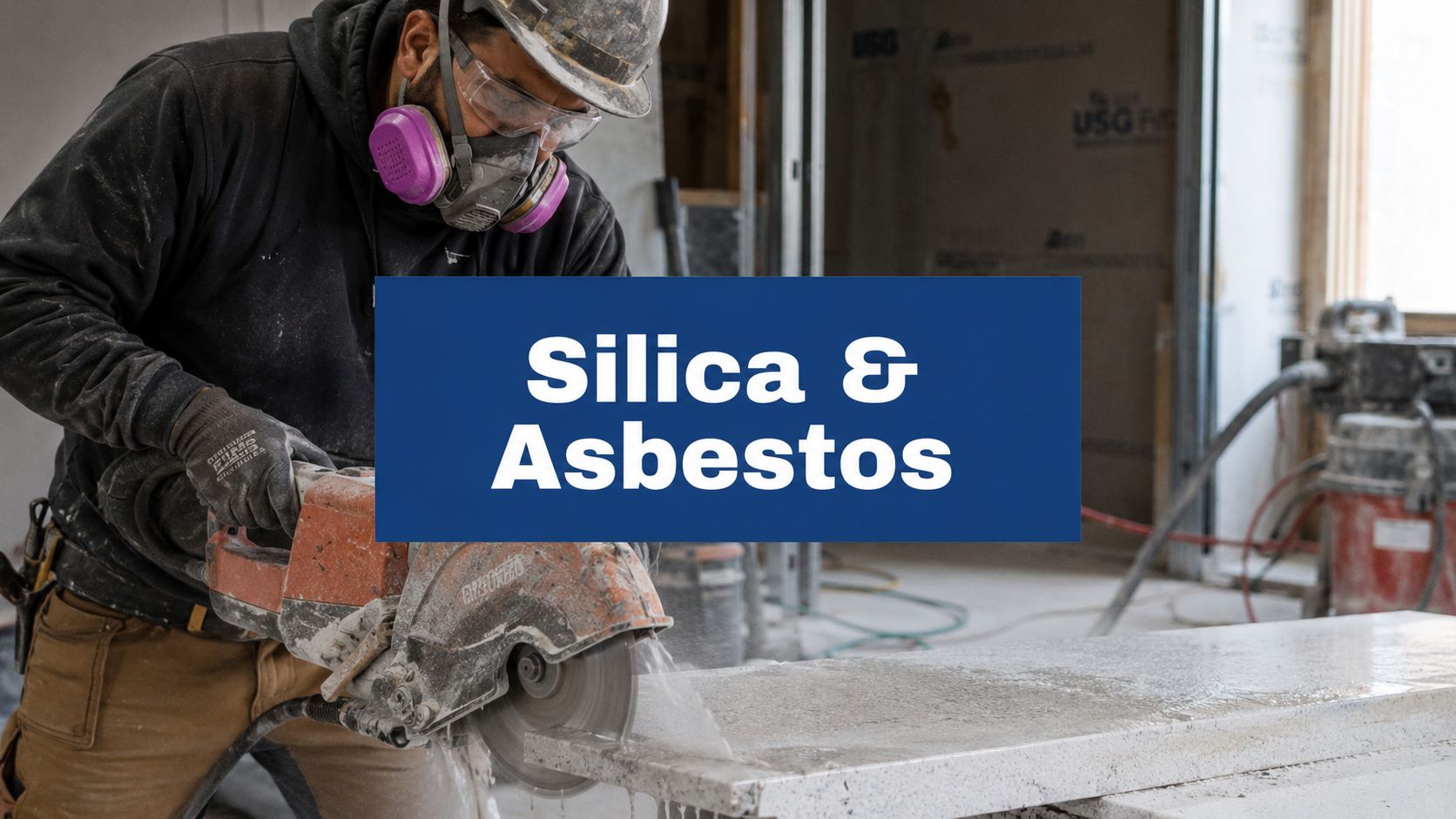
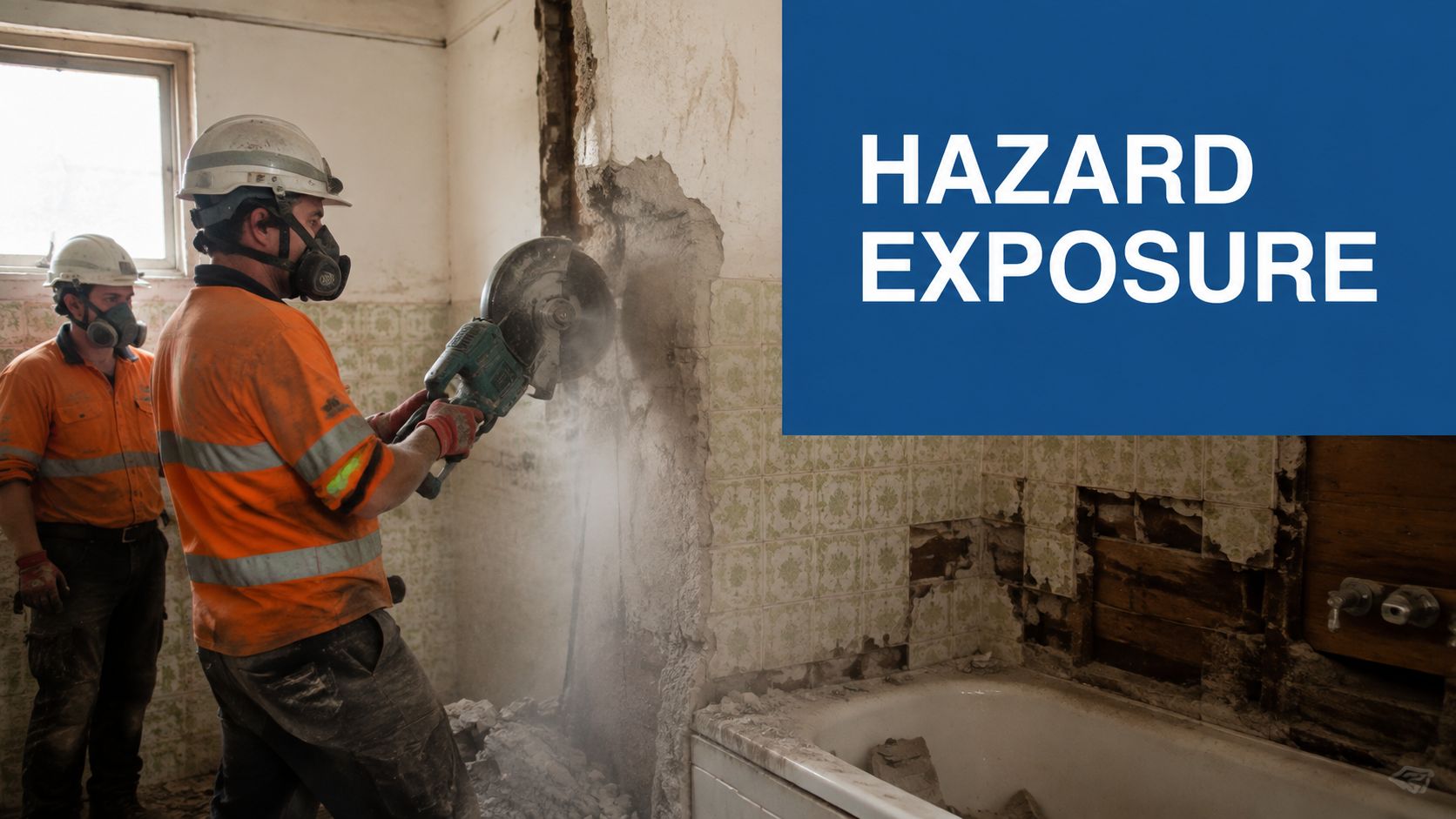
A demolition crew in Western Sydney begins cutting into a bathroom wall from a 1970s building. The saw produces a fine cloud of dust, and the supervisor has to make a quick decision. Could the dust contain respirable crystalline silica, asbestos fibres, or both? Should the team keep working with respirators, isolate the area, or stop and arrange a licensed assessment?
That situation is common across demolition, renovation, construction, civil work, and building maintenance. The Online Crystalline Silica Exposure Prevention and Asbestos Awareness Course helps workers and supervisors recognise the hazard before work creates an exposure, select suitable controls, and understand when a task must stop.
Table of Contents
- Why This Course Matters on Australian Worksites
- Understanding Crystalline Silica and Asbestos Hazards
- What the Combo Course Covers and How You Are Assessed
- Combo Course Versus Standalone Training Options
- Workplace Compliance and Career Benefits
- How to Book Your Training with TP Training
Why This Course Matters on Australian Worksites
A routine renovation can change risk quickly. A supervisor may plan to remove tiles, then discover that the task also involves masonry, older backing materials, or products installed before current controls were expected. The work method, access restrictions, dust suppression, and escalation process must reflect what is present, not what the job was assumed to involve.
The right response begins with identification. Workers and supervisors need to recognise when to pause, isolate the area, prevent further disturbance, and arrange appropriate assessment before work continues. A practical guide to site precautions is available in these workplace safety tips.
The silica benchmark has changed
Australia's current national workplace exposure standard for respirable crystalline silica is 0.025 mg/m³ as an eight-hour time-weighted average, effective 1 July 2025. Safe Work Australia states that this standard must not be exceeded. It applies to the respirable fraction of quartz, cristobalite, tridymite, and tripoli, meaning fine particles that can travel deep into the lungs rather than visible dust generally. The Safe Work Australia exposure standard explains the benchmark and how it is measured.
The lower limit changes how familiar tasks should be planned. Wet cutting, on-tool extraction, isolation, air monitoring, respiratory protection, and health monitoring need to work as one control system. The course helps workers connect the exposure standard with decisions made at the point of work, including when existing controls are not enough.
Engineered stone changed the compliance conversation
From 1 July 2024, nearly all work involving the manufacture, supply, processing, or installation of engineered stone benchtops, panels, and slabs was banned. Imports of those products were banned from 1 January 2025. These changes moved silica awareness beyond a legacy tick-box exercise. Supervisors, contractors, installers, renovators, and procurement teams must understand substitute materials and the controls that still apply to high-risk work.
Asbestos adds a separate reason to combine the subjects. Older buildings and refurbishment projects can contain legacy materials that are disturbed without warning. A worker trained only in silica controls may still respond incorrectly when an older product is uncovered. Combined training builds one repeatable habit: stop, identify, control, and report before continuing.
Understanding Crystalline Silica and Asbestos Hazards
On an Australian renovation site, a worker may cut a tile in the morning and drill into an old wall in the afternoon. The first task can release respirable crystalline silica. The second may disturb asbestos-containing material. These hazards can share a work area, but they require different controls and responses.
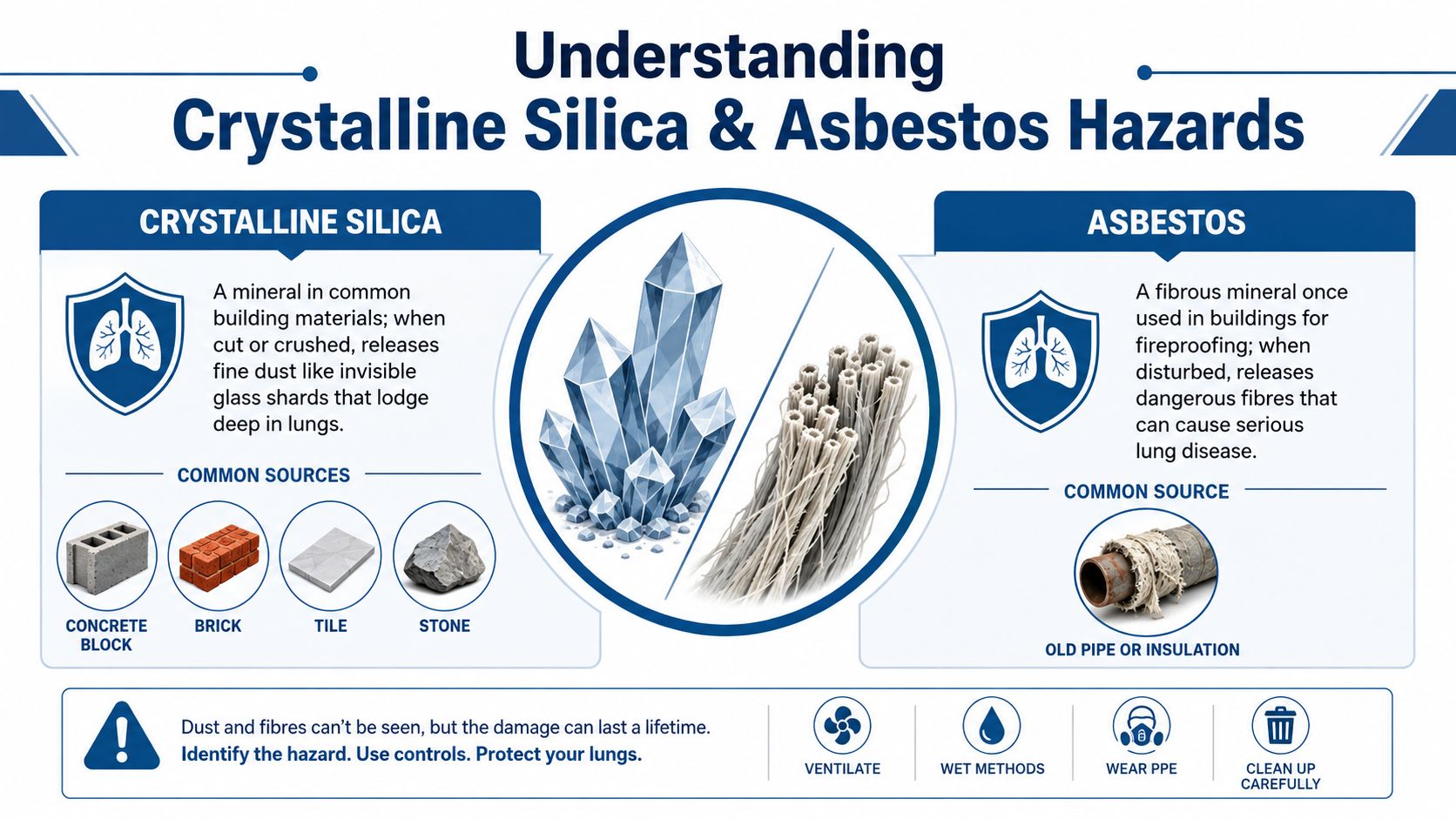
Crystalline silica occurs in construction materials such as concrete, bricks, tiles, sandstone, and engineered stone. The material is not automatically hazardous because it contains silica. Risk increases when cutting, grinding, drilling, crushing, or polishing creates fine particles small enough to inhale.
Respirable silica behaves like invisible glass shards. It can pass the body's larger dust defences and lodge deep in lung tissue. Repeated or substantial exposure can cause silicosis, an irreversible and progressive lung disease, and is associated with lung cancer and kidney disease.
Australian safety information estimates that approximately 587,000 workers were exposed to silica dust in 2011, with an estimated 5,758 of those workers expected to develop lung cancer over their lifetime because of silica dust exposure. The Australian silica research information describes high-risk crystalline silica work as work likely to produce a large amount of respirable crystalline silica or create a health risk in the workplace.
Asbestos requires a different response
Asbestos is a fibrous mineral used in many Australian building products. Intact, bonded material may present less immediate inhalation risk than material that is damaged, friable, cut, or broken. Once fibres become airborne, they can remain in the lungs for decades and contribute to mesothelioma, asbestosis, and lung cancer.
The national asbestos strategic plan progress report recorded 4,469 Australians who died from asbestos-related diseases in 2021, with an age-standardised death rate of around 17 deaths per 100,000 population, including 28 per 100,000 for men and 6 per 100,000 for women. It also records approximately 14.7 million tonnes of asbestos-containing waste disposed of in Australia since financial year 2006–07, including about 1,214,000 tonnes in financial year 2022–23. The national asbestos progress report explains this continuing public-health context.
Why the hazards overlap
Renovation and demolition work may expose workers to modern silica-generating materials and older suspect asbestos products in the same area. Drilling a tiled surface, for example, can create silica dust while disturbing an older backing board, pipe insulation, cement sheet, or adhesive that requires asbestos assessment.
Silica controls do not make suspected asbestos safe. Workers need a repeatable response: stop, identify, control, and report before continuing. The silica awareness course training information helps explain why these hazards need separate decisions.
The national asbestos factsheet says asbestos is present in 1 in 3 homes, about 13 million tonnes of asbestos-containing materials were consumed in the Australian built environment, and an estimated 4,000 Australians die annually from asbestos-related diseases. These figures reinforce the need for practical awareness on refurbishment and maintenance sites. The 10830Nat 11084Nat Crystalline Silica Exposure Prevention Asbestos Awareness Combo Courses combine both subjects for workers across NSW.
What the Combo Course Covers and How You Are Assessed
On a renovation or construction project, the same worker may cut tiles in the morning and encounter an old cement sheet during strip-out. The course joins these subjects while keeping their controls separate. Silica training explains how respirable dust is generated and reduced. Asbestos training focuses on recognising suspect material, preventing disturbance, and reporting it correctly.
The silica module turns the limit into site behaviour
Learners examine materials and tasks that can produce respirable crystalline silica, including concrete, brick, tile, stone, and engineered stone. Cutting, grinding, drilling, and polishing are covered because the task determines how exposure can occur and which controls are suitable.
The hierarchy of controls organises the response:
- Elimination and substitution: Remove the dusty task where possible, or choose a material or process with lower silica content.
- Engineering controls: Use wet cutting, on-tool extraction, local exhaust ventilation, and suitable containment to capture or suppress dust at its source.
- Administrative controls: Plan the work, restrict access, separate workers, maintain equipment, and follow the safe work method.
- Respiratory protection: Use suitable P2 respiratory protection when exposure may remain after higher-order controls, with correct selection, fit, and use.
The module links control choices with air monitoring and health monitoring. A respirator is one layer of protection, not permission to ignore extraction, isolation, or wet methods. The practical goal is to reduce airborne exposure through the strongest controls available first, particularly under Australia's lower silica workplace exposure limit.
The asbestos module is built around stopping work safely
Asbestos awareness covers friable, bonded, and loose-fill asbestos, including common locations in Australian buildings. Learners consider how suspect products may appear, why building age and condition matter, and what to do if a material is damaged unexpectedly. The asbestos awareness training information supports this part of the learning.
The safe response is straightforward:
- Stop the task and prevent further disturbance.
- Keep people away from the area.
- Do not cut, drill, sweep, or use methods that spread contamination.
- Report the incident through the site's required process.
- Arrange suitable assessment, containment, or licensed removal.
Practical rule: If you suspect asbestos, do not solve the problem by creating more dust.
Online multiple-choice knowledge checks follow each module, with a final quiz assessing the combined learning. Learners receive immediate feedback on incorrect answers and can review the content before attempting the assessment again. After successful completion, TP Training provides a nationally recognised statement of attainment.
Combo Course Versus Standalone Training Options
A combined course suits workers whose job takes them through changing buildings, materials, and work stages. A demolition worker, renovator, maintenance contractor, or site supervisor may need to understand silica controls during masonry work and asbestos precautions during strip-out. Completing both topics in one learning pathway can also make it easier to connect the hazards to one site risk assessment.
Standalone training can still be appropriate. An office-based project manager who doesn't enter work areas may only need the awareness module required by the employer's system. A specialist worker whose tasks involve one clearly defined material group may also be directed to a single-topic course. The decision should follow the actual work, site access, employer requirements, and likely career direction.
| Feature | Combo Course | Standalone Silica Only | Standalone Asbestos Only |
|---|---|---|---|
| Coverage | Addresses both silica exposure prevention and asbestos awareness in one pathway. | Concentrates on silica-generating materials, dust controls, monitoring, and respiratory protection. | Concentrates on suspect asbestos materials, avoidance, reporting, and escalation. |
| Best suited to | Demolition workers, renovators, general construction workers, supervisors, and people moving between work types. | Workers primarily cutting, grinding, drilling, or polishing silica-containing materials. | Workers working around older buildings, refurbishment, demolition, or suspected asbestos products. |
| Overlapping principles | Connects planning, identification, exclusion, reporting, and control selection across both hazards. | Applies those principles to respirable silica exposure. | Applies them to asbestos identification and disturbance prevention. |
| Learning decision | Useful when both hazards may appear on the same project or when broader site responsibility is expected. | Suitable when the employer or role calls for silica awareness only. | Suitable when the role's main exposure concern is asbestos-containing material. |
| Credential outcome | Provides the relevant completion outcome for the combined training pathway. | Provides the outcome for the silica subject. | Provides the outcome for the asbestos subject. |
The combo format doesn't mean the subjects become shallow. It reduces repeated introductions to general safety principles while retaining the separate controls each hazard requires. That distinction matters after the engineered stone restrictions and the lower silica exposure standard, because workers may need broader awareness than their current task appears to demand.
People often confuse a White Card with hazard-specific training. A White Card course supports construction induction, but it doesn't replace focused silica and asbestos awareness where those hazards form part of the work.
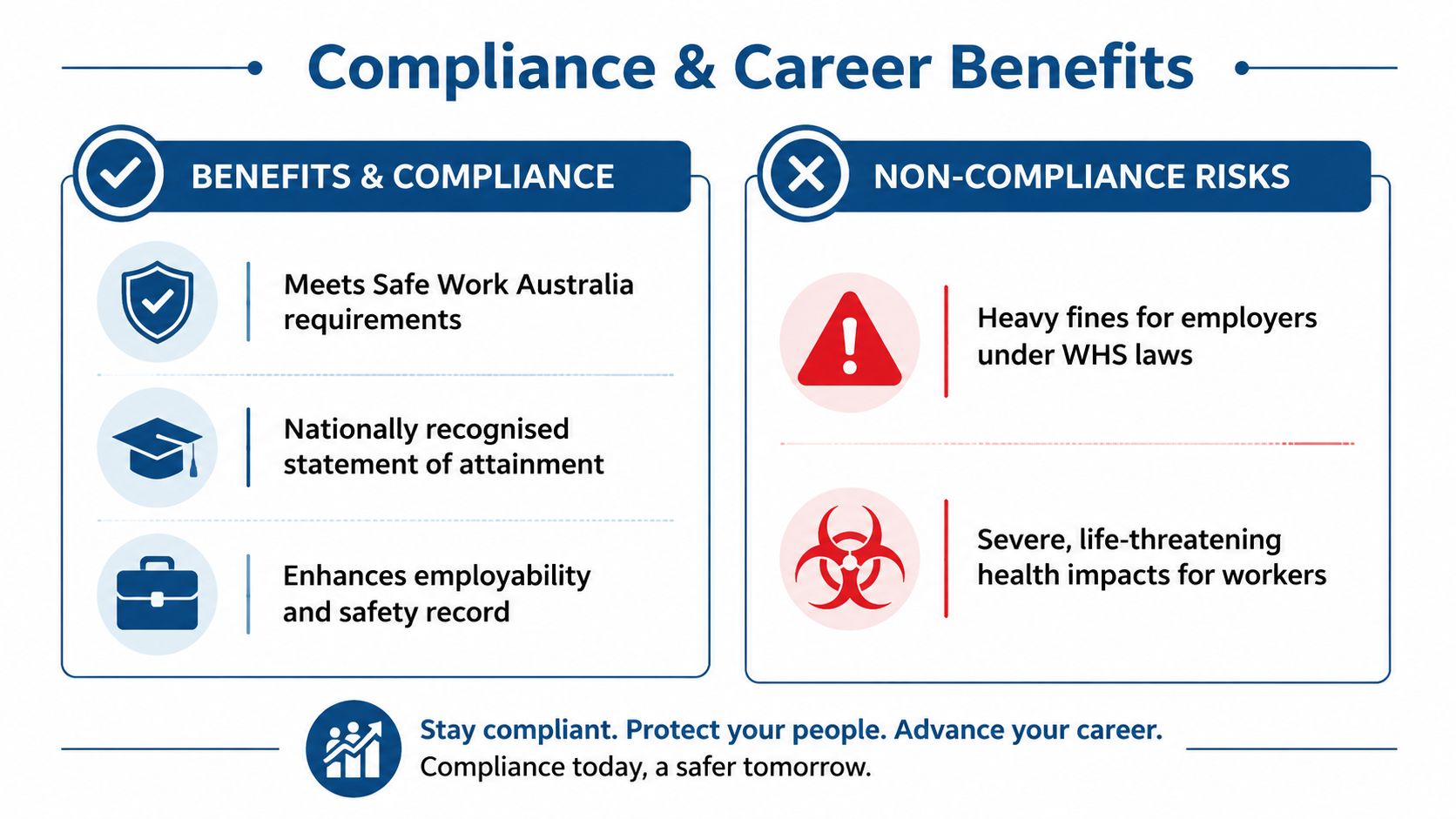
Workplace Compliance and Career Benefits
A certificate doesn't control dust or identify asbestos by itself. Its value appears when a trained worker changes what happens on site. That might mean questioning a cutting method, checking whether extraction is connected, keeping others outside a work zone, or stopping demolition after an unexpected material is exposed.
Safe Work Australia says PCBUs must provide health monitoring where exposure creates a significant health risk. For silica work, that links training with the broader duty to plan controls, verify their performance, and respond to the health risks created by the task. State and territory requirements still need to be checked for the specific workplace, project, and role.
Compliance is an operational responsibility
The current silica benchmark is a specific airborne limit, not a general instruction to “keep dust down”. The control plan should address the material, task, equipment, work area, worker position, monitoring requirements, and residual exposure. For asbestos, the focus is different. Workers must recognise suspect products, avoid disturbance, and refer assessment or removal to the appropriate licensed and controlled process.
The engineered stone bans added urgency to this knowledge. Safe Work Australia states that nearly all manufacture, supply, processing, and installation of engineered stone benchtops, panels, and slabs has been banned since 1 July 2024, while imports were banned from 1 January 2025. These changes affect purchasing, storage, existing stock, installation decisions, and communication across the supply chain.
Training supports career readiness
Dual-hazard awareness can strengthen a worker's readiness for sites where responsibilities change from one task to another. Supervisors need to communicate controls, recognise when a plan no longer matches the work, and make sure workers understand escalation procedures. Contractors and labour-hire workers also benefit from being able to show relevant training when discussing site access and task allocation.
The practical benefits include:
- Better pre-start conversations: Workers can identify the hazards that need attention before tools begin.
- Clearer escalation: Teams know when to stop work instead of improvising around suspect material.
- Stronger supervision: Supervisors can check whether controls match the task and whether workers use them correctly.
- Broader role readiness: Combined awareness supports people moving between construction, refurbishment, demolition, and maintenance environments.
A completed course is useful only when it leads to safer decisions before exposure occurs.
The national silica action plan records 197 silica-related notifications from May 2024 to December 2025, including 148 silicosis notifications. Its NSW data shows tunnelling notifications increasing from 32 in 2024 to 94 in 2025, and construction notifications increasing from 31 to 92 over the same period. The National Silica Notification System action plan shows why current training needs to address active worksite decisions rather than treat silica as a historical issue.
How to Book Your Training with TP Training
Start by reviewing the Online Crystalline Silica Exposure Prevention and Asbestos Awareness Course booking page. Check that the combined pathway matches your role, site duties, and employer's training requirements before you enrol.
A straightforward booking process looks like this:
- Confirm the training need: Ask your supervisor or employer whether you need both subjects, whether online completion is accepted, and whether additional site-specific induction is required.
- Submit your enrolment details: Use the course booking process to provide the information requested by the training organisation.
- Prepare your study setup: Online learning works best when you have a reliable device, a stable internet connection, and enough uninterrupted time to complete the knowledge checks.
- Work through both modules: Read the material carefully, use the feedback from incorrect answers, and review content before reattempting an assessment.
- Keep your completion record: Store the statement of attainment and provide it to the employer or site administrator when requested.
TP Training delivers nationally recognised, practical training across NSW, with training centres including Penrith, Burwood, Auburn, Parramatta, and Sydney CBD. Online delivery can help workers manage shift patterns, remote site commitments, and travel, while the training provider can clarify the delivery arrangements that apply to the selected course.
Learners who need extra communication support can review information about multilingual training support before booking. For asbestos awareness courses, Australian training materials for the 11084NAT Course in Asbestos Awareness state that there are no prerequisites or co-requisites, participants must be at least 14 years old, and students under 18 need a guardian to sign a permission and awareness slip. Face-to-screen learners need identification showing signature, photo, address, and date of birth, plus a secure internet connection, a computer, laptop, or tablet, and MS Teams.
TP Training offers the combined silica exposure prevention and asbestos awareness pathway with practical, nationally recognised training delivered by experienced trainers across NSW. Visit TP Training to review the course details, confirm your booking requirements, and prepare for safer decisions on your next construction, renovation, or demolition project.

You may also like

Government Fund Courses in Australia: A Practical Guide
Workplace Safety Training: A 2026 Guide for Australia