
Most Dangerous Jobs in Australia: 10 High-Risk Roles
In 2024, 188 workers died from traumatic injuries sustained at work, a national fatality rate of 1.3 deaths per 100,000 workers, according to Safe Work Australia's key WHS statistics. The figures vary sharply by industry. Transport, postal and warehousing recorded 54 fatalities, 29% of all worker deaths, at 7.4 per 100,000. Agriculture, forestry and fishing recorded 44 deaths, or 23%, with a rate of 13.7 per 100,000. Construction recorded 37 deaths, about 20%, at roughly 2.8 per 100,000.
Headcount and risk don't track each other. Fatality totals show where deaths cluster; rates show how exposed workers are relative to the size of the workforce.
The ten roles below are ranked by the severity and frequency of their hazards and the consequences of a mistake. Each entry connects the main source of risk to a practical control and relevant training. NSW-specific notes identify where cards, licences or site requirements affect workers in Sydney and regional NSW. Get training that matches the task, then follow the site plan.
Table of Contents
- 1. Heavy Vehicle and Truck Drivers
- 2. Farmers and Agricultural Workers
- 3. Forestry and Logging Workers
- 4. Commercial Fishers and Deckhands
- 5. Construction Labourers and Building Workers
- 6. Scaffolders, Roofers and Workers at Heights
- 7. Crane, Hoist and Rigging Operators (Dogging and Rigging)
- 8. Traffic Controllers and Roadworkers
- 9. Forklift and Warehouse Operators
- 10. Mining Equipment and Heavy Plant Operators
- How the Ten High-Risk Roles Compare on Hazards, Controls and Training
- Turning Risk Knowledge Into Safer Work Habits
1. Heavy Vehicle and Truck Drivers
Truck driving ranks first here because road exposure, fatigue and load movement can combine in a single shift. An overnight run into western Sydney may finish with a tight delivery window, reversing into a live site and climbing onto a trailer. Each task needs its own control.
A heavy vehicle licence confirms the vehicle class you can drive. Managing work hours, restraining loads and reversing safely require task-specific skills. Telematics can help supervisors track speeding and hours; delivery schedules must also leave room for rest breaks.

Before the next run, match each hazard to a practical check:
- Fatigue: Record work and rest hours accurately under the Heavy Vehicle National Law. Plan the delivery around those limits rather than squeezing rest into whatever time remains.
- Vehicle condition and shifting loads: Walk around the truck and check restraints before every trip. Consider what the load will do under braking.
- Cab and trailer access: Keep three points of contact. Put paperwork away before climbing down so your hands are available for the handholds.
For dangerous goods work, check whether the load requires a dangerous goods driver licence before accepting it. TP Training offers a Dangerous Goods Driver's License Course. Its dangerous goods driver's licence guide explains what the ticket covers.
For Sydney and regional NSW construction deliveries, confirm the site access rules and whether your duties require a White Card. TP Training also offers White Card Safety Training.
Owner-operators carry a separate financial responsibility alongside these safety tasks. Reviewing life insurance options for owner-operators belongs in business planning, while fatigue management, load checks and safe access remain part of every shift.
2. Farmers and Agricultural Workers

On a rate basis, agriculture sits at the top of the leading industries. The work is often one person, one machine, and a long way from an ambulance. A tractor rollover, a quad bike on a slope, a grain bin, or a startled animal can turn a routine job into a fatal one before anyone else knows you're hurt.
The useful control isn't a poster in the shed. It's the hardware and the habit you use when you're alone. Roll-over protective structures on tractors, and quad bikes set up so they don't invite a passenger, change the outcome of the same mistake. Lockout before you clear a blockage does the same for entanglement. A sat-phone that stays in the ute doesn't help the person under the machine.
Practical rule: If you can't isolate the machine and tell someone where you are, don't start the task.
- Helmet on, no passengers: Quad bikes punish extra weight and a bare head.
- Keep first aid current: A stocked kit on the property only helps if you can use it while you wait.
- Plan the call for help: Satellite messaging beats a mobile that drops out past the creek.
NSW farms near town still face the same machinery risk as remote blocks. Distance just removes the margin. I recommend treating rescue time as part of the job plan, not as something you'll sort out after the incident.
3. Forestry and Logging Workers
Forestry risk comes from the tree, not from how experienced the faller feels. A stem can barber-chair, a limb can fall after the cut, and a machine can roll on ground that looked firm at dawn. Manual falling with a chainsaw keeps you inside that uncertainty. Mechanised felling heads pull the operator into a cab and out of the drop zone, which is the better default wherever the terrain allows it.
What to set before the saw starts
- Dress for the saw: Chaps, a helmet with visor, and hearing protection are the minimum, not the wet-weather option.
- Mark two tree lengths: Keep everyone else outside that exclusion zone, with a spotter who can stop the cut.
- Read the day: Wind, wet slope, and fatigue change how a tree behaves. Carry a satellite device when the crew is out of radio range.
A crew that relies on "I'll just drop this one" will eventually drop it the wrong way. Exclusion zones and a mechanised head aren't slower once you count the time lost to a serious injury. If you're new to the bush, don't learn felling by watching from inside the drop zone. Learn it from outside, then step in only when the plan is already set.
4. Commercial Fishers and Deckhands
The hazard is the sea plus the gear. A vessel can sink or capsize, a person can go overboard in the dark, and a line or winch can take a limb before anyone shouts. Slippery decks, heavy lifts, and long hours make the ordinary jobs dangerous too. Help is slow because you're not on a road.
Picture a dawn shot off the NSW coast. The deck is wet, the crew is short, and someone steps out without an inflatable lifejacket because "we're only hauling for a minute." That's the minute a wave or a line takes them. Automatic-inflation jackets and a personal locator beacon are the controls that still work when you're unconscious. A trip plan filed before you leave is what tells rescuers where to look.
Wear the lifejacket on deck every time, including alongside the wharf.
Keep decks clear and wear non-slip boots. Run a stability check and a short safety drill before departure, not after the season's first scare. First aid and CPR need to be current, because the first responder is the person standing next to you. A drill you skip because the weather looks kind is the drill you'll wish you'd done.
5. Construction Labourers and Building Workers
A labourer carrying materials can cross a truck's reversing path while another crew starts cutting concrete nearby. Construction risk comes from changing work areas and overlapping tasks: moving plant, trench collapse, contact with power, falls and hazardous dust. One crew's work can expose everyone around it.

Controls that belong on the day
Use the site-specific safety plan and toolbox talk to establish where plant will move, which excavations are closed and what cutting or stripping work is scheduled. Revisit those arrangements when the work area changes.
Before starting, check these controls:
- White Card first: In NSW, construction induction is required before you start construction work, including as a labourer. TP Training offers the White Card Safety Training Course.
- Control dust at the task: Use wet cutting and dust suppression for silica-producing work. TP Training's Crystalline Silica Exposure Prevention Online Course and Asbestos Awareness Online Course address hazard awareness; the cutting or stripping task still needs its own controls.
- Separate people from plant: Barriers between people and reversing trucks provide physical separation. Confirm the pedestrian route before carrying materials through the work area.
These checks apply on Sydney building sites and regional NSW jobs alike.
Manual-handling strains also deserve attention. Guidance on how to treat a pulled muscle can help you address a strain without letting it distract from the site's fatal hazards.
For trench work, keep the entry rule clear: stay out of an unsupported excavation. Check that the planned protection is in place before entering, even for a quick task.
6. Scaffolders, Roofers and Workers at Heights
Falls stay among the most common causes of fatal and serious injury because the drop doesn't need to be dramatic. A fragile roof sheet, an open edge, a scaffold bay tagged out and used anyway, or a ladder at the wrong angle is enough. Roofers, scaffolders, glaziers, and maintenance workers meet that hazard on houses and on high-rise alike.
Edge protection and safety mesh go on before the roofing crew starts, not after the first sheet is down. Scaffold gets a structured inspection and a tag before anyone climbs it. If the tag says unsafe, the bay is closed, even when the job is late. A rated harness only works if the anchor is rated too, and only if you clip on in practice.
Ladders are for access, not for a long work platform. Check them for damage and set the angle so you're not leaning out to reach. Before you drive an elevating work platform, do the EWP course for that machine, including boom-type plant over 11 metres where the licence applies. Our working at heights course notes set out what the one-day RIIWHS204E training covers. I'd rather see you clipped on for a ten-minute task than explaining a short fall that broke a life.
An untagged scaffold is a closed scaffold.
7. Crane, Hoist and Rigging Operators (Dogging and Rigging)
A load leaves the ground with its weight underestimated and the wrong sling attached. The danger is already overhead. For crane, hoist and rigging crews, the main risks come from suspended loads, crane instability, confused signals and contact with powerlines.
Before a critical lift, record the load weight, rigging arrangement and travel path in the lift plan. Keep people outside the lifting exclusion zone. Use load moment indicators and observe wind limits, rather than relying on how stable the crane felt earlier.
Match gear to the weight. Confirm the load's mass before selecting slings, shackles and hooks, then inspect the gear before use. The guide to what to look for in dogman gear supports that selection check. Unknown weight or unsuitable gear means the lift waits.
For workers in Sydney and regional NSW, the training must match the duties. Our dogging and rigging ticket guide explains the ticket pathways. Check which high risk work licence your dogging or rigging tasks require before accepting the work.

Before the hook takes weight, check:
- Signals agreed: The signaller and operator use the same signals, with one person directing the lift.
- Path clear: The planned route keeps the suspended load away from people.
- Powerline clearance established: Maintain the required exclusion distance throughout the lift, even when the movement is short.
- Conditions within limits: Check wind conditions against the crane's operating limits before proceeding.
8. Traffic Controllers and Roadworkers
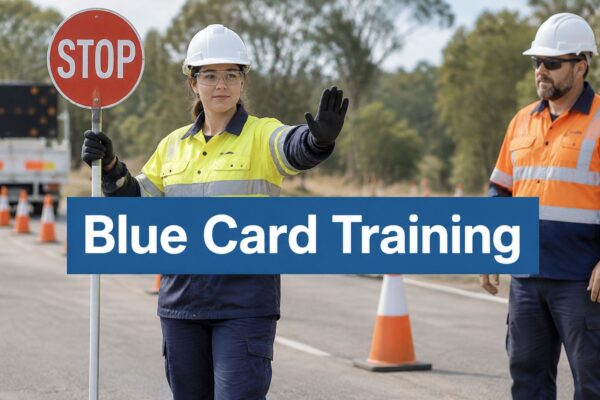
You stand a metre from live traffic so everyone else can pass a work zone safely. Night shift, a high-speed approach, and plant moving inside the closure are the usual mix. Hi-vis helps drivers see you. It doesn't stop a vehicle that hasn't slowed down.
What holds on a live road
Variable message signs and a real speed drop do more than a cone line that drivers ignore. The traffic management plan needs approval from the relevant road authority before the shoulder is closed. Your standing position needs a view of approaching traffic and a step-off that isn't into plant.
- Blue Card before you stop traffic: NSW traffic control needs the right card, not a hi-vis vest and a radio.
- Wear compliant hi-vis the whole shift: Faded garments fail at dusk, which is when you need them.
- Red Card if you plan the zone: Planning a work zone is a different job from holding the bat.
See what the day covers in our Blue Card training outline. The traffic controller course is a one-day program listed for Burwood and Auburn. Implementer and combo options sit alongside it if your role includes setting out the zone, not only controlling it. Don't accept a spot with no escape route because the lane is "only" 60.
9. Forklift and Warehouse Operators
A distribution centre looks controlled until a forklift, a pedestrian, and a high rack share the same aisle. Tip-overs, people on foot, falling loads, and racking collapses cause the serious harm. Speed and a raised load make a stable truck unstable in one turn.
Walk the floor as if you're the picker, not the driver. If the only path crosses the forklift route, the layout is the hazard. Physical barriers and marked walkways beat a painted line that everyone steps over. A pre-start and a yard speed limit catch the defects and the habits that tip trucks.
You need a current licence to operate a forklift truck (TLILIC0003) before you move a pallet, including on a "quiet" afternoon shift. Travel with the load low and inside the rated capacity. Report a defect and park the truck. Our forklift training explainer sets out why the licence and the site rules are separate. Pedestrians stay in the marked walkway even when it adds twenty seconds. That twenty seconds is cheaper than a strike.
10. Mining Equipment and Heavy Plant Operators
Haul trucks, excavators, dozers, and loaders are large enough that a light vehicle disappears in a blind spot. Ground changes through the shift. A collision, a rollover, or a failed component has very little forgiveness, which is why mines run some of the strictest rules in the country and still carry serious risk.
Collision avoidance and proximity detection on haul trucks help, but they don't replace a no-go zone or a radio call. Complete the civil ticket for the machine you'll run in practice, such as excavator operations or articulated haul truck operations, before you enter an active pit. Inspect before the shift and report defects the same hour. Keep the separation distance your site sets, and don't chase production into a rest break you've already lost.
Rosters exist because fatigue on a haul road looks like a straight line until it isn't. Follow the rest rules even when the crew is short. The same plant skills show up on civil jobs outside the pit, where the exclusion zones are often weaker. Treat those sites with the mine habit, not with a looser one.
How the Ten High-Risk Roles Compare on Hazards, Controls and Training
The main risk differs by role: fatigue and moving vehicles dominate road and plant work, while falls and suspended loads drive risk at height. The NSW requirement column highlights where a specific card, licence or site control applies. Other training needs depend on the task and workplace.
| Role | Main source of risk | NSW requirement or practical distinction |
|---|---|---|
| Heavy Vehicle and Truck Drivers | Road crashes, fatigue and load movement | A Dangerous Goods Driver's Licence Course is relevant when the role involves transporting dangerous goods. |
| Farmers and Agricultural Workers | Machinery, livestock and grain handling | Controls depend on the task and property. Plan for machinery isolation and emergency communication. |
| Forestry and Logging Workers | Falling trees, chainsaws and difficult terrain | Set exclusion zones and use suitable felling methods for the site. |
| Commercial Fishers and Deckhands | Capsizing, man overboard and entanglement | Lifejackets and emergency equipment need to suit the vessel and conditions. |
| Construction Labourers and Building Workers | Falls, trench collapse and dust | A White Card is relevant to construction work. |
| Scaffolders, Roofers and Workers at Heights | Falls from edges, roofs and scaffolds | Work Safely at Heights training addresses work-at-height hazards; use suitable edge protection and fall-arrest systems. |
| Crane, Hoist and Rigging Operators (Dogging and Rigging) | Dropped loads, crushing and rigging failure | Dogging or rigging work requires the relevant high risk work licence. |
| Traffic Controllers and Roadworkers | Passing traffic and work-zone plant | The Traffic Controller Training Course is a 1 day course listed for Burwood and Auburn, NSW. |
| Forklift and Warehouse Operators | Pedestrian strikes, tip-overs and falling loads | Operators need the relevant forklift licence, including TLILIC0003. |
| Mining Equipment and Heavy Plant Operators | Vehicle interaction, ground conditions and fatigue | Training should match the machine and the site. Civil plant courses do not replace site-specific procedures. |
Turning Risk Knowledge Into Safer Work Habits
The main hazards across these ten roles are familiar: moving vehicles and plant, falls, shifting loads, and fatigue. Safer work depends on controlling those risks at the job site, before the shift begins and as conditions change.
Check that each worker has the current qualification for the task, understands the site plan, and knows who can stop the job. A site induction should identify exclusion zones, changing hazards, and the process for raising concerns. Ask about those controls before accepting a start date. A signature alone does not explain where workers can safely operate.
Match training to the work. Workers should hold the qualification required for the task, and employers should confirm it during induction. Refresh training when duties or equipment change, or when a worker needs to rebuild a safety skill.
TP Training is accredited by SafeWork NSW and recognised by ASQA, with RTO number 21488. Courses run weekly at Sydney locations, including Penrith, Burwood, Auburn, Parramatta and Sydney CBD. The Auburn Training Centre is at 5 Melissa Street, Auburn, NSW 2144. Face-to-face training is delivered across Australia, including regional NSW, QLD, VIC and ACT. Warehousing and construction programs sit alongside traffic control, high risk work, first aid and short courses.
For workers, focus first on the hazards in the role you are about to start. For employers, check that induction covers the actual plant, work area and site controls, then verify the relevant qualification. Training supports safer decisions on shift; active controls and clear supervision keep those decisions connected to the job.
If you're entering construction, traffic control, civil plant, warehousing or dangerous goods driving, TP Training offers practical, nationally recognised courses for these work areas across its training locations. Check your current ticket and choose training that matches the tasks you'll perform. Visit TP Training to see locations, dates and course options.

You may also like

RSA Training Online in NSW That Employers Accept
RSA Training Sydney CBD: Rules, Course Details and Booking