
Working at Heights Course: Your 2026 Guide to Certification
You're often in one of two situations when you start looking up a Working at Heights course.
Either your employer has told you that you need the ticket before you can start a job, or you've looked at the task in front of you and realised it's not just “a bit of work off the ground”. It might be a roof repair, a warehouse task near high racking, plant maintenance on a platform, or work on a multi-level construction site. The job might feel routine. The fall risk isn't.
That's where a lot of confusion starts. Many workers assume this course is mainly about learning to wear a harness. It isn't. In Australia, the course sits inside a much broader safety and legal framework. The main focus is preventing the fall in the first place, then managing the remaining risk properly if prevention isn't reasonably practicable.
Table of Contents
- An Essential Skill for a Safe Career
- Understanding Your Legal and Workplace Obligations
- What the Working at Heights Course Actually Covers
- The Practical Side of Training and Assessment
- Who Needs This Certification in Australia
- Booking Your Course with TP Training
- Frequently Asked Questions
An Essential Skill for a Safe Career
A new worker arrives on site, sees a ladder, a roof edge, and a harness hanging nearby, and thinks the job is simple. Clip on, get up there, finish the task. That's exactly the mindset that causes trouble. Safe work at height starts long before anyone leaves the ground.
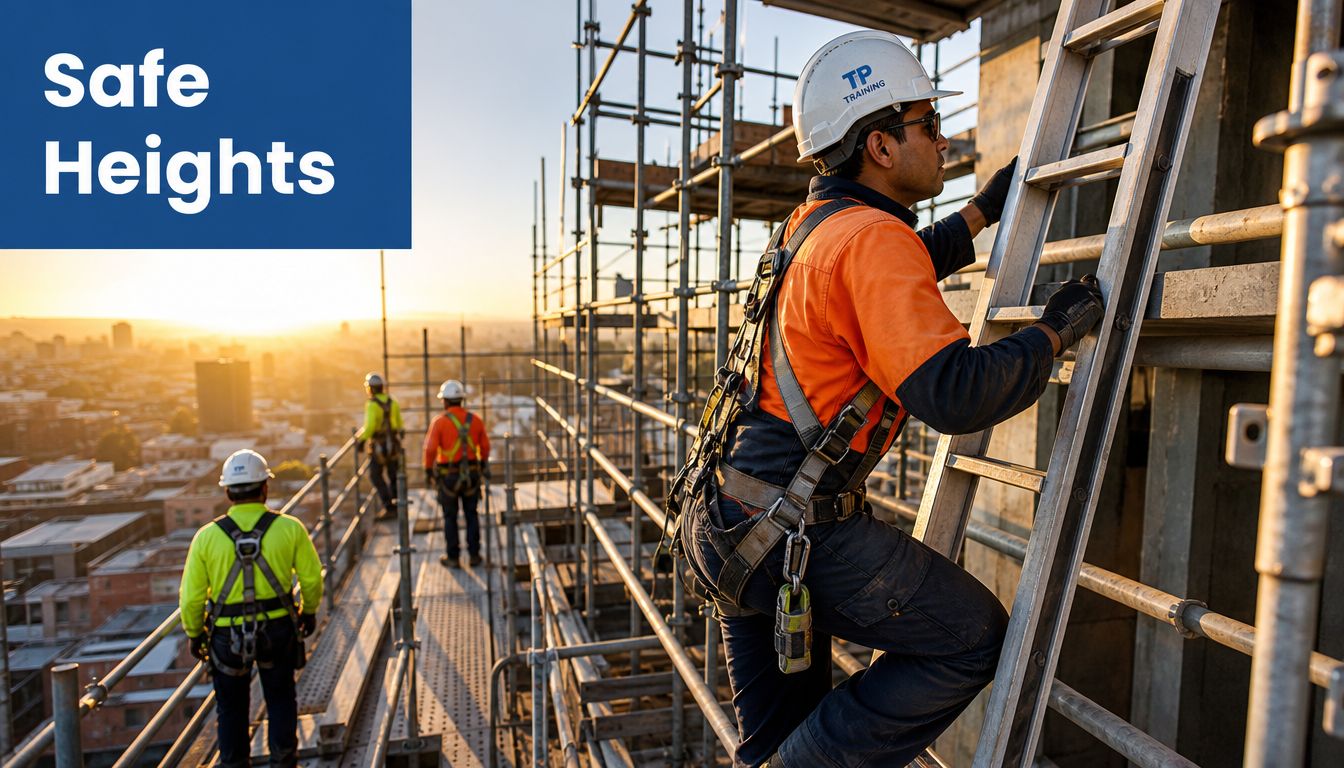
A proper Working at Heights course gives you a way to think, not just a piece of paper. It teaches you how to spot fall hazards, question unsafe setups, choose the right control measures, and use equipment properly when the job requires it. That matters whether you're starting out, changing roles, or updating your site compliance.
For many people, this training also affects employability. Site supervisors, principal contractors, labour hire companies, and safety officers want workers who understand more than the bare minimum. They want people who can recognise when a guardrail is better than a harness, when an anchor point needs checking, and when the task shouldn't proceed until the controls are sorted.
Practical rule: If your job could involve a fall from one level to another, don't treat height safety as a formality. Treat it as a core work skill.
Understanding Your Legal and Workplace Obligations
A worker can be only a short distance off the ground and still suffer a life-changing fall. That is why Australian height safety law is based on risk, not on the idea that only roofs, towers, or multi-storey sites count.
When the law applies
The starting point is simple. If there is a risk of a person falling from one level to another and getting hurt, the duty to manage that risk applies. You do not need to be on a high-rise project for the rules to matter.
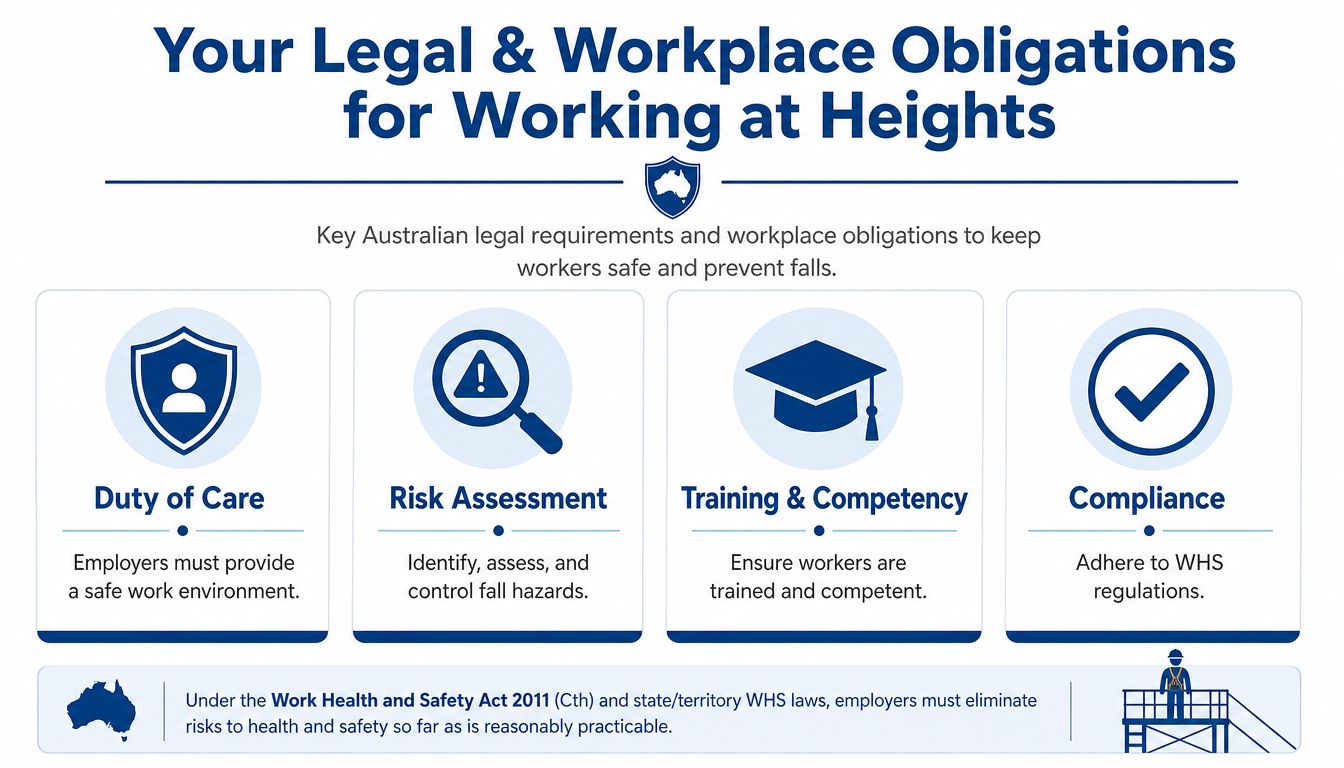
Safe Work Australia explains this clearly in its guidance on falls at height. For construction work, a risk of falling more than 2 metres makes the task high risk construction work, so a Safe Work Method Statement (SWMS) is required before the job starts.
That 2 metre mark causes confusion.
It is a legal trigger for SWMS requirements in high risk construction work. It is not a line that says anything below 2 metres is safe, and it does not mean training only matters above that height. A short fall onto reo, concrete, plant, or uneven ground can still cause serious injury. The question is always, “What is the fall risk here, and how do we control it?”
What your employer must do, and what you must do
Under Australian work health and safety law, the PCBU has the primary duty to identify hazards, assess the risk, and put controls in place. As a worker, your duty is to follow reasonable instructions, use the provided controls correctly, and not do anything that creates extra risk.
Many sites often mismanage height safety. People talk about a “harness ticket” as if clipping on is the whole answer. Legally, the first question is whether the fall can be prevented in the first place. Guardrails, scaffolds, edge protection, aerial work platforms, solid construction, and better task planning sit higher in the hierarchy of controls than a personal fall-arrest system.
A harness works like a seatbelt. It can reduce harm after something has already gone wrong. It does not remove the hazard the way a guardrail or properly designed work platform can.
If your work includes tree work, pruning near structures, or vegetation management, these same control principles overlap with broader safe arboriculture practices. Different industries use different equipment, but the legal logic stays the same. Eliminate the fall where possible. Prevent the fall if you can. Arrest it only when higher-level controls are not reasonably practicable.
What the 2 metre threshold means in practice
This table is a useful way to read the rule on site:
| Situation | What matters |
|---|---|
| Working below 2 metres | A fall risk can still require controls, supervision, and training |
| Working with a fall risk over 2 metres in construction | The work is high risk construction work and needs a SWMS |
| Any work at height | The PCBU must assess the risk and choose controls using the proper hierarchy |
You will often see height training discussed alongside other site entry and safety requirements. If you are sorting out your broader compliance pathway, this guide to CPR, first aid, White Card and workplace safety certifications shows how these qualifications fit together.
Why workplaces ask for this training
Employers ask for Working at Heights training because they need workers who can recognise unsafe setups before the task starts. A trained worker should be able to look at a roof edge, mezzanine, ladder task, scaffold, or raised platform and ask the right questions. Is there a way to do this from the ground? Is there edge protection? Is the access method suitable? If fall-arrest gear is being used, was it chosen because higher controls were not reasonably practicable, or because someone reached for the harness first?
That is the legal and workplace obligation in plain terms. The course supports compliance, yet its primary benefit is teaching you how to apply the hierarchy of controls so height safety decisions make sense on the job.
What the Working at Heights Course Actually Covers
A lot of course pages make it sound like this training is mostly about harnesses, lanyards, and clipping onto an anchor point. That's only part of it.
The course unit and the real purpose of training
The nationally recognised unit is RIIWHS204E Work Safely at Heights. In practice, this unit teaches you how to assess a task, identify height hazards, select suitable controls, and use height safety equipment correctly when it's required.
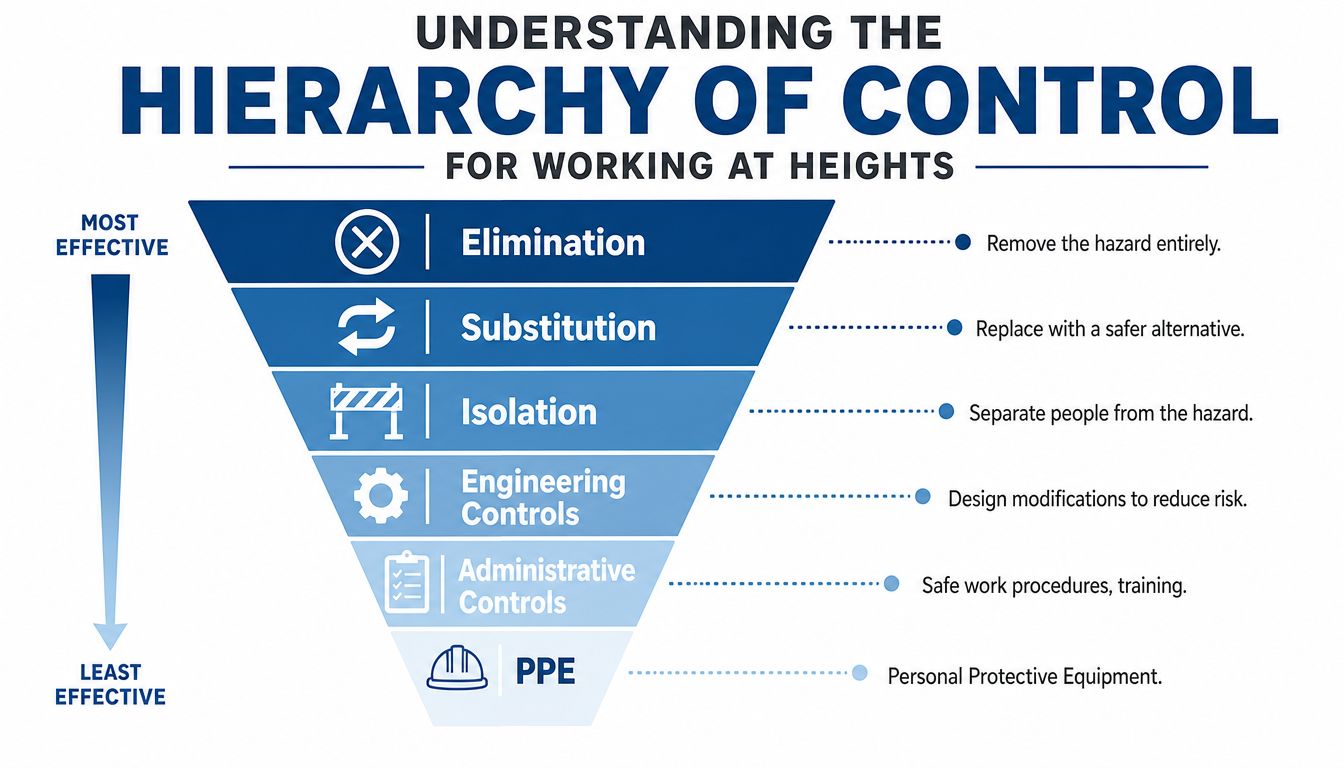
The biggest misunderstanding in industry is also the most important lesson in the course. A persistent misconception is that fall arrest systems such as harnesses are the main control. Australian regulations and the RIIWHS204E course require a hierarchy where fall prevention is the first preference, making the training focused on fall prevention rather than fall arrest, as discussed in this industry explainer on the hierarchy for working at heights.
The hierarchy that workers often get wrong
When people hear “height safety”, they often picture PPE first. Legally, that's backwards.
If the work can't be done from the ground or from solid construction, the order of control is:
- Fall prevention devices first. This includes measures such as barriers, scaffolding, guard rails, or elevating work platforms.
- Work positioning systems next. These hold or support the worker so the task can be done safely.
- Fall arrest systems last. This includes equipment such as a harness or safety net when the higher-order options aren't reasonably practicable.
That order matters because it changes how the job is planned. If a worker reaches for a harness before asking whether guard rails, scaffolding, or an EWP should be used, the planning has already gone off track.
A harness doesn't prevent the fall hazard from existing. It only manages the consequence if other controls can't be used.
What you learn besides harness use
The course usually covers a mix of theory and practical application, including:
- Hazard identification so you can recognise edges, openings, fragile surfaces, unstable access points, and poor anchor locations.
- Risk assessment so the task is reviewed before work starts, not while someone is already exposed.
- Equipment knowledge including the purpose of anchor systems, connectors, and work positioning gear.
- Procedural compliance so workers understand site rules, permits, SWMS requirements, and their own responsibilities.
- Emergency awareness so people understand the importance of rescue planning rather than assuming the harness alone solves the problem.
That's why calling it a “harness ticket” misses the point. A good Working at Heights course trains judgment just as much as technique.
The Practical Side of Training and Assessment
Most students feel more confident once they understand what the practical part looks like. It isn't about catching you out. It's about proving that you can perform the key safety tasks correctly.
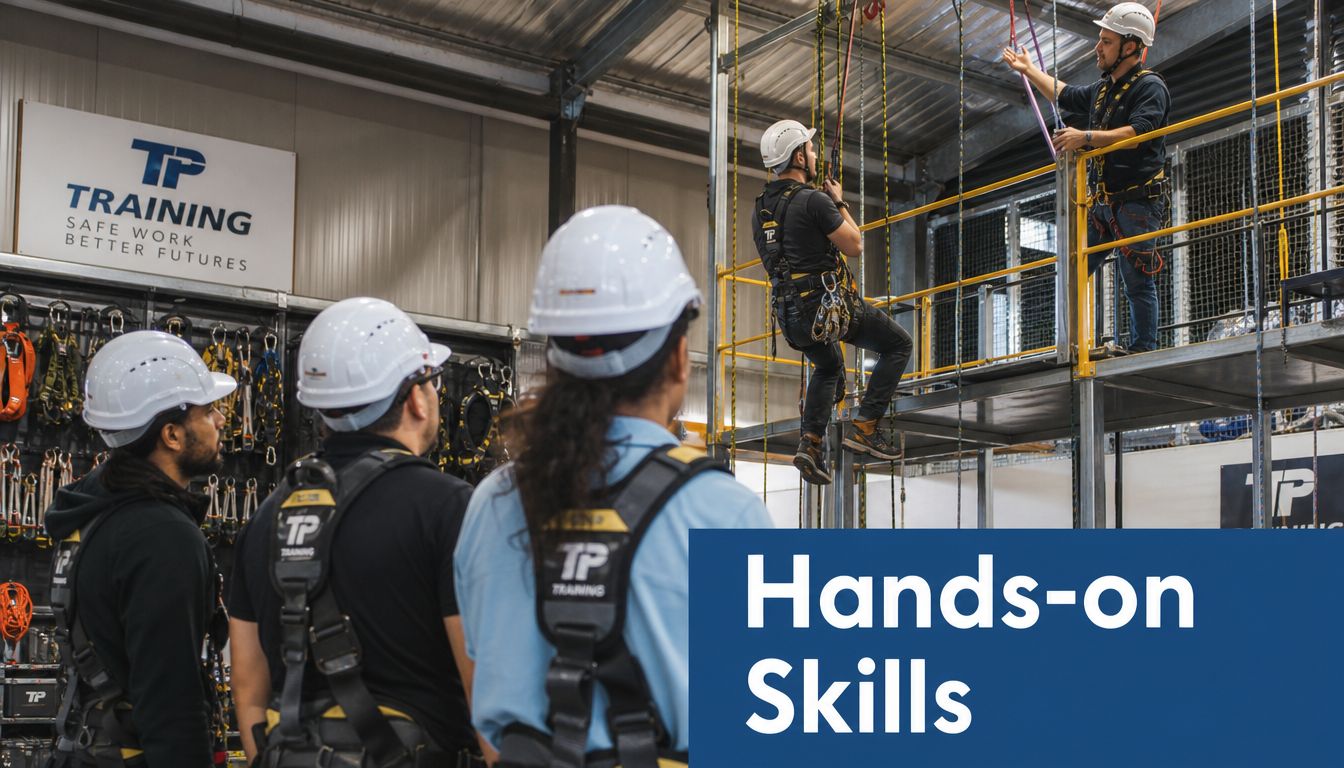
What a training day usually feels like
A typical day starts with theory, but the practical tasks are where the learning becomes real. You won't just talk about equipment. You'll handle it, inspect it, fit it, and use it in a controlled setting.
The nationally recognised competency standard requires candidates to demonstrate practical skills including inspecting harnesses, correctly fitting personal fall arrest systems, and verifying the integrity and suitability of anchor points before use, according to the official RIIWHS204E training.gov.au unit details.
That practical emphasis helps workers understand why details matter. A twisted strap, a poor fit, a damaged connector, or an unsuitable anchor point can turn a control measure into another hazard.
What you'll be assessed on
Expect assessment tasks that check both your actions and your judgment. For example:
- Pre-use checks where you inspect the harness and associated gear for condition and suitability.
- Correct fitting so the system sits properly on your body and can function as intended.
- Anchor point checks to confirm the point is appropriate before the system is connected.
- Safe movement while attached to the system in a way that matches the work method.
- Worksite awareness so you recognise when the task setup itself needs changing.
If you want a practical comparison with other suspended or at-height work methods, this overview on understanding rope access and swing stages is useful because it shows how different systems suit different environments.
Some students are surprised that the hardest part isn't wearing the harness. It's deciding whether the harness should have been the solution at all.
Workers who also operate access plant often pair this knowledge with EWP training in Sydney because the planning decisions around access equipment and fall prevention frequently overlap on site.
Who Needs This Certification in Australia
Some workers know immediately that they need a Working at Heights course. Roofers, riggers, and construction workers usually don't need much convincing. Others don't realise the requirement applies to them until a job offer, site induction, or supervisor flags it.
Industries where the course is commonly required
A Working at Heights certificate is mandatory in high-risk industries including construction, mining, warehousing, roofing, telecommunications, and maintenance, and the training covers rigging, anchor systems, and the safe use of work positioning systems, as outlined in this overview of when a Working at Heights certificate is needed.
That broad list makes sense when you look at the actual tasks involved:
- Construction workers might install formwork, work near edges, access upper levels, or use temporary platforms.
- Mining and resources workers may move across plant, fixed structures, and raised maintenance areas.
- Warehouse staff can face height-related risk around access platforms, mezzanines, and high storage systems.
- Telecommunications crews often work on towers, raised structures, and rooftop equipment.
- Maintenance workers may service HVAC units, lighting, signage, and building systems above ground level.
People entering construction often find they need this qualification soon after getting their White Card for Sydney CBD work and site entry, especially once their duties move beyond basic ground-level tasks.
Jobs that surprise people
The course isn't only for traditional construction trades. It can also matter for:
- a facilities worker accessing a roof plant area
- a signage installer working near an unprotected edge
- a cleaner dealing with height access equipment
- a warehouse worker using a task-specific access setup
- a technician servicing rooftop communications or air-conditioning equipment
The pattern is simple. If the task exposes you to a fall from one level to another, your role may require the training even if your job title doesn't sound “high risk”.
Booking Your Course with TP Training
Once you know the course applies to your work, the next step is making sure you meet the entry requirements and choose a training day that fits your schedule.
What to have ready before you book
The Working at Heights course is typically delivered as a 1-day face-to-face training program in Australia. That format suits the unit because students need both theory and practical assessment time.
Before booking, check these basics:
- White Card status if your work is construction-related and the site requires general construction induction.
- Basic English ability so you can follow instructions, participate in assessment, and understand site safety language.
- Physical capacity for practical tasks because the course involves fitting and using equipment in a supervised environment.
- USI details if you're enrolling in nationally recognised training. If you still need one, this guide explains 5 simple steps to create and manage your Unique Student Identifier.
Where training is available
TP Training delivers practical, nationally recognised safety training across Sydney training centres including Penrith, Burwood, Auburn, Parramatta, and Sydney CBD. For students trying to line up several site-related qualifications, that can make scheduling easier.
If your work also crosses into road or civil projects, Prepare Work Zone Traffic Management Plan Course Pwz Red Card is another nationally recognised option available through TP Training, with experienced trainers and hands-on learning across NSW.
When you book any safety course, read the enrolment information carefully. Confirm the unit name, the practical component, what identification you need to bring, what PPE is supplied or expected, and how your statement of attainment is issued after successful completion.
Frequently Asked Questions
How long does the certificate last
The RIIWHS204E unit does not have a legislated expiry date. Your statement of attainment does not automatically lapse after a set number of years.
What causes confusion is the difference between holding the unit and proving current competency on site. Many employers, principal contractors, and clients ask for refresher training at regular intervals before they will accept a worker for height-related tasks. They do this because working at heights is not just about owning a harness and clipping on. The controls, equipment, rescue planning, and site conditions can change.
A good way to read this is simple. Your qualification may still be valid, but your site may still require recent evidence that you can apply the hierarchy of controls correctly, inspect equipment, and work safely under current conditions.
If you work in a higher-risk environment, your employer may also require more frequent competency checks based on the site risk assessment and SWMS.
What happens if you work without the right training
The risk is practical before it is administrative. A worker who has not been trained may reach straight for a harness, even when the safer legal approach is to prevent the fall first with guardrails, scaffolds, solid platforms, or other higher-order controls. That mistake can put the worker, the crew, and the PCBU in a difficult position very quickly.
For the business, the exposure can include enforcement action, disrupted work, and questions about whether risks were managed properly. For the worker, it can mean being turned away at induction, removed from site, or disciplined for not meeting site requirements.
Here is the plain-language version:
| Who | Possible consequence |
|---|---|
| Worker | May be refused site access or removed from task |
| PCBU | May face investigation, notices, or prosecution if training and risk controls are inadequate |
| Employer and client relationship | Project delays, contract issues, and reputational damage can follow |
If language support would help you understand enrolment, course expectations, or assessment instructions, TP Training offers multilingual support in English, Mandarin, Korean and Vietnamese.
Is there a minimum height before the rules apply
The law focuses on fall risk, not a single magic number. If a person could fall from one level to another and be injured, the risk must be assessed and controlled.
That is why a short drop can still matter. Falling from a truck deck, mezzanine edge, brittle roof section, ladder transition point, or plant platform can cause serious injury even if the distance sounds modest in conversation.
The 2 metre threshold often causes confusion because it is used in some construction contexts to help classify certain tasks as high risk construction work requiring a SWMS. It does not mean anything under 2 metres is safe, and it does not mean training is only relevant above that height.
A better question is: what control should stop the fall from happening in the first place? In Australian workplaces, that is the point of working at heights training. It teaches you to apply the hierarchy of controls properly, with fall prevention first and fall arrest used only when higher-order controls are not reasonably practicable.
If your job involves roof work, platforms, maintenance at height, warehouse access, plant structures, or any task with a fall risk, a practical next step is to review the available course options with TP Training. Check the unit details, confirm the training location that suits you, and make sure your site qualifications line up before the job starts.

You may also like
Trade Courses Sydney: 3 Career Pathways Worth Exploring

Mock Interview Online Preparation Guide