
Prepare Work Zone Traffic Controller: 2026 Guide
You're probably here because you've done traffic control on the ground, or you're looking at the next step up and realising the person who prepares the work zone carries a very different kind of responsibility. The controller on the road is visible. The planner often isn't. But if the plan is wrong, everyone feels it fast.
That's why the prepare work zone traffic controller role needs to be understood properly. This isn't just about cones, signs, and a neat diagram. It's about building a safe system before the crew arrives, before the first lane closes, and before the public starts reacting to changed conditions.
Table of Contents
- The Planner and The Controller Two Sides of Site Safety
- Essential Qualifications Your Ticket to Plan and Implement
- Designing a Bulletproof Traffic Management Plan
- From Plan to Practice On-Site Leadership and Communication
- Navigating NSW Compliance and Responding to Emergencies
- Build Your Career with Expert Traffic Management Training
The Planner and The Controller Two Sides of Site Safety
At dawn on a Sydney street, the crew rolls in while buses are starting up, tradies are cutting through side roads, parents are already thinking about school drop-off, and residents still need driveway access. The traffic controller people notice first is the one holding the bat. The person who prepared the work zone has already done the harder part. They've worked out how vehicles will taper, where pedestrians will be pushed, what sight lines are blocked, and what happens if the site conditions change halfway through the shift.
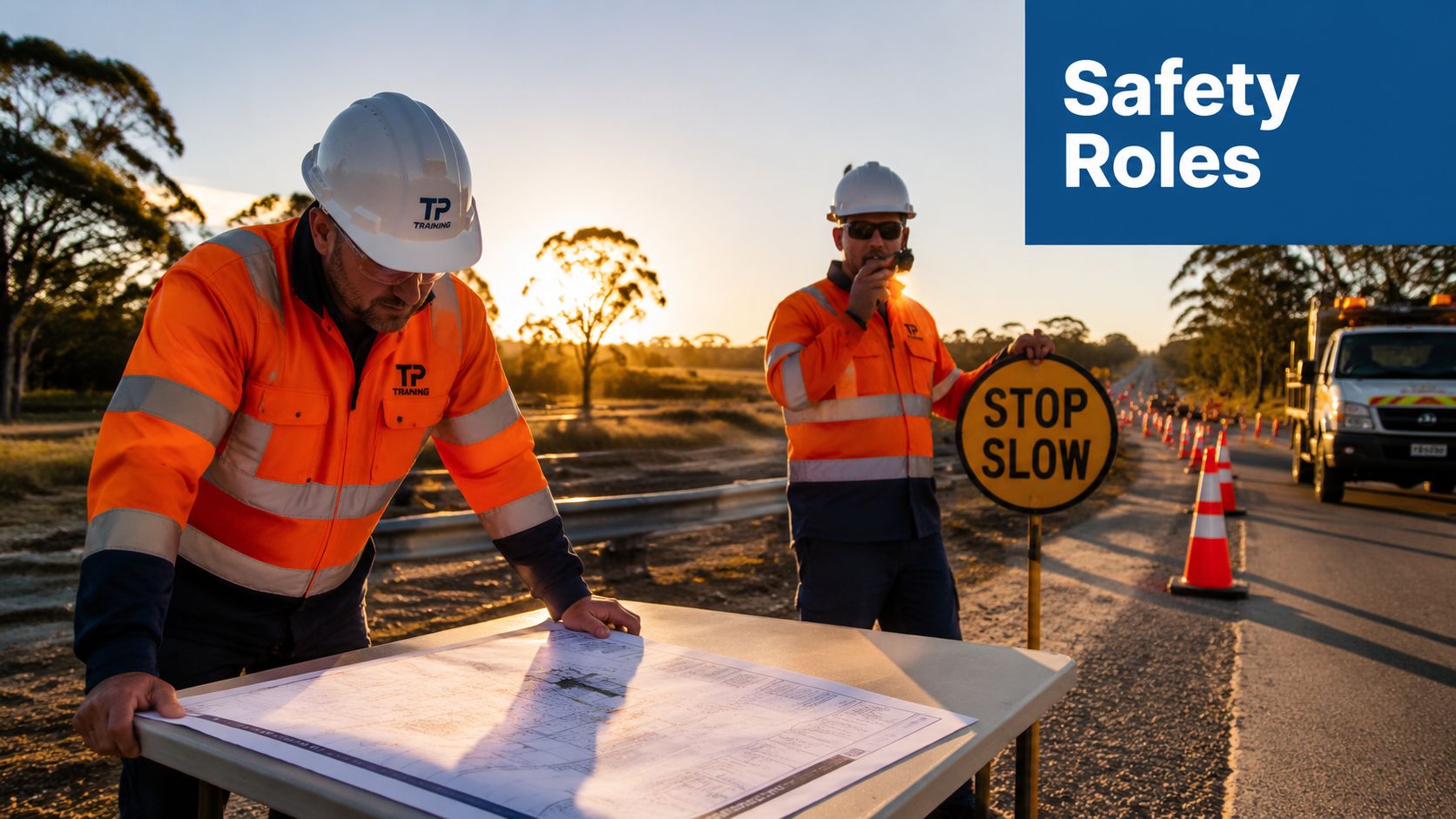
A lot of new entrants blur these roles together. That's a mistake. The traffic controller follows the approved setup and directs live traffic. The prepare work zone planner designs, varies, or inspects the arrangement that everyone else must work under.
The work starts before the road changes
If you've read honest takes on traffic management work, such as these career insights before starting traffic management training, you'll know the public-facing part of the job is only one layer. Planning sits behind every safe shift.
As of 2024, approximately 10,300 road traffic controllers are employed across Australia, and that workforce operates under plans prepared by a smaller group with the competency to prepare work zone traffic management plans, a role defined under WHS and Civil Construction competency standards, according to road traffic controller stats for 2024.
That matters because scale creates consequence. When thousands of people are implementing traffic arrangements across live roads, the quality of planning becomes a frontline safety issue, not back-office paperwork.
Practical rule: If a plan can't be understood quickly by the crew setting out the site, it isn't finished.
Liability sits with the planner in a different way
A good controller needs awareness, calm under pressure, and strong communication. A good planner needs all of that plus judgment. The planner has to think through conflicts before they happen. Can heavy vehicles clear the closure? Can residents still enter and exit? Will queued traffic affect an upstream intersection? Is the sign placement defensible if there's an incident review later?
What works is site-specific thinking. What doesn't work is recycling an old diagram and pretending one suburban street behaves like another.
The planner's role is less visible, but it carries a sharper edge. One poor call in a work zone plan can create confusion for the public, exposure for workers, and legal trouble for the people who signed off on it.
Essential Qualifications Your Ticket to Plan and Implement
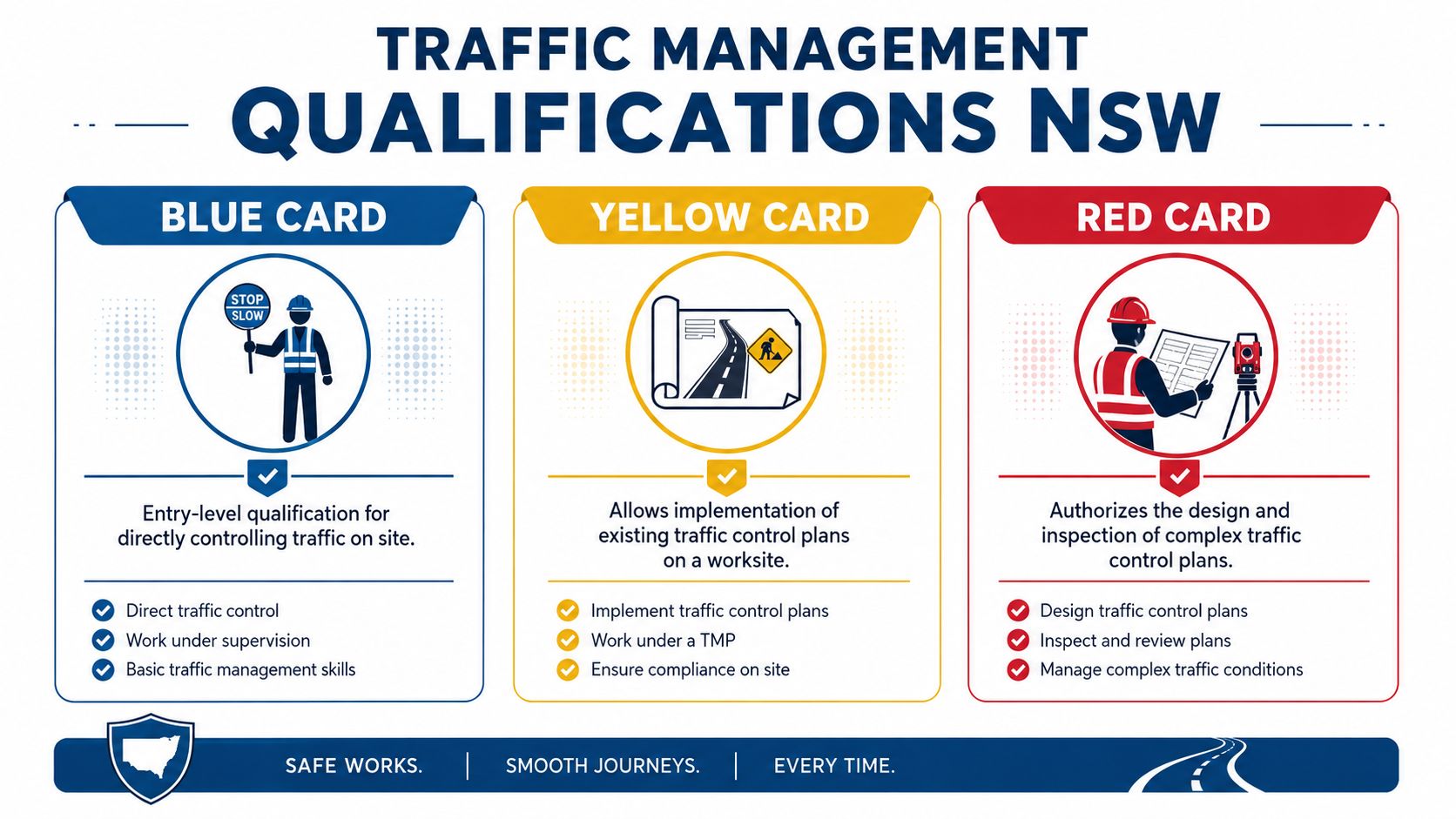
Traffic management in NSW makes more sense when you stop thinking in colour names and start thinking in authority. Who controls traffic? Who implements a plan? Who is allowed to design or inspect it? Those are different permissions, and each one sits on a different training base.
What each card actually means on site
Think of the system like a chain of responsibility.
- Blue Card role: The worker directly controls traffic on site. This is the live interface with drivers, plant, cyclists, and pedestrians.
- Yellow Card role: The worker implements an approved arrangement on the ground. That means setting out the site correctly and making sure the plan is followed in practice.
- Red Card role: The worker prepares, varies, or inspects the work zone traffic management plan itself.
If you're still sorting out the base requirements for site entry and safety training, this guide to CPR first aid white card and workplace safety certifications is a useful starting point.
The qualification that separates planning from control
The specific competency unit for preparing work zone traffic management plans is RIICWD503A, which defines the scope of the PWZ role and legally distinguishes the person who designs or inspects the plan from the Traffic Controller who directs traffic and the Implementer who sets up the site, as listed on training.gov.au for RIICWD503A.
That distinction is the whole point of the prepare work zone traffic controller pathway. You're not just getting permission to stand on a road. You're getting trained to think through risk, sequencing, documentation, and compliance before anybody starts work.
The general pathway into traffic control work also includes core competency units. The verified pathway states that workers complete RIIWHS205E, RIIWHS206E, and RIICOM201E, with RIIWHS201E as a prerequisite. It also notes that failing to obtain the White Card before enrolment is a common administrative problem, causing approximately 15 to 20% of enrolment delays in NSW training providers, according to this guide on how to become a traffic controller.
Don't treat the White Card as admin. If it's missing, your pathway stalls before the traffic training even starts.
For workers moving into setup responsibilities, the Traffic Management Implementer Course Yellow Card provides practical, nationally recognised training with experienced trainers and hands-on learning across NSW.
NSW Traffic Control Qualifications at a Glance
| Card Type | Primary Role | Key Responsibilities |
|---|---|---|
| Blue Card | Traffic Controller | Direct live traffic safely on site under an approved arrangement |
| Yellow Card | Implementer | Set up and apply an existing traffic control plan on the worksite |
| Red Card | Prepare Work Zone Planner | Design, vary, or inspect work zone traffic management plans |
A lot of people want to jump straight to the top card because it sounds like advancement. Sometimes that's the right move. Sometimes it isn't. Planning works best when you already understand how sites behave once the paper meets the road. The strongest planners usually know where implementers struggle, where controllers get boxed in, and where motorists stop behaving the way the drawing assumed they would.
Designing a Bulletproof Traffic Management Plan
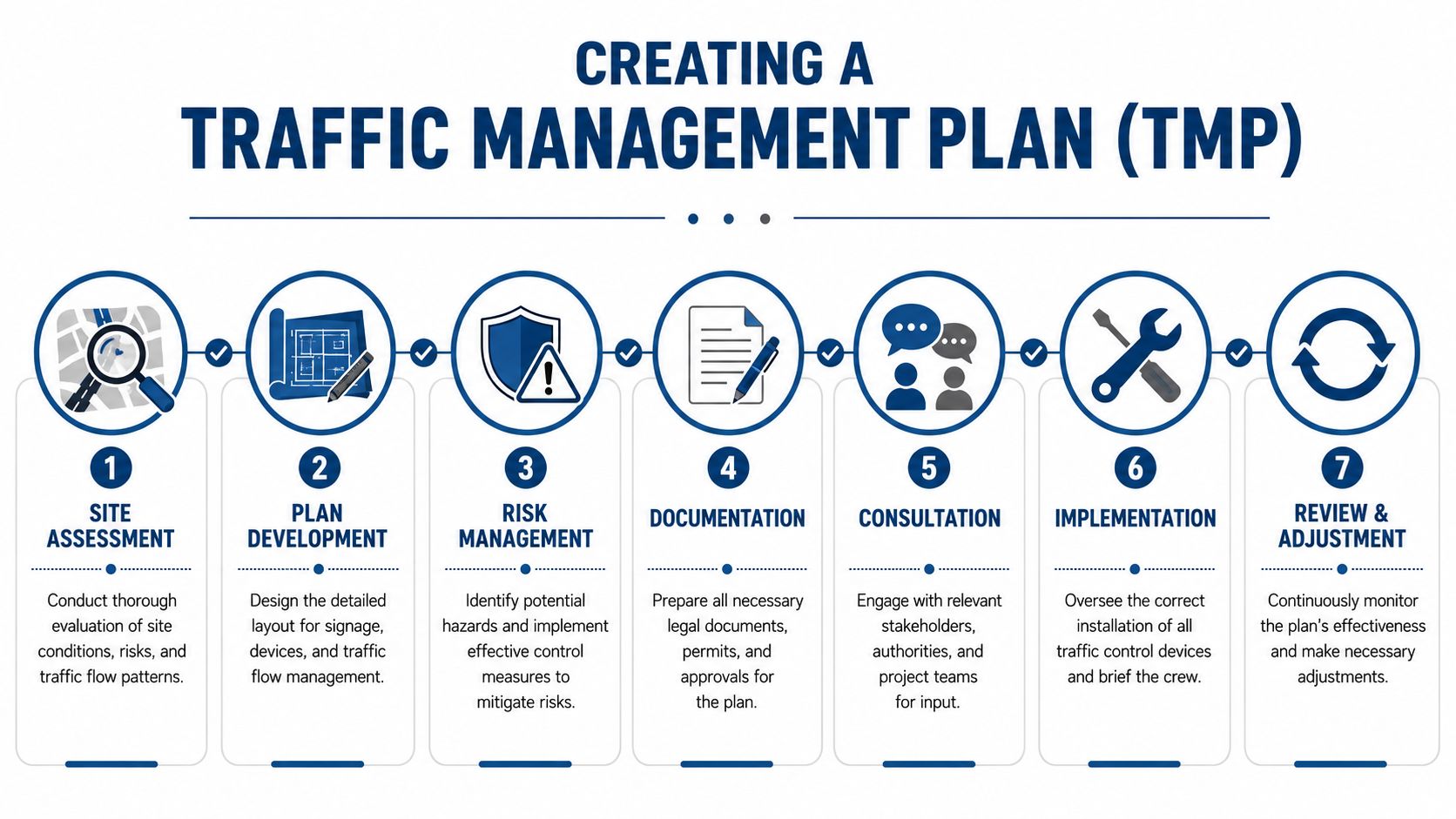
A Red Card planner gets judged twice. First on the drawing. Then on what happens when that drawing is handed to an implementer at 5:30 in the morning, with traffic building and no room for guesswork.
That is why a work zone plan has to do more than look correct. It has to hold up under legal scrutiny, suit the site as it exists, and give the Blue or Yellow Card crew clear instructions they can apply without improvising around hidden hazards.
Start with the live road environment
A school frontage is a good test. On paper, the lane closure may fit the scheme. On site, the planner finds parked cars pinching sight distance, a crossing pulling pedestrians into the work area, parent drop-off behaviour changing by the minute, and a driveway that cannot be shut without creating another risk.
That is the planner's job. The implementer places the devices. The planner carries the heavier liability of deciding whether the arrangement should exist in that form at all.
Ask the questions that expose failure early:
- How does the road operate before any signs go out? Check speed environment, lane widths, approach visibility, pedestrian desire lines, bus activity, intersections, and any fixed objects that remove recovery space.
- Where will drivers make bad decisions? Short merges, school zones, crest curves, shopping strips, and side street entries all change behaviour fast.
- What access has to remain open? Residents, businesses, emergency services, pedestrians, cyclists, and heavy vehicle paths all need to be accounted for before the first cone is placed.
- What happens if the site stops behaving like the drawing? Queue growth, weather, reversing plant, and changed work methods should not make the arrangement unsafe the moment conditions shift.
For NSW sites, planners often need more than a standard diagram and a few notes. Sight-line checks, swept path checks, staging, and access management can all become deciding factors, especially in tighter urban work.
Build a plan another crew can apply without guessing
A good planner writes for the crew who did not attend the site walk. If the implementer has to fill gaps with local judgement, the planner has left risk in the field.
I have seen layouts fail for that exact reason. The drawing was neat. The assumptions were not.
Use a planning process that closes those gaps:
- Inspect the site in person: Photos help, but they do not replace standing on the approach and seeing what drivers will see.
- Choose the right TGS and justify any departure: Start with the applicable scheme, then record why the site requires a variation.
- Document every condition that changes placement: Bus zones, kerb buildouts, narrow verges, driveways, work compound entry, and pedestrian reroutes need to be shown clearly.
- Check signs and devices as one system: Sign count means little if sequence, spacing, visibility, or readability are wrong. Guidance on Australian safety sign standards is useful when reviewing whether signage choices support clear driver response.
- Write plain notes: Crews need exact placement intent, not vague instructions that invite on-site interpretation.
Training matters here because planning is a different skill from controlling traffic in the lane. If you are comparing courses that show the difference between drafting a plan and making one work in the field, this review of traffic controller training centres in Sydney gives practical context.
A tidy drawing can still be unsafe if it ignores access, sight distance, or predictable human behaviour.
Minimum details that must be on the plan
Planners also need discipline in the document itself. A plan that misses core identifiers or orientation details causes delays at best and exposure at worst.
Before sign-off, check for these basics:
- Plan identity: TGS number, designer details, approver details
- Orientation: north point and a usable dimensional reference
- Version control: draft date, revision clarity, and current issue status
- Site-specific instructions: any note needed to stop the implementer from making assumptions on access, staging, or placement
- Jurisdiction fit: the document has to match the state and road authority requirements that apply to the job
At this point, the Red Card role becomes mentally demanding. The planner has to anticipate the mistakes other people might make later, under pressure, and remove as many of those decisions as possible before the crew ever arrives on site.
From Plan to Practice On-Site Leadership and Communication
A planner's influence shows up during handover. If the plan is sound but the briefing is weak, the site can still drift into a setup that's technically close and practically unsafe.
A handover that actually works
The implementer and controllers need more than a PDF and a start time. They need to understand the intent of the arrangement. That means where the critical hazards sit, what can't be moved, what access must stay open, and what to do if the live environment doesn't match the drawing.
Good handovers usually include:
- Essential requirements: lane closure length, taper position, pedestrian route, blind approach risks
- The expected trouble spots: resident interactions, deliveries, plant entry, school movement, bus activity
- The escalation point: who gets called if the site has to be varied
A planner who leads well doesn't disappear after issuing the document. They make sure the people implementing the setup can read the plan the same way the planner intended it.
What breaks down on site
Failures on site are rarely dramatic at first. A sign gets nudged. A cone line shortens. A controller stands where they can't be seen properly. A driveway gets blocked “for a minute”. Then the whole arrangement starts working against itself.
That's why communication matters just as much as technical drafting. The planner, implementer, and controller need common language and a clear chain for variation. If there's confusion about whether the site can be changed without approval, someone will eventually make that call under pressure.
For workers focused on the practical side of setting out sites and applying plans, this article on IMP ticket training in Sydney is relevant because implementer competence is what turns a plan into a controlled work zone.
Crews don't need more paperwork. They need a plan that tells them what matters most when the site gets busy.
The strongest planner-led sites tend to have one thing in common. Everyone knows the difference between following the plan and freelancing around it.
Navigating NSW Compliance and Responding to Emergencies
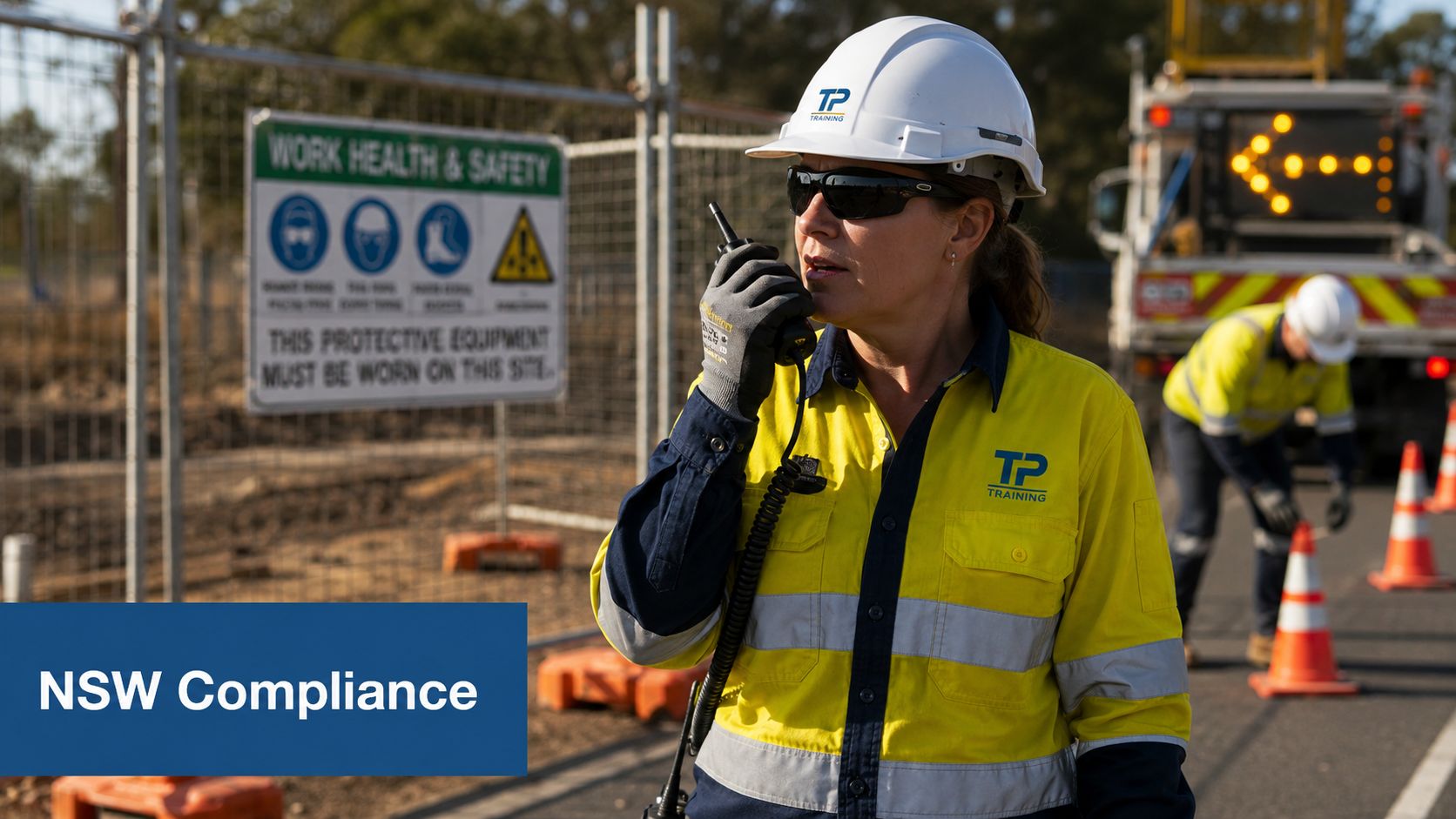
A lane closure can look tidy at 6:00 am and become a liability by 8:15. School traffic turns up, a delivery truck stops short of the taper, rain cuts visibility, and someone on site asks to “just shift a few signs” to keep work moving. That is where the Red Card holder earns their keep. The planner is the person who has already worked through those failure points before the first bollard goes out.
Compliance is part of the safety system
In NSW, compliance sits inside day-to-day safety work. A planner prepares the work zone under a regulated framework, and the plan has to match the applicable standards, road authority conditions, and the actual operating environment on that road.
That matters most after something goes wrong.
If there is a near miss, a complaint from the public, an access issue for emergency services, or a regulator review, the question is never whether the crew meant well. The question is whether the plan was suitable, whether the risks were identified properly, and whether the site was being run in line with the approved arrangement. A Blue or Yellow Card worker implements and controls the site in real time. The Red Card holder carries a different burden. They make the judgment calls earlier, with less room for guesswork and more personal exposure if the planning is weak.
Good planners do not hide behind templates. They use the standard drawings and rules properly, then adjust for the site in front of them. A narrow shoulder, poor approach sight distance, bus stops, driveways, pedestrian demand, and queue interaction all change what is safe on paper and what is safe on the road.
Emergency planning is where weak plans get exposed
Emergency response should be written into the traffic management plan before the shift starts. It should cover vehicle intrusion, breakdowns inside the work zone, sudden queue growth, weather changes, loss of visibility, and emergency access through or around the site.
An effective plan also makes clear who has authority to stop work, who can approve a variation, and what the crew must do first when conditions change.
This is the part of the role that separates the planner from the implementer. The implementer responds to what is happening now. The planner has to anticipate what several people may do under pressure, then build a plan that still holds when the site gets messy. That takes technical knowledge, but it also takes calm judgment. The mental load is different because the liability is different.
Workers aiming to step into that higher-responsibility role can get the broader pathway in this guide to becoming a traffic controller in 2025.
TP Training also provides practical, nationally recognised Childcare First Aid Course training with experienced trainers and hands-on learning across NSW.
A careful planner respects the legal framework because it gives the site structure when normal conditions disappear. That is not paperwork for its own sake. It is what keeps a changed traffic situation from turning into an injury, a strike, or a closure that no one can control.
Build Your Career with Expert Traffic Management Training
Moving into planning is a real step up. It asks for better judgment, stronger documentation habits, and the ability to think about risk before the site is live. If you want to work as a prepare work zone traffic controller, informal experience alone usually isn't enough.
Why formal PWZ training matters
The Prepare Work Zone course is a 3-day program with 8 hours of training per day, totalling 24 hours of face-to-face instruction plus a separate day of assessment, according to the course information for the Prepare Work Zone Traffic Management Plan course.
That duration tells you what the role involves. It isn't quick familiarisation. It's structured training for high-level tasks like risk assessment, scheme selection, and plan modification.
If you're still mapping out the broader career path from entry-level traffic control into higher responsibility work, this guide on becoming a traffic controller in 2025 gives the bigger picture.
Who should move into the planner role
This pathway usually suits people who already think ahead on site. The ones who notice the blocked sight line before setup starts. The ones who question whether a drawing still fits the actual kerb line. The ones who understand that public access problems become safety problems fast.
The role also suits workers who can handle accountability. Planning means your decisions travel across the whole site team. If your notes are vague, the crew inherits the risk. If your assumptions are wrong, the public and the workers wear the result.
Formal training matters because it gives structure to that responsibility. It teaches you how to assess, document, brief, and review the work properly. For someone serious about stepping out of pure on-road control and into design, compliance, and site planning, that's the right next move.
If you're ready to move from following traffic plans to preparing them, TP Training offers nationally recognised, practical training across NSW in traffic control, implementation, and broader workplace safety. For workers aiming to take on the planning responsibilities behind safer worksites, structured training is the step that turns experience into recognised capability.

You may also like

Trade Courses Sydney: 3 Career Pathways Worth Exploring

Mock Interview Online Preparation Guide