

Free Online White Card Training: What You Need to Know
Most advice about free online White Card training is too casual about the one thing that matters: whether the course is valid where you plan to work. A cheap or free-looking course that fails state rules can leave you with a certificate an employer won't accept, which is a waste of time no matter how convenient the enrolment page looked.
The safer move is simple. Treat delivery format, provider approval, and state recognition as the decision points, not the marketing headline. A free online class can be legitimate in some cases, but “online” by itself doesn't mean compliant, and that distinction is where people get caught out.
Table of Contents
- The Truth About Free Online White Card Training
- What White Card Training Actually Covers
- Online vs In-Person Training Formats Explained
- State-by-State Recognition and Requirements
- How to Choose a Legitimate Training Provider
- Career Benefits of Proper White Card Certification
- TP Training White Card Course Details and Enrollment
The Truth About Free Online White Card Training
The biggest mistake is assuming every free online White Card training offer leads to the same outcome. It doesn't. Some courses are compliant training delivered by a registered provider, while others are just self-paced content dressed up to look official, and those are very different things in practice.
What the word online really hides
Online can mean a live virtual classroom, or it can mean a library of videos and quizzes you complete whenever you feel like it. Only one of those may satisfy the regulator, because Safe Work Australia says connected real-time delivery must include live interaction with the trainer and one-on-one or face-to-face assessment interaction, and it cannot be delivered entirely through a self-paced LMS, prerecorded videos, or pre-training modules. The compliance issue is supervision and assessment, not whether a screen is involved. See the public rules on Safe Work Australia's White Card training guidance for the standard that matters.
Practical rule: if a provider can't clearly explain who supervises you live and how the assessment works, walk away.
Why the price tag is the wrong starting point
People chase “free” because they want to save money, and that's understandable. But with White Card training, the cost is not just the enrolment fee, it's the risk of completing a course that isn't recognised in your state or by your employer. The better question is whether the course is delivered by a registered provider under the correct state rules, because that's what protects the card's value.
If you want a quick contrast with how legitimate vocational learning is usually framed, the structure used in TP Training's online CE for nurses article shows the difference between regulated training and generic online content. White Card training has even tighter rules because it grants access to construction work.
A genuine provider should be direct about delivery mode, assessment, and state acceptance. If the page is heavy on “free” and light on compliance detail, that's not a feature, it's a warning sign.
What White Card Training Actually Covers
White Card training is a site access requirement, not a broad safety theory class. The official course is Prepare to work safely in the construction industry, and the industry calls it a white card. The ACT guidance describes it as a 6-hour training program covering workers' rights and responsibilities under WHS law, common hazards and risks, basic risk management principles, and expected site behaviour. That content is tied directly to construction induction, not casual awareness. For the official overview, see Safe Work Australia's construction site guidance.
What you're actually expected to learn
The point is practical safety, not test tricks. Workers need to recognise hazards, follow site rules, and know what to do before starting a task. If a course spends too much time on glossy marketing and too little time on those basics, it is not preparing anyone for site work.
That matters on real jobs. Ladders, power tools, moving plant, and trades working overhead all demand a worker who understands the basic safety system before stepping onto site. The White Card shows that induction has happened, not that someone is a skilled tradesperson.
For a plain-language overview of the credential itself, see TP Training's white card explainer.
The unit behind the card
The credential is tied to a named unit of competency, not a generic attendance slip. Workers complete the national construction induction pathway, and Comcare identifies CPCCOHS1001A, Work safely in the construction industry as the nationally recognised unit for general construction induction training. That is what gives the card its value across the industry.
Training only works when the person on site understands the rules that keep the job moving safely.
If you are comparing course pages, check for the unit name and the site behaviour requirements. If the provider cannot connect the training to those basics, the course is too shallow for the credential it claims to deliver.
Online vs In-Person Training Formats Explained
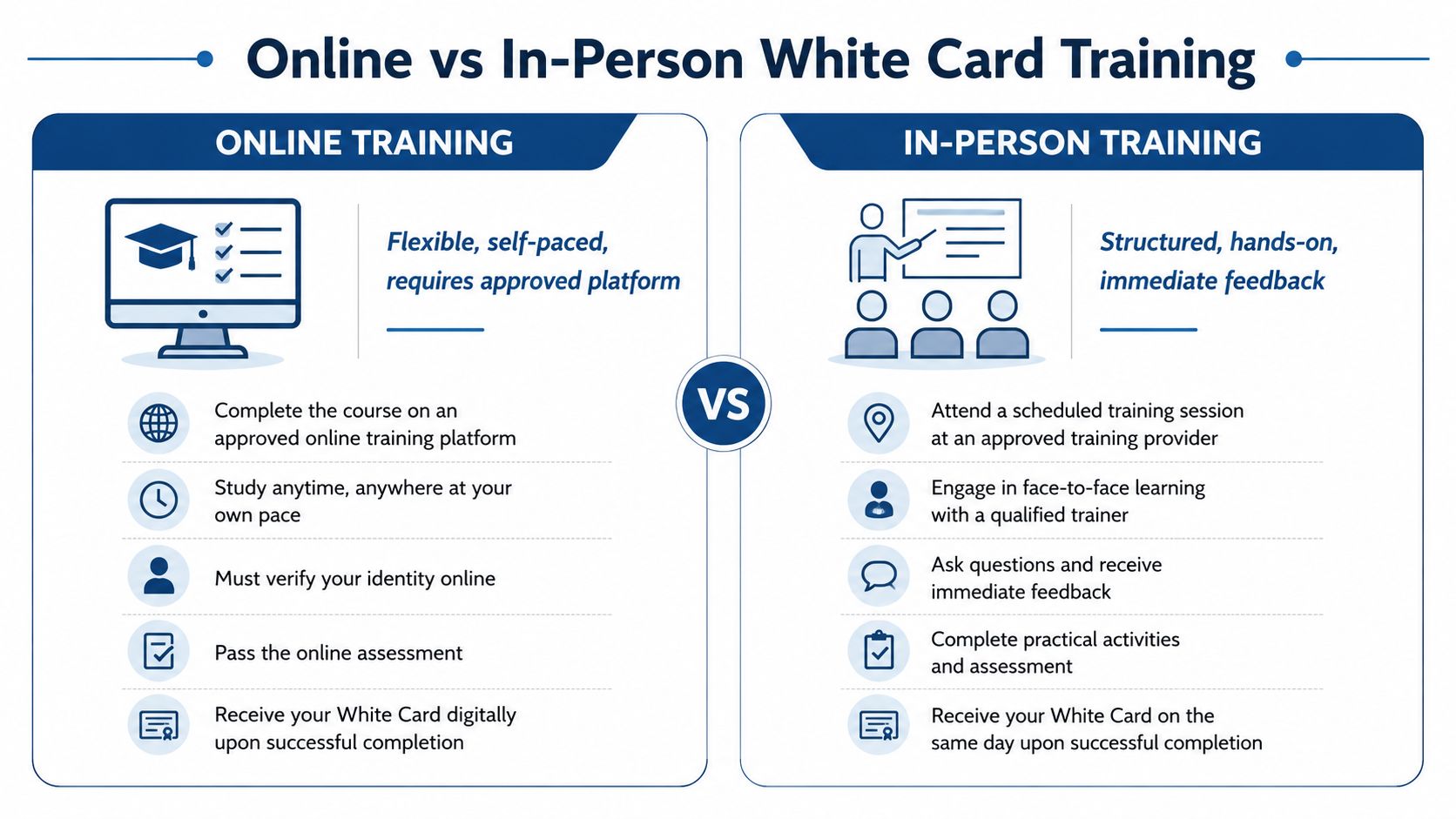
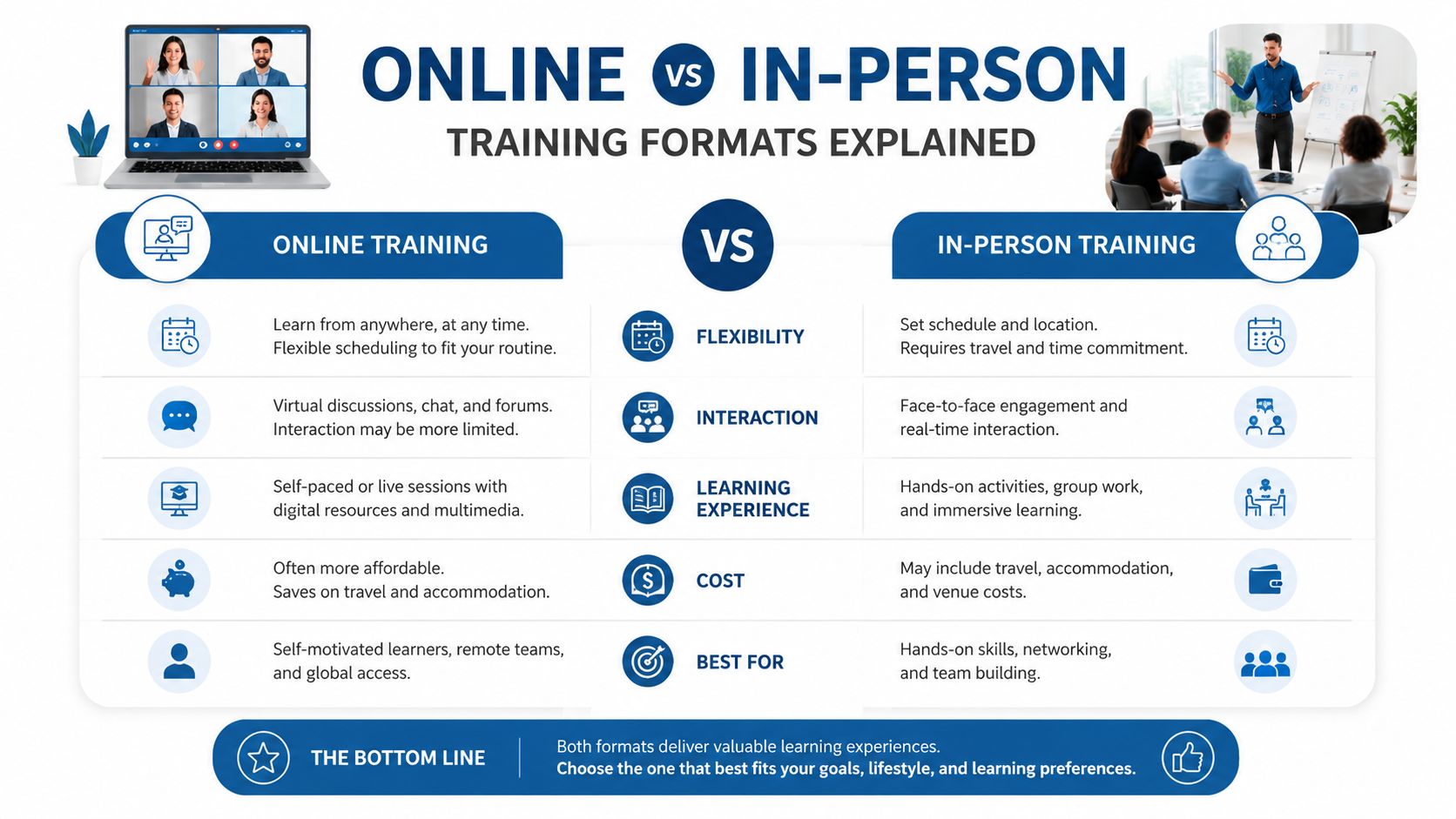
“Online White Card” sounds simple, but the compliance rules are not. Safe Work Australia draws a clear line between connected real-time delivery and fully self-paced e-learning, and that line decides whether the training meets the requirement. Live supervision and live assessment pass the test. Clicking through lessons alone does not.
The format that can work
A compliant online class needs live interaction with the trainer. Questions must be answered in real time, assessment must be observed, and the trainer has to be present while you complete the required checks. The platform can be Zoom or another video tool. The point is the same, the trainer is there and assessing you live.
That is why “online” marketing can mislead job seekers. A provider can call a course online and still fail the rule if it is self-paced with no live trainer interaction. Approval depends on the delivery model, not the label.
The format that usually fails
Pre-recorded videos, static LMS modules, and pre-training lessons do not meet the Safe Work Australia standard by themselves. They can help you prepare, but they are not a lawful substitute for live supervision and assessment when the requirement calls for connected delivery. Workers lose time when they treat them as equivalent.
Ask one direct question before you enrol, “Is this live, trainer-led assessment or just self-paced content?” If the answer is unclear, walk away.
If you are comparing course options, read TP Training's note on working at heights training online and apply the same caution to White Card claims. A provider may offer a practical pathway, including a White Card Training Course, but the delivery method still has to match the rules in the relevant state. Convenience means nothing if the card will not hold up on site.
State-by-State Recognition and Requirements
White Card training is national in name, but not uniform in practice. The modern card replaced older state-specific cards in the late 2000s, and Service NSW states that a white card can be used in any Australian state or territory. That national portability is real, but the way you earn the card still depends on jurisdiction, provider approval, and delivery format. For an overview of the NSW process, see TP Training's White Card guide.
The comparison that actually matters
| State | Online Training Accepted | Key Requirements | Application Deadline |
|---|---|---|---|
| NSW | Yes, where the delivery model and provider meet the rules | 100 points of ID is required, and new arrivals may be treated differently | Statement of training can be valid for 60 days while waiting |
| Victoria | Not from non-approved RTOs | Online courses that are not from approved RTOs are not accepted | Follow provider and regulator timing rules |
| Western Australia | Yes, but under specific rules | Online delivery through registered training organisations scoped to deliver in WA, with location-based assessment requirements | Follow the applicable regulator process |
| Other jurisdictions | Depends on local approval | Check state-specific delivery and assessment rules before enrolling | Varies by jurisdiction |
The deadline people miss
A worker may need to apply for the physical card after training, and multiple regulators use a 60-day window tied to the certificate or statement of attainment. Comcare says the application must be made within 60 days of certification unless the applicant has a written declaration from the RTO, and ACT guidance says the worker receives a certificate and then has 60 days to apply. That deadline is operationally important because it's easy to miss if you leave the paperwork sitting in your inbox. For the federal process, see Comcare's construction induction card guidance.
Why state variation is the real trap
The confusion comes from mixing live virtual training, self-paced online learning, and nationally recognised induction into one bucket. They aren't the same thing. The smart move is to check the state rule first, then enrol, not the other way around.
How to Choose a Legitimate Training Provider
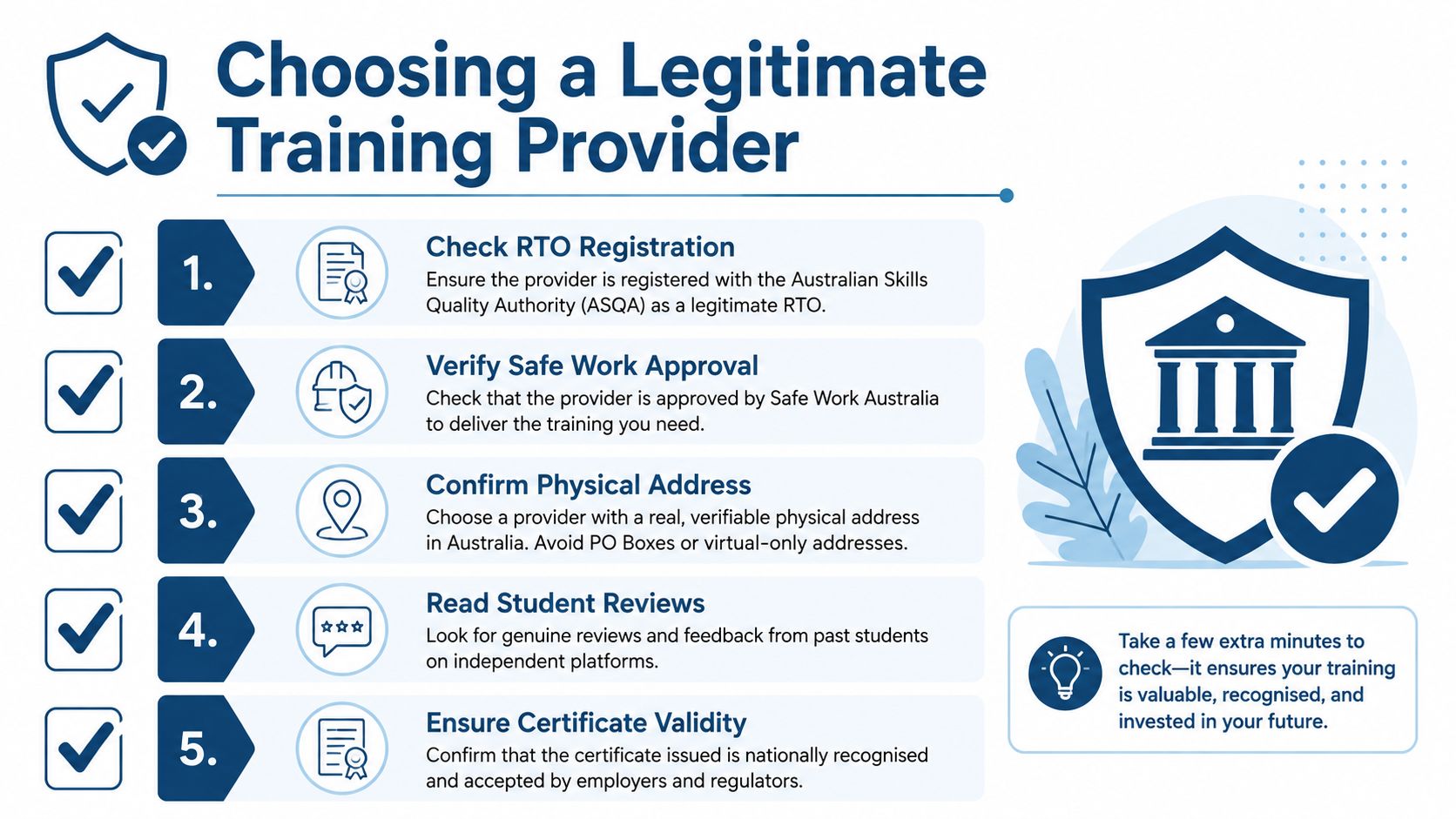
A legitimate provider makes the rules obvious before you pay. A dodgy one hides them under words like “instant”, “free”, or “anywhere, anytime”. Your job is to check the provider against the compliance facts, not against the marketing copy.
Start with approval, not promises
Check whether the provider is a registered training organisation and whether it's scoped for the delivery mode in your state. If you're in Victoria, don't assume any online course will work, because Victoria says online White Card courses that aren't from approved RTOs are not accepted. If you're in WA, confirm the provider's delivery and assessment process fits WA requirements.
Then check the identity process. NSW guidance notes 100 points of ID is required, and that new arrivals may be handled differently. If a provider doesn't mention ID verification early, it's either careless or trying to make enrolment look easier than the actual compliance process.
Ask for the process, not the sales pitch
Good providers explain the paperwork before enrolment, because that's what keeps the card valid.
Use this checklist before you sign up:
- Verify the delivery model: Ask whether the course is live trainer-led, because self-paced content alone won't meet the standard.
- Check state recognition: Confirm the course is accepted in the state where you'll work, not just where you live.
- Ask about assessment: The trainer should explain how assessment happens and whether it is supervised in real time.
- Confirm identity requirements: Be ready for ID checks, because they're part of legitimate processing.
- Understand the card timeline: Know when your certificate becomes active and when you need to apply for the physical card.
For a broader vocational training perspective, TP Training's article on vocational training in Australia is a useful reminder that proper registration and delivery structure matter more than flashy enrolment claims.
The right provider doesn't just sell access. It helps you leave with a credential that employers will respect on site.
Career Benefits of Proper White Card Certification
A valid White Card does more than open a job ad. It gets you onto sites where employers expect basic induction to be done properly, and that matters in construction, civil works, logistics, and related support roles. If you want steady work, you need a credential that won't be questioned on day one.
Why employers care about validity
Employers are not looking for the cheapest course. They want workers who can show the card to the PCBU on site and to inspectors on request, because that's part of the enforcement framework. Comcare's guidance makes that inspection requirement explicit, which is why a casual or questionable certificate is a poor substitute for a valid card.
The white card also signals that you understand site expectations before you're handed tools or sent near active work. That saves supervisors time and lowers friction when crews are trying to get started. In plain terms, it makes you easier to deploy.
Why portability matters for your future
The national shift to a single recognised qualification was a practical breakthrough. Older state cards like NSW's green card, Victoria's red card, and WA's blue card were replaced by a national standard in the late 2000s, and that move created a mutually recognised qualification across states and territories. Service NSW says a white card can be used in any Australian state or territory, so proper certification supports movement when work shifts across borders.
The risk profile behind the training is also real. Historical reporting cited in industry commentary says that between 2003 and 2016, more than 35% of all traumatic injury deaths in Australia occurred in the construction industry, and 2019 construction serious claims were reported at 16.2 per million hours worked. Those figures explain why the credential is taken seriously and why compliance matters in the first place. For the historical reporting context, see ASQA's White Card report.
If you want a practical career move, get the proper card once and keep it valid. Don't gamble on a cheap format that may not survive the first compliance check.
TP Training White Card Course Details and Enrollment
TP Training offers White Card training in NSW with practical, nationally recognised delivery. Choose a location that fits your schedule, then arrive with the required ID and complete the trainer-led process properly. The provider lists training centres in Penrith, Burwood, Auburn, Parramatta, and Sydney CBD.
What to do before course day
Bring the identity documents the provider asks for, and make sure your details match the enrolment information. White Card training is not the place to arrive unprepared, because ID checks and assessment decide whether the outcome is valid. If you're new to construction, read the course requirements before the day so you know what to expect.
What to expect from the format
TP Training describes the course as practical and hands-on, with experienced trainers and learning across NSW. That is the format workers need when they are learning site expectations, not just reading theory. It suits anyone who wants a usable qualification, not a box-tick.
If you want a White Card that will stand up to real site checks, enrol in the right course and finish the process properly. TP Training gives you a direct route into compliant White Card training, and that is the route worth taking.
If you need a White Card built to satisfy state rules, start with TP Training and check the course format before you enrol. You get a practical, nationally recognised pathway in NSW, plus the clarity needed to avoid a certificate that will not hold up on site.

You may also like
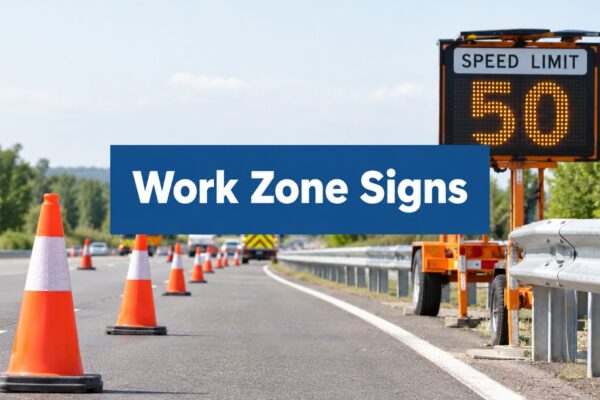
Traffic Management Signs: A Complete Work Zone Reference
Responsibilities of Employers: A Complete NSW Safety Guide