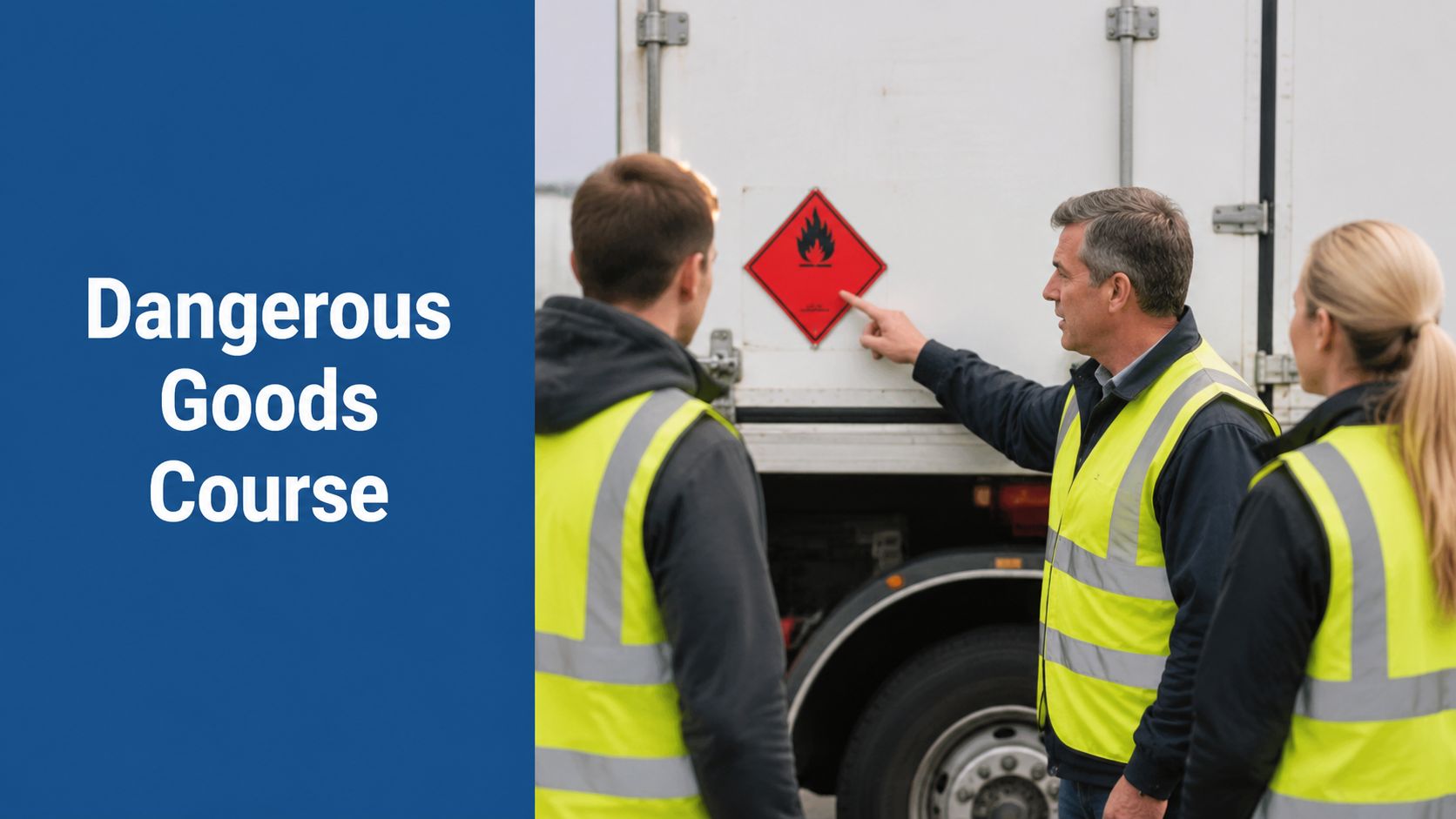
Dangerous Goods Driver License Course: 2026 Guide
The Dangerous Goods Driver License Course in Australia is built around TLILIC0001, and completing it is only one step toward an NSW EPA-issued licence. You'll still need a current driver licence, a medical assessment, and a recent training certificate, with the training and medical evidence generally issued within 6 months of your application.
You may be sitting in a depot with a delivery docket in one hand and a load plan in the other, wondering whether the goods on your truck require a dangerous goods driver licence. That uncertainty is common because people often use “the dangerous goods course” and “the dangerous goods licence” as if they're the same thing. They aren't.
The course demonstrates competency. The NSW EPA licence is the regulatory approval that follows a separate application process. The right path depends first on the type and quantity of dangerous goods you'll carry, then on your training, medical evidence, driving history and application timing.
This guide separates those steps in plain English. It also explains how to book an affordable dangerous goods course online without confusing a low-cost training booking with the separate government licence fee.
Table of Contents
- What the Dangerous Goods Driver License Course Actually Covers
- When You Actually Need a Dangerous Goods Licence in NSW
- Licensing Rules, Validity Windows and Fees You Must Meet
- Inside the TLILIC0001 Course Day and Assessment Structure
- How to Book an Affordable Dangerous Goods Course Online with TP Training
- Your Next Steps After the Course to Get Licensed and Start Work
What the Dangerous Goods Driver License Course Actually Covers
A driver may be asked to move packaged chemicals, fuel, gases or agricultural products and assume that any dangerous goods awareness course will be enough. In NSW, the recognised starting point is TLILIC0001 Licence to transport dangerous goods by road, but completing the unit alone doesn't authorise you to drive a regulated load.
TLILIC0001 covers the knowledge and practical skills needed to transport dangerous goods safely by road. The unit includes nine competency elements, including classification, packaging, vehicle marking and placarding, documentation, loading and unloading controls, emergency procedures and responses to spills. Each topic exists because a transport mistake can affect the driver, other road users, emergency crews and the receiving workplace.
The Dangerous Goods Drivers License Course is one way TP Training provides practical, nationally recognised training with experienced trainers and hands-on learning across NSW. The training should be treated as the competency stage, not as the final licence approval.
The course and the licence are different
The distinction is easier if you think of the process as two linked decisions:
- Training decision: Can you demonstrate the required skills under TLILIC0001?
- Licensing decision: Does the NSW authority have the current driver, medical and competency evidence needed to issue the licence?
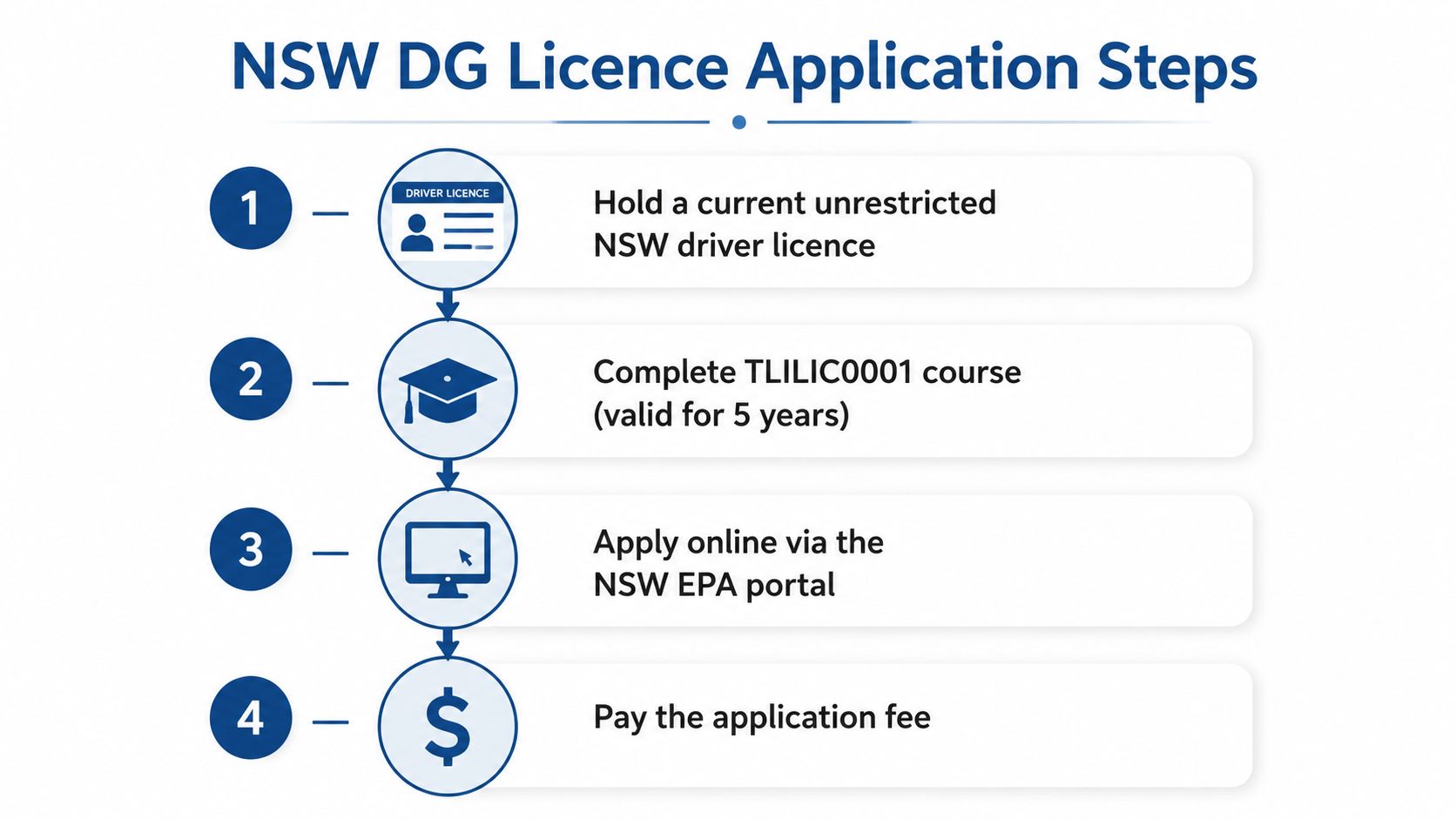
NSW EPA guidance identifies TLILIC0001 as the nationally recognised course that must be completed before applying for the dangerous goods driver licence. The applicant must also already hold a driver licence, provide medical fitness evidence and submit competency evidence from an approved test or approved training course completed within the previous 6 months. The NSW regulation also requires a photograph and the prescribed fee as part of the formal application process. NSW EPA dangerous goods driver licensing guidance
TP Training delivers the course in a 1.5 day format. Students don't need to bring PPE, and there are no prerequisites beyond basic literacy. Successful participants receive a Statement of Attainment on the same day, subject to completing the required assessment successfully. That document supports the later application, but it isn't the licence itself.
TLILIC0001 Course Coverage at a Glance
| Competency Element | What It Covers | On-Road Relevance |
|---|---|---|
| Classifying dangerous goods | Identifying the relevant dangerous goods class and transport risks | Helps the driver understand the hazard before loading |
| Selecting suitable packaging | Matching goods with appropriate packaging and handling controls | Reduces leakage, damage and incompatibility risks |
| Applying marks and labels | Using required package marks and labels | Helps handlers and emergency services identify the load |
| Marking and placarding vehicles | Displaying transport information on the vehicle | Provides visible hazard information during transport |
| Preparing documentation | Checking transport and emergency information | Gives the driver and others reliable load details |
| Loading and unloading | Applying safe handling and segregation principles | Reduces movement, reaction and exposure risks |
| Managing security | Controlling access to dangerous goods | Limits avoidable interference with the load |
| Responding to incidents | Following emergency procedures for spills or other events | Supports an organised response instead of improvised action |
| Completing transport duties | Applying the requirements through the journey | Connects classroom knowledge with daily driving tasks |
Good workplace habits matter alongside formal competency. TP Training also publishes practical workplace safety tips that can help workers think about risk before beginning a task.
When You Actually Need a Dangerous Goods Licence in NSW
The first question isn't “Where can I book the course?” It's “Does my transport scenario cross the licensing boundary?” That boundary is often misunderstood because a small number of containers can look harmless individually while the total load is regulated.
The practical thresholds highlighted for NSW include more than 500 litres or 500 kilograms in relevant bulk transport situations. The calculation can apply to the aggregate quantity across packages, not just the amount in each individual package. A vehicle carrying several packages that are each below the threshold may still require careful assessment when the combined load exceeds the applicable limit.
An Intermediate Bulk Container, or IBC, creates another important checkpoint. The relevant trigger is more than 3000 litres in an IBC context. One IBC over that cap can create a licensing requirement even when the rest of the vehicle appears to sit below a broader bulk threshold.
A practical way to assess your load
Before booking, collect the details that determine the answer:
- Product type: Identify the dangerous goods classification and whether the goods are liquids, solids, gases or another regulated category.
- Packaging format: Separate packaged goods from bulk containers and identify any IBCs.
- Total quantity: Add the relevant quantities across the load rather than checking only one carton, drum or container.
- Vehicle arrangement: Consider the vehicle, trailer and how the goods are presented for transport.
- Delivery pattern: Check whether the same setup is used repeatedly or only for an occasional movement.
Fuel resellers, gas delivery operators, agricultural chemical suppliers and businesses moving laboratory samples can all face different practical questions. A laboratory sample may be small, but its classification and packaging still matter. A gas delivery vehicle may need assessment based on the quantity and container arrangement, not merely the number of cylinders. Agricultural chemicals may be packaged individually while still creating a regulated aggregate load.
Practical rule: Don't treat course completion as proof that your particular vehicle and load are licence-free. Confirm the quantity, packaging and transport arrangement first.
The licensing boundary is a compliance issue, but it's also a cost issue. Taking the wrong course can waste time and booking money, while failing to obtain the required licence can create a much larger operational problem. The NSW EPA guidance confirms that applicants complete TLILIC0001 before applying through the licensing process, so training and approval should be planned as separate stages. NSW dangerous goods road transport regulation
Licensing Rules, Validity Windows and Fees You Must Meet
A driver may finish training on Monday, arrange the medical on Tuesday, then discover that the application evidence has an expiry window. In NSW, completing TLILIC0001 and receiving the dangerous goods driver licence are separate steps. Treat the course certificate as one key, and the licence application as the door it helps you open.
Once your load requires a licence, follow this order:
- Hold the required driver licence. You must already hold a current driver licence before applying for the dangerous goods driver licence.
- Complete TLILIC0001. Your competency evidence must come from an approved test or approved training course completed no more than 6 months before the application.
- Arrange the medical assessment. A registered medical practitioner must issue the medical fitness certificate within 6 months of the application. The assessment uses the relevant Austroads and NTC commercial-driver standards.
- Prepare supporting evidence. Provide the required driving history, photograph and other prescribed documents.
- Submit and pay. Lodge the application through the applicable NSW service channel and pay the prescribed fee.
Evidence has an expiry window
The six-month period can cause problems when training happens early, the medical is delayed, and the application is lodged later. If either the competency evidence or medical certificate is outside the permitted window, you may need updated evidence. Check both dates before booking the application appointment.
The current NSW regulation sets the dangerous goods driver licence application and renewal fee at 0.57 fee units. It sets the dangerous goods vehicle licence application and renewal fee at 0.87 fee units per road vehicle, with 0.87 fee units to add another vehicle and 0.23 fee units to replace a vehicle. Since fee units are set administratively, their dollar value can change. Check the current amount when you apply. NSW regulation fee provisions
The driver licence remains valid for 5 years from its issue date, and refresher training is required after that period. Your personal licence also does not prepare the vehicle by itself. Before each trip, confirm the vehicle setup. Placard-loadable quantities may require the correct placards, fire extinguishers and emergency procedure guides.
Drivers comparing this pathway with overseas or interstate terminology may also encounter the phrase Hazmat Endorsement. In NSW, use the local EPA process and confirm the requirements for the jurisdiction where you will operate. The comparison term does not replace the NSW application.
Some roles require more than one safety credential. TP Training provides Prepare Work Zone Traffic Management Plan Course Pwz Red Card training with experienced trainers and hands-on learning across NSW. That course is separate from dangerous goods driver licensing. For wider guidance on Australian licensing requirements, see this trade licensing guide.
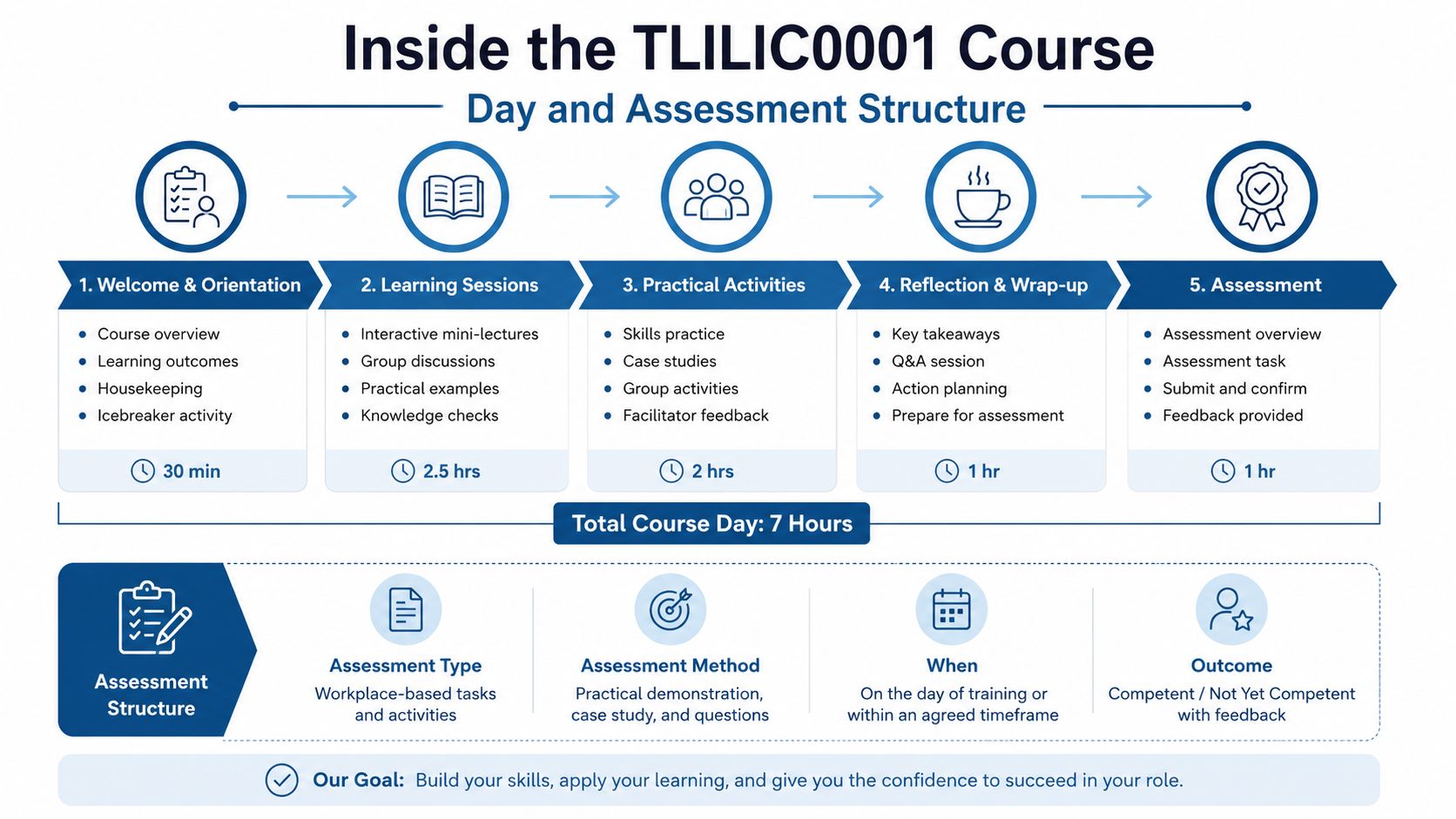
Inside the TLILIC0001 Course Day and Assessment Structure
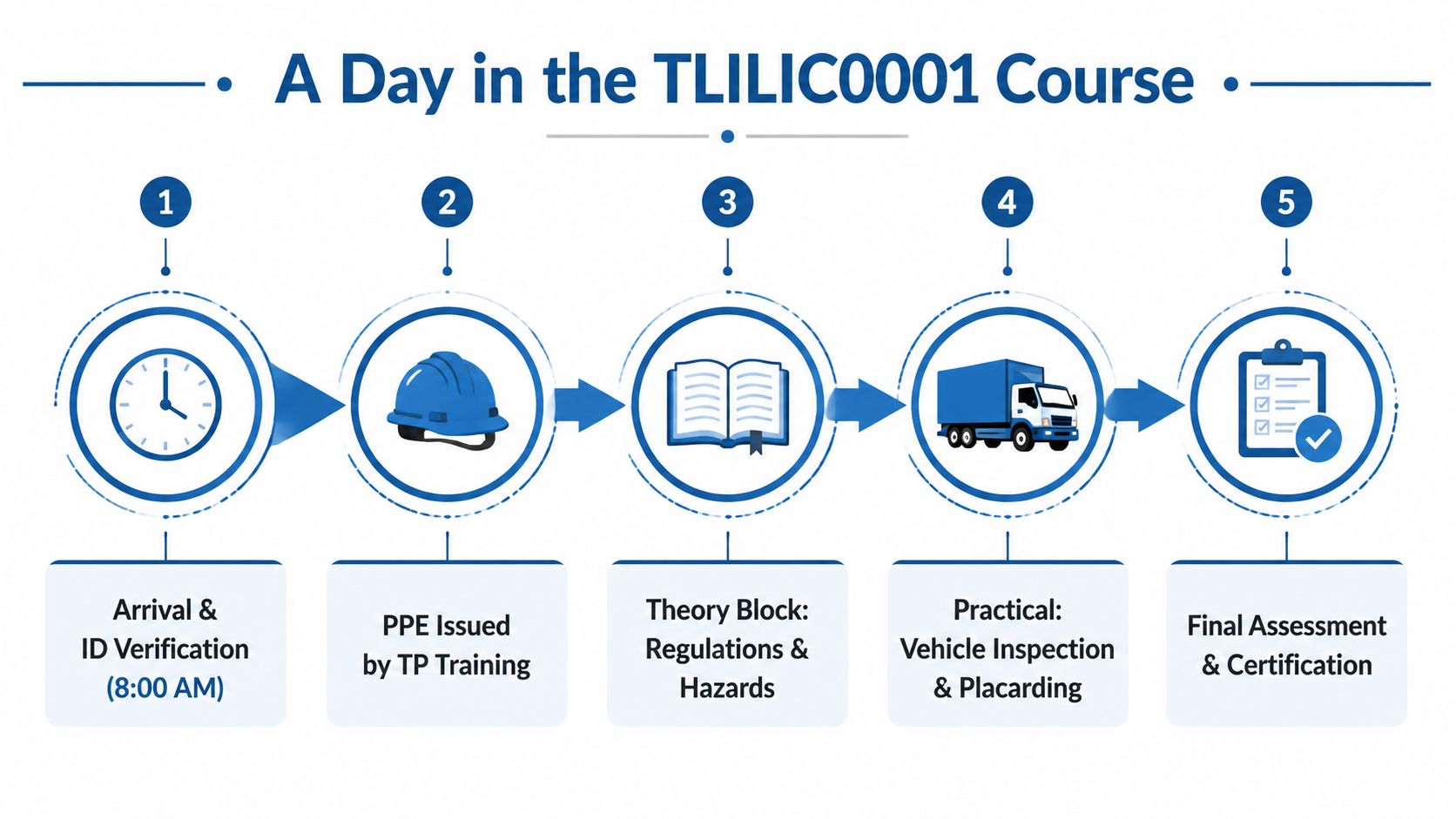
A typical course day begins before any dangerous goods are handled. You'll arrive, complete identity verification and receive the instructions needed for the session. TP Training supplies PPE, so students don't need to arrive with their own safety gear.
The theory component gives the practical work a framework. Trainers work through hazard classes, packaging codes, labels, placards, segregation principles, transport documents and emergency procedures. The point isn't to memorise isolated symbols. You need to understand how a classification affects the way goods are packaged, loaded, marked and moved.
From classroom concepts to transport decisions
Practical examples then connect the rules to decisions a driver may face at a depot or customer site. Learners can work through vehicle inspection and placarding examples, examine how goods should be separated, and check whether the documentation matches the load.
Consider a driver who sees several packages labelled for different hazards. The safe response isn't to place everything wherever space is available. The driver needs to identify the goods, review compatibility and segregation requirements, confirm the vehicle information and ensure the transport documents support the journey.
This approach also supports broader workplace habits, such as checking the work area, identifying changes in conditions and stopping when the load doesn't match the paperwork.
Assessment and completion
Assessment includes knowledge questions and practical activities linked directly to TLILIC0001 requirements. You'll need to show that you can apply the information, not merely repeat a definition. A trainer may look at how you inspect a vehicle, interpret load information, apply placarding requirements or respond to an incident scenario.
There's no pre-course homework or separate preparation project required for students. You do need to attend ready to participate, ask questions and follow instructions carefully. If a learner needs clarification, raising it during training is safer than carrying a misunderstanding into a live transport task.
The course structure and delivery expectations are also discussed in TP Training's Dangerous Goods Drivers Licence training guide. Successful participants receive their Statement of Attainment on the same day, which lets them organise the next licensing step while the evidence is still within its validity window.
How to Book an Affordable Dangerous Goods Course Online with TP Training
Affordable booking starts with choosing the right course, not just the cheapest search result. A low-cost booking only helps if it matches the load you'll transport, the NSW competency requirement and the timing of your licence application.
TP Training's online enrolment process is designed to let a learner complete the booking without a long phone exchange. Start by opening the dangerous goods course page, then review the course information and select a suitable Sydney location and date. The booking flow should make the session details clear before you proceed to payment.
A simple online booking path
- Choose the course: Confirm that the booking is for TLILIC0001 and suits your intended road transport work.
- Select a location: Choose a convenient training centre so travel time doesn't turn a low-cost course into an expensive day.
- Pick a date: Match the course date with your planned medical appointment and application timing.
- Complete secure payment: Pay through the online portal and check the final booking summary before submitting.
- Save confirmation: Keep the confirmation and pre-course information so you know what to bring and when to arrive.
Online booking can reduce administrative friction, especially for job seekers and employed drivers who need to plan around shifts. TP Training operates across NSW training centres, including Penrith, Burwood, Auburn, Parramatta and Sydney CBD, according to the publisher information provided for its training organisation. Weekend options may also be relevant where listed during booking, but you should confirm the current date and location before paying.
Keep the total training cost in view
A genuinely affordable pathway includes the full booking picture. Look for clear pricing, transparent inclusions and confirmation of whether the course fee covers the training and assessment. Don't assume the course price includes the separate NSW EPA licence fee, medical appointment or any vehicle-related compliance work.
Some learners may be considering a broader logistics package. TP Training's course catalogue includes options such as Load Restraint and Heavy Combination training, but you should only bundle courses that relate to your actual job requirements. Buying unrelated training can make the overall pathway more expensive rather than cheaper.
Language support can also affect the cost of learning. TP Training supports learners who speak Mandarin, Korean, Vietnamese and Arabic, which may help students ask questions and understand safety instructions without arranging separate assistance. That doesn't remove the need to demonstrate competency in the required assessment, but clear communication supports safer participation.
A low-cost online booking is most useful when it helps you choose the correct course, date and location, receive confirmation promptly and avoid unnecessary time away from work. Before paying, check the course name, location, date, assessment requirements and the separate steps that remain after training.
If you need to organise your Unique Student Identifier before enrolment, use TP Training's USI creation and management guide.
Your Next Steps After the Course to Get Licensed and Start Work
A driver completes the assessment on Friday, then accepts a regulated load on Saturday because the course is finished. That creates a serious compliance mistake. Plan the application and work start as connected steps, and check the load requirements before booking training.
Start with the job itself. Ask the employer or consignor what goods, quantities, containers, vehicle and routes you will handle. Packaging, aggregate quantity, bulk arrangements and IBC size can determine whether a licence is required. If the load falls within a licensing trigger, confirm the transport scenario with the employer, consignor or relevant NSW authority rather than assuming an ordinary driver licence is enough.
The practical sequence
- Confirm the job requirement. Write down the goods, quantities, container type, vehicle and routes. These details guide the licensing pathway.
- Book TLILIC0001 online. Select a suitable TP Training date and location, then save the booking confirmation.
- Attend and participate. Complete the theory, practical activities and assessment. PPE is supplied for the TP Training delivery described earlier.
- Collect your course evidence. Successful participants receive their Statement of Attainment on the same day.
- Arrange the medical. Use a registered medical practitioner who can assess fitness against the relevant commercial-driver standards.
- Prepare the application. Gather your current driver licence, competency evidence, medical certificate, driving history, photograph and prescribed fee.
- Lodge the NSW application. Follow the applicable NSW process and keep copies of every document submitted.
- Wait for the licence outcome. Do not accept driving work that requires the licence until it has been issued.
A common mistake is telling an employer, “I have passed the course,” when the employer needs confirmation that the required licence is already available. Ask what evidence the business needs before your first shift, and check that vehicle documents, placards, emergency information and load paperwork are ready for the trip.
The application timing also affects your planning. The training certificate and medical evidence must fit the 6-month application window described in the NSW rules. Delaying the medical or application after training can mean repeating administration and paying extra costs.
Other workplace credentials may form part of the role. TP Training's guide to CPR, first aid, White Card and workplace safety certifications helps workers identify separate qualifications an employer may request. These courses address different workplace duties, so confirm which ones apply to your position.
An affordable pathway means knowing the total cost before you book. Check the course fee, medical appointment, NSW EPA application fee and any vehicle-related compliance work, then schedule each step while your documents remain current.
TP Training provides practical, nationally recognised Dangerous Goods Driver License Course training with experienced trainers and hands-on learning across NSW. Visit TP Training to review the course pathway, choose an affordable online booking option and plan your next step toward compliant dangerous goods transport.

You may also like
Asthma and Anaphylaxis Training in NSW
First Aid Training for Construction Workers NSW