CPR Training Face Shields: A Practical Australian Guide
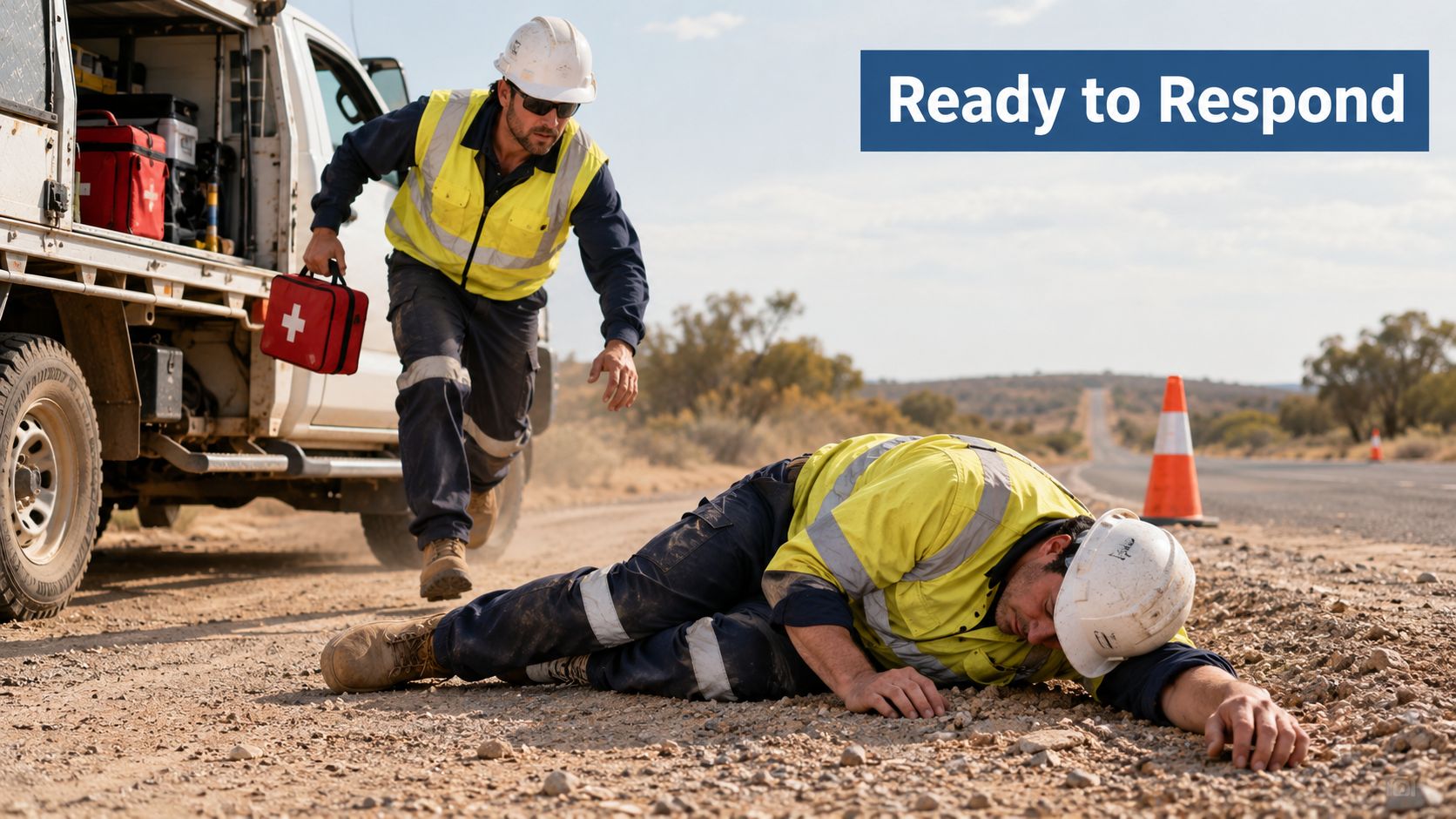
A first-aid kit is on its way across a roadworks site. A colleague has collapsed, the crew is spread along the work zone, and the nearest kit isn't beside you. You know CPR includes rescue breaths, but you're unsure whether to wait for a barrier or start helping now. Knowing what a CPR training face shield does, and what it doesn't do, can make that decision clearer.
Table of Contents
- What a CPR Training Face Shield Actually Does
- Face Shield vs Pocket Mask vs Full PPE
- Why Infection-Control Guidance Matters in Training
- Using a Face Shield Correctly During Training
- When to Use a Face Shield and When to Skip It
- Cleaning, Reusing and Storing Barrier Equipment
- Choosing the Right Equipment for Training Delivery
- Putting It All Together Before Your Next Course
What a CPR Training Face Shield Actually Does
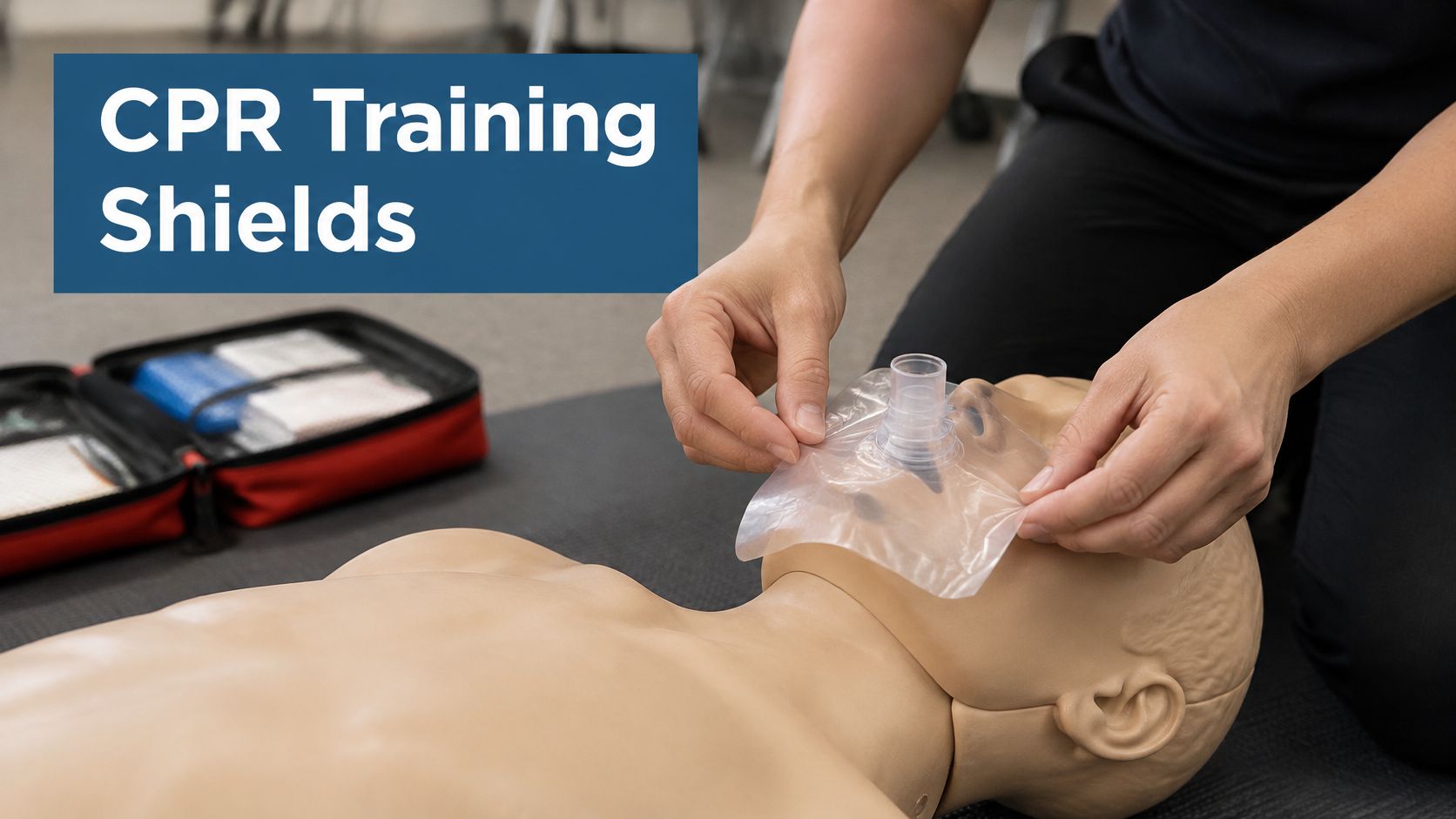
At a roadworks site, a CPR face shield is a small barrier intended to help with rescue breathing. It's usually a thin, transparent sheet with a one-way valve that sits over the casualty's mouth. The barrier helps reduce direct mouth-to-mouth contact, while the valve allows the rescuer to give breaths.
The term “face shield” can cause confusion. A CPR barrier is not the same as a rigid visor or protective face shield worn over the eyes and face. Those items are designed for broader splash protection. For rescue breathing, look for a barrier made for CPR, with a valve positioned for ventilation.
In Australian CPR courses, learners practise compressions and ventilations on a manikin. The ARC identifies physical demonstration on a manikin as a requirement of CPR education, and Australian guidance uses a 30:2 compression-to-ventilation ratio before an advanced airway is established. A face shield can help learners practise the ventilation component, but it doesn't replace compressions, calling for emergency help or using an AED. ARC CPR education guidance
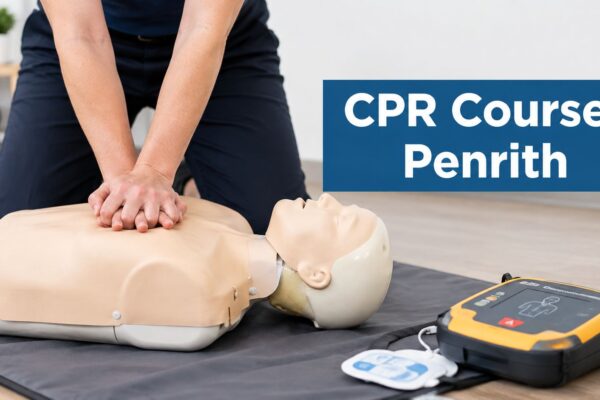
A simple way to explain it to a co-worker is: a CPR face shield is a one-way-valve barrier for rescue breaths, not a substitute for the rest of CPR. If you're looking at training near Western Sydney, TP Training's CPR course in Penrith is one place to check course information.
Face Shield vs Pocket Mask vs Full PPE
These options can all help manage contact during resuscitation, but they're designed for different circumstances. Mixing them up can leave a learner with the wrong idea about what a device protects against.
A disposable CPR face shield is a flat barrier with a one-way valve. It's compact and suited to individual practice with a manikin. A pocket mask is a shaped mask with a valve, generally handled and cleaned according to its manufacturer's instructions. Full PPE is broader protective equipment, such as a respirator, eye protection, gown and gloves, used when the risk assessment and setting call for more than a barrier for rescue breaths.
| Barrier option | Barrier type | Typical user | Single-use or reusable | Best-use scenario |
|---|---|---|---|---|
| Disposable CPR face shield | Flat barrier with a one-way valve | Learner or first aider | Single-use | Individual ventilation practice or routine rescue-breath barrier |
| Pocket mask | Shaped mask with a one-way valve | Trained responder or learner under supervision | Reusable if cleaned as directed | Repeated practice or a responder kit with a cleaning process |
| Full PPE | Respirator, eye protection, gown and gloves | Responder following workplace or clinical protocols | Depends on the equipment and instructions | A higher-risk infectious scenario requiring broader precautions |
The useful question isn't which option wins. It's whether the equipment suits the task and the level of risk. For routine CPR training, a disposable shield is straightforward to issue to learners. A pocket mask offers a different style of practice, but needs appropriate cleaning and storage. Full PPE is not interchangeable with either barrier: a thin CPR shield doesn't provide equivalent eye or respiratory protection.
Workplaces can apply the same risk-based thinking to other tasks. For example, PPE essentials for kitchens can help readers think about selecting protective equipment for a specific work environment. First-aid learners can also review TP Training's information about the HLTAID011 first aid course.
Why Infection-Control Guidance Matters in Training
The purpose of a barrier is to make rescue breathing feel more manageable, not to suggest that CPR is too dangerous to attempt. An Australian Government briefing described out-of-hospital cardiac-arrest survival as commonly below 5 percent, underlining why immediate bystander action matters. The briefing also described a Sydney person who survived after receiving CPR following a collapse at home. Australian Government briefing on cardiac-arrest response
Under normal, non-pandemic conditions, ANZCOR says disease transmission during CPR is very low. It considers a barrier reasonable when one is available, while advising that protective equipment mustn't cause CPR to be delayed or withheld. That distinction helps learners avoid two unhelpful extremes: ignoring barriers altogether, or waiting for equipment while a person needs immediate help. ANZCOR CPR guidance
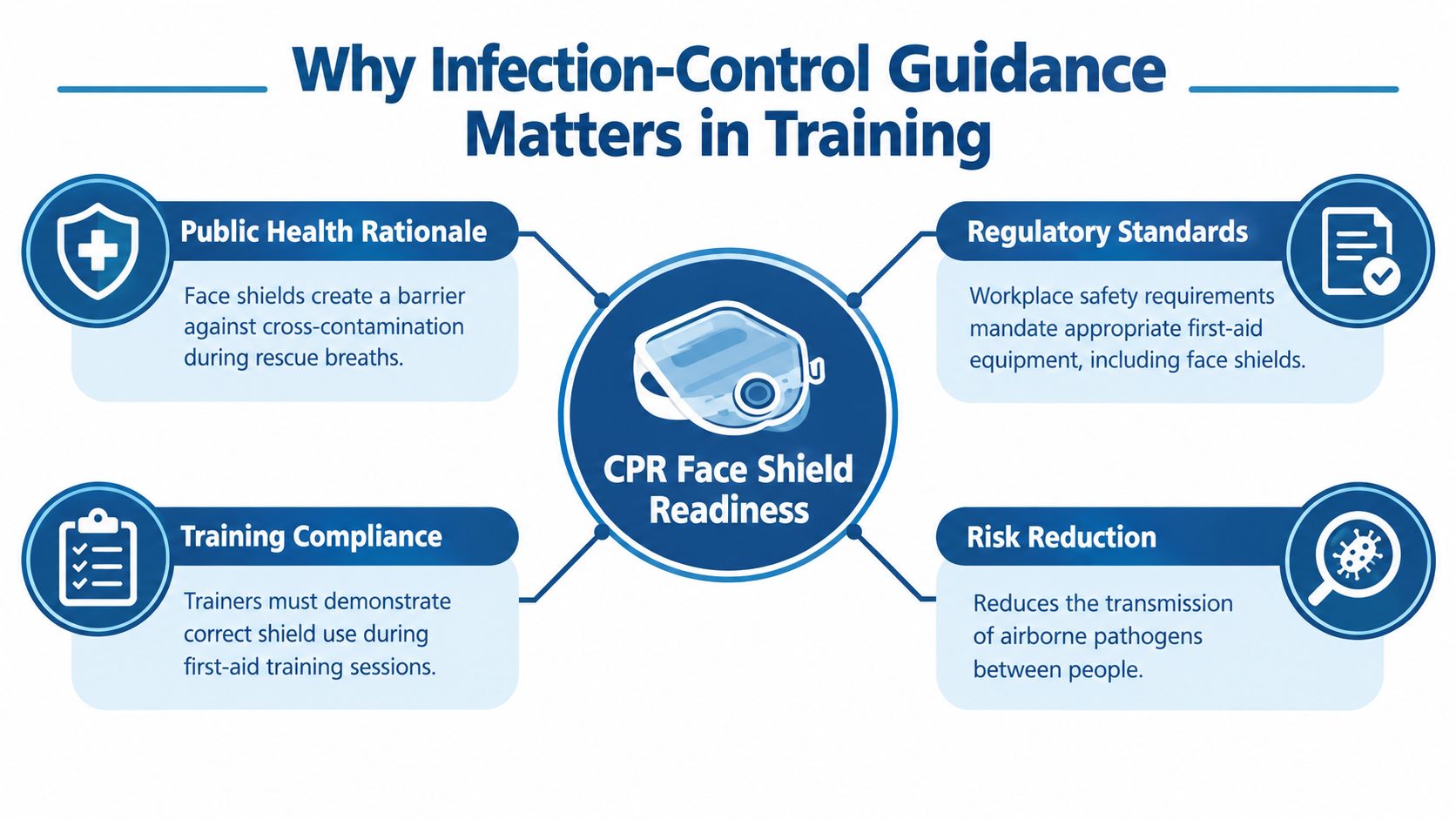
The PPE decision changes when a serious infectious respiratory illness is known or suspected. NSW clinical evidence guidance treats chest compressions and assisted ventilation as potentially aerosol-generating in infectious respiratory disease events. In that higher-risk situation, a thin CPR barrier alone isn't adequate responder protection; follow workplace infection-control procedures and the applicable PPE guidance.
Practical rule: Use a barrier when it's available, but don't let searching for one stop compressions from starting.
For a crew working across a construction site, that rule needs to be understood before an emergency. Workplace first-aid training guidance from TP Training can help employers consider how training fits into workplace preparedness.
Using a Face Shield Correctly During Training
Practice should help learners use the barrier without losing sight of the whole CPR sequence. Before starting, make sure each learner has a disposable shield and knows which side of the valve faces the manikin. Follow the course trainer's directions and the product instructions.
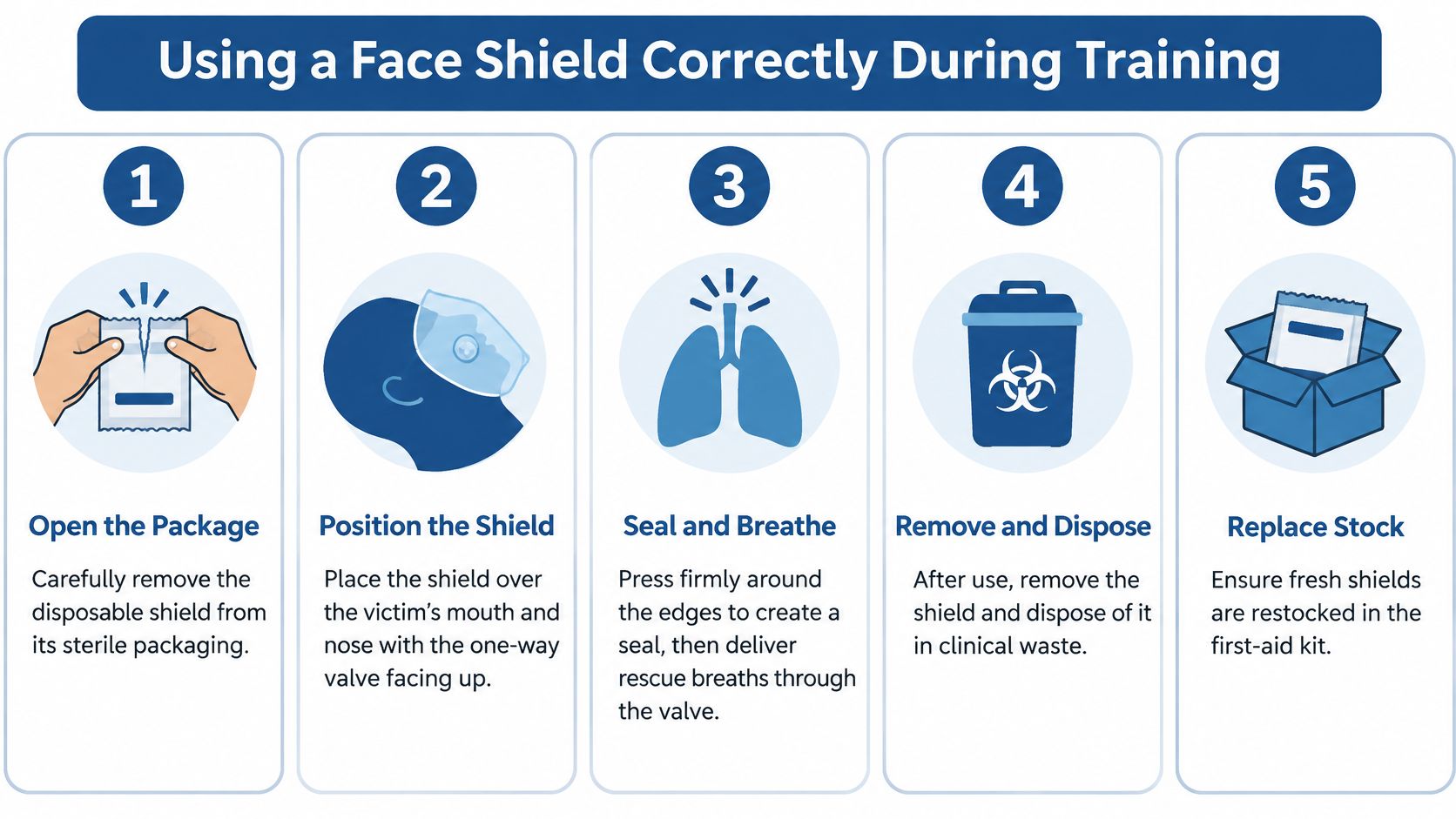
The valve must sit over the mouth, not the nose. The learner maintains the airway position taught in the course, places the barrier as directed and gives breaths while checking for visible chest rise. If the seal or position is wrong, the breath may not be effective. The trainer can pause the exercise, correct the placement and let the learner try again.
A common mistake is treating the shield as a reason to skip ventilation practice. Another is focusing on the sheet and forgetting airway positioning, the seal or the wider CPR sequence. ARC education guidance expects learners to physically demonstrate skills on a manikin, so the accessory supports practice rather than replacing assessment.
A quick practice check
- Package: Open the disposable shield without contaminating the valve.
- Position: Align the valve over the manikin's mouth.
- Airway: Maintain the head position taught by the trainer.
- Breath: Check for visible chest rise.
- After practice: Dispose of the shield and prepare a fresh one for the next learner.
Learners in a practical training environment can encounter safety skills alongside other hands-on learning. TP Training's CPCClDG3001 dogging licence course and training in Sydney provides practical, nationally recognised training with experienced trainers and hands-on learning across NSW.
When to Use a Face Shield and When to Skip It
At a roadside incident, the kit may be some distance away. The decision should be clear before anyone reaches for it: don't wait for a face shield before starting compressions. ARC guidance supports using a barrier for rescue breathing when one is available, but says CPR shouldn't be delayed or withheld solely because protective equipment isn't available.
Use this simple sequence:
- No barrier to hand: Start chest compressions and activate the emergency response. Don't postpone CPR while someone searches for a kit.
- CPR shield available: Use it for rescue breaths as part of the CPR technique you've been trained to perform.
- Known or suspected serious infection: Apply workplace infection-control procedures and the appropriate higher-level PPE. A thin resuscitation barrier isn't enough for that risk.
This distinction matters on construction, traffic-control and industrial jobs, where a first-aid kit may not be immediately beside the casualty. A resuscitation shield enables rescue breaths. It differs from a protective visor that shields the eyes and face, and neither should be mistaken for full respiratory protection.
A face shield can support complete CPR. It mustn't become a reason to delay compressions, emergency activation or AED use.
Visible bodily fluids or a known infection may call for extra caution and workplace protocols. The practical lesson is to act promptly within your training, use a barrier when accessible and escalate protection when the circumstances require it.
Cleaning, Reusing and Storing Barrier Equipment
A disposable face shield is for one use. After practice or an incident, discard it rather than keeping it because it looks clean. For a pocket mask or training manikin, follow the manufacturer's cleaning and maintenance instructions and the organisation's infection-control procedure.
For reusable pocket masks, a sensible training-room process is to take the mask apart as directed, clean the components according to the manufacturer's instructions, and inspect them for damage before reuse. Don't assume every valve or mask can be treated the same way. If a component is damaged or its condition is uncertain, follow the relevant replacement procedure.
Manikins also need an established hygiene routine between learners. Trainers should use the manikin manufacturer's instructions and the training provider's procedures, rather than assuming the CPR shield handles all shared-equipment hygiene.
Keep barriers within reach
Healthdirect Australia includes a disposable resuscitation face shield among suitable items for home, workplace and vehicle first-aid kits. Store the kit somewhere workers can access quickly, rather than burying the shield beneath equipment that's rarely needed. Healthdirect's first-aid kit guidance
A straightforward stock rule helps: disposable shields go into the kit ready for use, then out after use; reusable masks need a documented cleaning routine; and the kit should be checked regularly so supplies remain accessible and packaging stays intact.
Choosing the Right Equipment for Training Delivery
For a course coordinator, the face shield specification should match the exercise and the learners. Look for a transparent, single-use barrier with an integrated non-return valve, enough coverage for the intended practice, clear valve alignment and packaging that protects it before use. In a mobile course for a civil works crew, compact individual shields can be practical to distribute without adding bulky equipment.
Plan stock around the course delivery. Providing an individual shield to each learner supports hands-on ventilation practice; the quantity to prepare depends on the number of learners and how the training session is organised. Keep replacement stock available and make restocking part of the course preparation process.
Australian infection-prevention standards require a risk-based approach, including processes for PPE selection, training, use, testing and fitting. Precautions should reflect the infection risk associated with the intervention and the setting. Australian infection-prevention standards
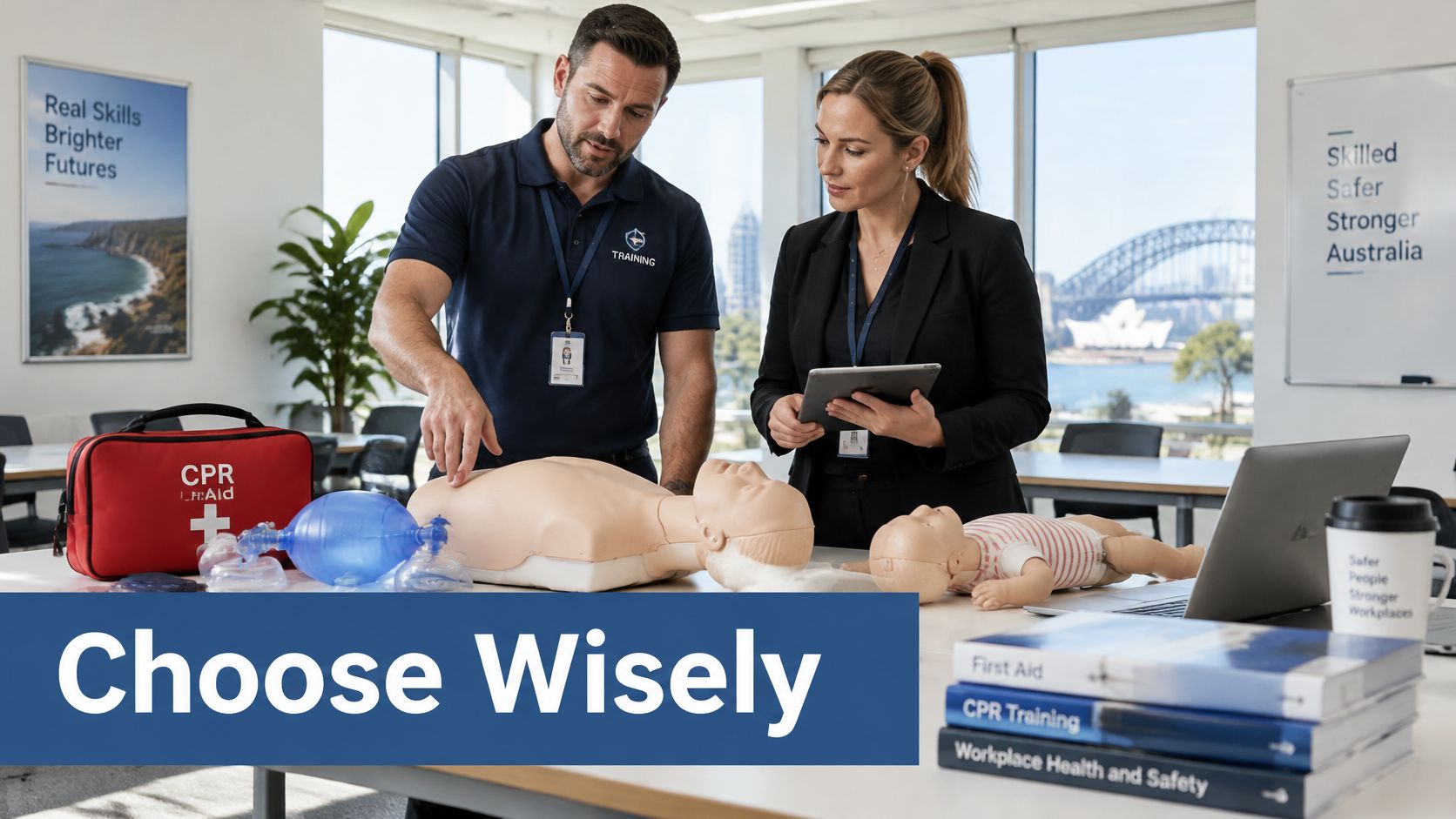
A good purchasing decision connects the course, the learner group and the workplace. Workplace safety training information from TP Training can be a starting point for employers considering how practical training fits their setting.
Putting It All Together Before Your Next Course
The main decision is simple: start compressions without waiting for a barrier, use a CPR face shield when it's available for rescue breaths, and follow workplace infection-control procedures when a serious infection risk is suspected. Remember that a thin resuscitation barrier isn't full PPE, and a disposable shield should be discarded after use.
A face shield can make rescue-breath practice feel more achievable, but confidence comes from knowing the full sequence. Review when CPR skills should be refreshed and make time to practise shield placement on a manikin.
Other high-risk workplaces also need clear, setting-specific controls. For a related example of safety planning in a specialist environment, see these safety protocols for hyperbaric chambers. Before your next course, check that your kit is accessible and the shield's packaging is sealed, then practise its placement with a trainer.
TP Training offers practical CPR and first-aid training for people preparing for workplace emergencies and learners building relevant skills. Visit TP Training to explore training options and find a course that suits your needs.

You may also like

Civil Construction Plant Operations Courses Explained
First Aid Training in the Workplace: A Complete Guide