
Blue Card Traffic Control Course Guide for Sydney
The Blue Card is the NSW entry-level credential for controlling traffic on or adjacent to public roads, and the qualification is issued for 3 years before refresher or renewal training is required. Formal training and competency assessment through a SafeWork NSW approved provider are required before the card can be issued.
You may be looking at a roadwork vacancy, preparing to change careers, or trying to understand which card an employer means when they ask for “traffic control tickets”. The terminology can feel confusing because NSW traffic management includes several responsibilities, from directing vehicles with a stop-slow bat to implementing broader traffic control arrangements. The right starting point depends on the work you want to perform, the road environment and the requirements of the hiring organisation.
For most first-time students, the Blue Card traffic control course is the practical entry point. It connects classroom knowledge with observed performance in a roadwork-style environment, then continues into workplace preparation, ongoing compliance and possible progression to higher-level traffic management duties.
Table of Contents
- Understanding the Blue Card Traffic Control Course
- NSW Requirements and Traffic Control Pathways
- Course Outcomes and Entry Requirements
- Course Format, Duration and Practical Learning
- Assessment, Certification and Worksite Readiness
- Renewal, Costs and Enrolment
- Sydney Training Locations and Next Steps
- Frequently Asked Questions and Career Pathways
Understanding the Blue Card Traffic Control Course
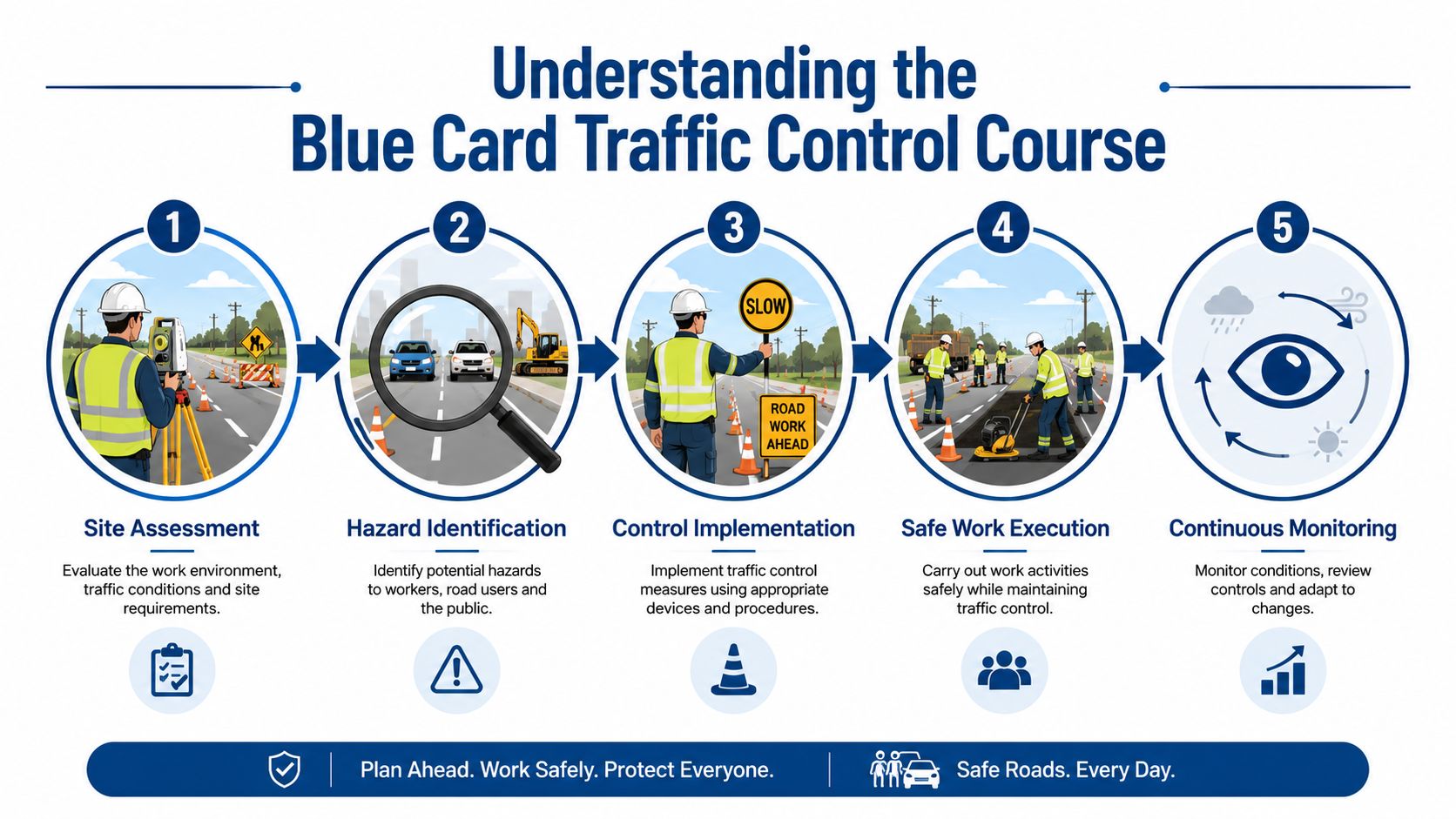
Before enrolling, a job seeker may see “traffic control ticket” in a roadwork vacancy and wonder which credential the employer expects. The Blue Card pathway provides the starting point for workers who will control traffic at or beside a public road, then leads from enrolment and training to live assessment, workplace readiness, renewal and possible progression to the Yellow Card.
The Blue Card is distinct from credentials linked to broader traffic management duties. It prepares a person for traffic control work under approved site arrangements, while Yellow Card work can involve implementing or managing wider traffic control measures, depending on the role and authorisation. The distinction matters because the card must match the duties the employer assigns.
In NSW, SafeWork NSW requires workers performing this type of work to hold a Traffic Control Work Training Card. The relevant course includes a live practical assessment before the card is issued. Its focus is the controlled movement of road users within the worksite arrangement, rather than preparing complex traffic plans or independently managing every kind of road closure. SafeWork NSW explains the traffic controller training requirement.
What the course prepares you to do
Training connects the rules to decisions you may need to make at a live worksite. You learn how to follow the approved arrangement, identify changing conditions, communicate with the crew and respond according to workplace instructions.
The course does not qualify you to prepare traffic management plans, establish every type of closure or supervise broader traffic management operations. Those duties may require further training, experience and employer authorisation. A Blue Card is one point in the learner journey, not a general licence for every traffic management task.
Practical rule: Passing the course gives you a credential. Worksite readiness also depends on induction, PPE, local procedures and the level of supervision arranged by the employer.
If you are deciding whether this work suits you, this guide on how to become a traffic controller explains the work environment, training pathway and first employment steps. Read it alongside the course requirements, then confirm the card and duties your prospective employer needs.
NSW Requirements and Traffic Control Pathways
NSW separates traffic control responsibilities according to the work a person performs. The Blue Card pathway is associated with the immediate control of road users, commonly using a stop-slow bat, while broader traffic management roles involve plans, signs, devices, implementation and coordination. Understanding that distinction prevents a common enrolment mistake, choosing a course because its name sounds familiar rather than because it matches the job.
The formal NSW pathway commonly used for the Blue Card is the RIISS00054 Traffic Controller Skill Set. SafeWork NSW requires providers to use the relevant skill set, and only RTOs that are registered by ASQA, have an agreement with SafeWork NSW and hold the required units within their scope can train and assess traffic control work in NSW. SafeWork NSW sets out the RTO approval requirements.
Matching responsibility to training
| Role or pathway | Typical responsibilities | Training direction |
|---|---|---|
| Traffic controller | Stop, slow and release road users, communicate with the crew and follow the approved worksite arrangements | RIISS00054 Traffic Controller Skill Set, commonly called the Blue Card pathway |
| Traffic management implementer | Set up, monitor and maintain broader traffic control arrangements, subject to the role and current NSW requirements | Further traffic management training, such as the Traffic Management Implementer Course Yellow Card |
| Traffic management planner | Prepare or work with traffic management plans and more complex controls | A higher-level pathway, with duties determined by the current qualification framework and employer |
| Combined pathway | Develop capability across immediate traffic control and broader implementation tasks | A provider may offer a combined Blue and Yellow pathway, but students should confirm the exact units and scope |
A Blue Card isn't a universal permission for every construction zone. Public-road work, private developments, council conditions, event operations and client requirements can all introduce additional controls. Employers may also require site inductions, a White Card, other licences or evidence of experience.
Students changing industries should apply the same care they would use when comparing other regulated work. For example, someone researching getting a security licence in NSW needs to match the licence to the duties and state rules. Traffic control requires the same discipline, verify the credential, provider approval and actual job scope before paying.
The difference between a traffic controller course and TAFE delivery is also worth checking carefully, because the provider's current approval and qualification scope matter more than the label alone. This comparison of traffic controller courses and TAFE can help learners frame the questions they should ask before enrolment.
Course Outcomes and Entry Requirements
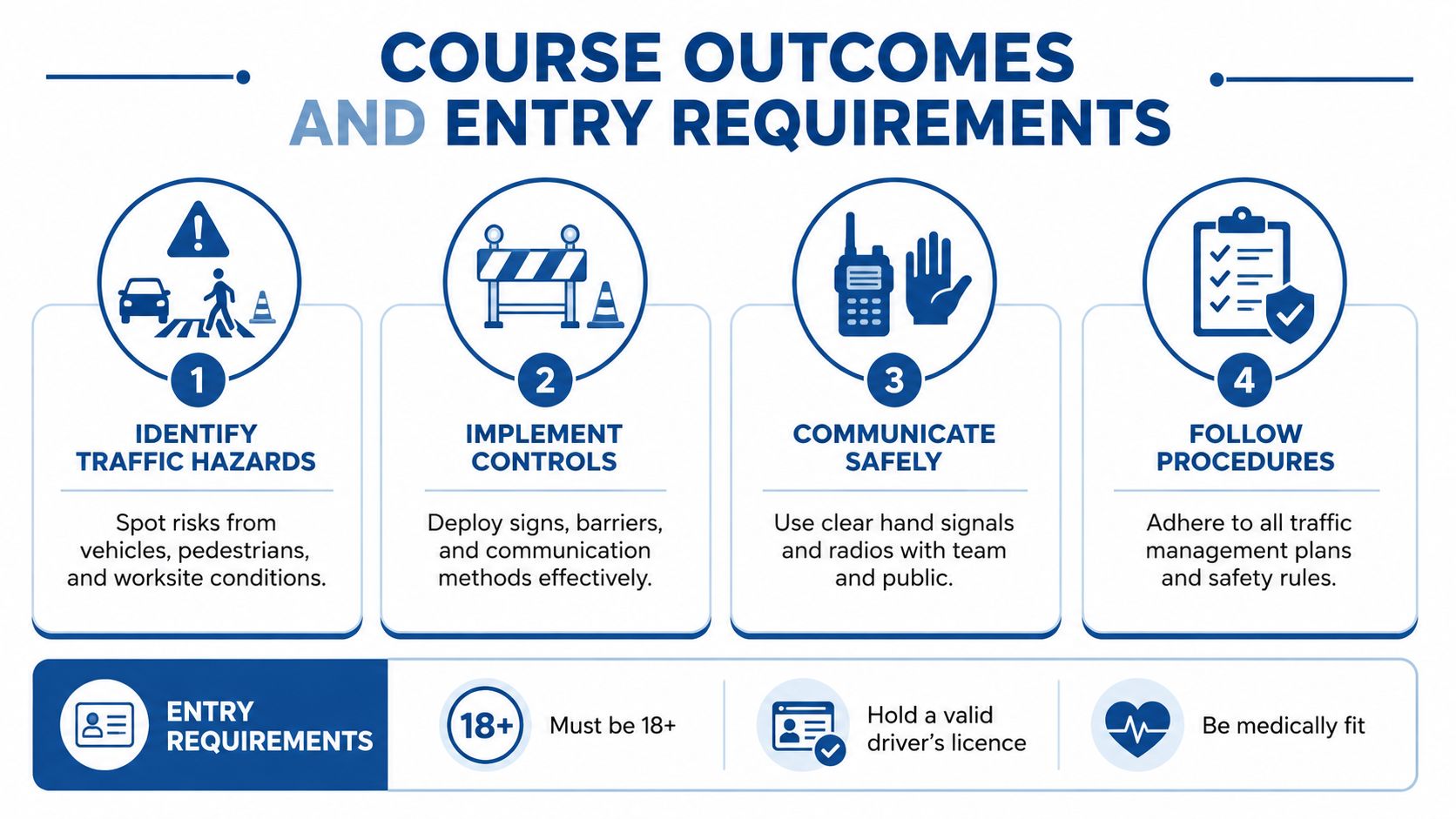
A competent Blue Card student can follow worksite instructions, identify hazards, check equipment and communicate clearly with road users and the crew. The practical goal is controlled movement: stopping, slowing and releasing traffic in a way that keeps drivers, pedestrians and workers from receiving conflicting signals.
Assessment works like a driving test. Knowing the road rules matters, but the assessor also needs to see safe decisions in action. A typical assessment includes knowledge questions and practical observation of stop-slow bat use, radio communication, pedestrian interaction, response to instructions and reactions to changing conditions. Attendance by itself does not prove competency. Students must perform the required tasks to the assessor's standard.
What to confirm before enrolment
Entry requirements can differ between providers, so request the current conditions in writing. The RIISS00054 course information from TP Training lists the following requirements and inclusions:
- Age: The flyer states a minimum age of 17 years. Work eligibility and employer requirements may still affect when a person can be hired, as noted in the same course information.
- Construction access: A White Card or equivalent is required, according to the same course information.
- Identity: Students need a USI and 100 points of identification, as specified in the same course information.
- Learning needs: Adequate literacy and numeracy are needed for the course activities.
- Practical participation: Students need suitable clothing and the ability to take part in outdoor assessment activities.
- Published fees: The flyer lists a $300 course fee and a $50 on-site final assessment fee. Confirm that these amounts are still current before booking, as stated in the same course information.
Hearing, vision, mobility or communication concerns should be discussed with the provider before enrolment. The provider can explain the practical demands and discuss reasonable support, rather than treating a concern as an automatic barrier.
Prepare your documents, check your USI details, organise the required PPE and ask about language, literacy and numeracy support. Confirm whether the practical assessment is simulated, live or a combination, because delivery conditions vary.
Before you book: Ask the provider to confirm the current skill set, entry requirements, assessment conditions, card process and complete payable amount.
Course Format, Duration and Practical Learning
A Blue Card course generally combines theory with hands-on activities because traffic control decisions happen in changing physical surroundings. Classroom learning provides the foundation, while practical exercises allow the trainer to observe whether a student can apply the rules under pressure.
The exact timetable, session length and delivery arrangement vary by provider and cohort. A provider may use face-to-face theory, equipment familiarisation, stop-slow bat practice, radio communication and a controlled roadwork simulation. Austroads' temporary traffic management framework also emphasises assessment in a road-like environment and, where appropriate, on a live site suited to the training level. The Austroads traffic controller factsheet outlines the field-based competency approach.
A practical comparison
| Component | What happens | Typical focus |
|---|---|---|
| Theory learning | Students work through responsibilities, communication, hazards and worksite instructions | Understanding why each control exists |
| Equipment practice | Students handle stop-slow bats, radios, signs and related traffic-control equipment | Consistent signals, checks and communication |
| Worksite simulation | Students practise positioning and directing traffic in a controlled environment | Visibility, safe standing points and predictable movements |
| Practical assessment | An assessor observes required tasks and responses | Demonstrating competency, not merely recalling information |
The physical activity might include positioning signs, following the intended sequence of controls, communicating with another controller and directing motorists under supervision. Students need to concentrate on what they can see, what the other controller is communicating and whether conditions remain safe.
Practical training isn't an optional extra added for convenience. A person can answer a theory question correctly and still stand in an unsafe location or give an unclear signal. The observed component tests whether the knowledge has become reliable workplace behaviour.
Some learners compare a standalone course with a combined booking. A Traffic Control Combo Course Blue and Yellow Card may be relevant for someone who already knows they want both immediate traffic control and broader implementation capability, but the correct choice depends on the duties sought.
Assessment, Certification and Worksite Readiness
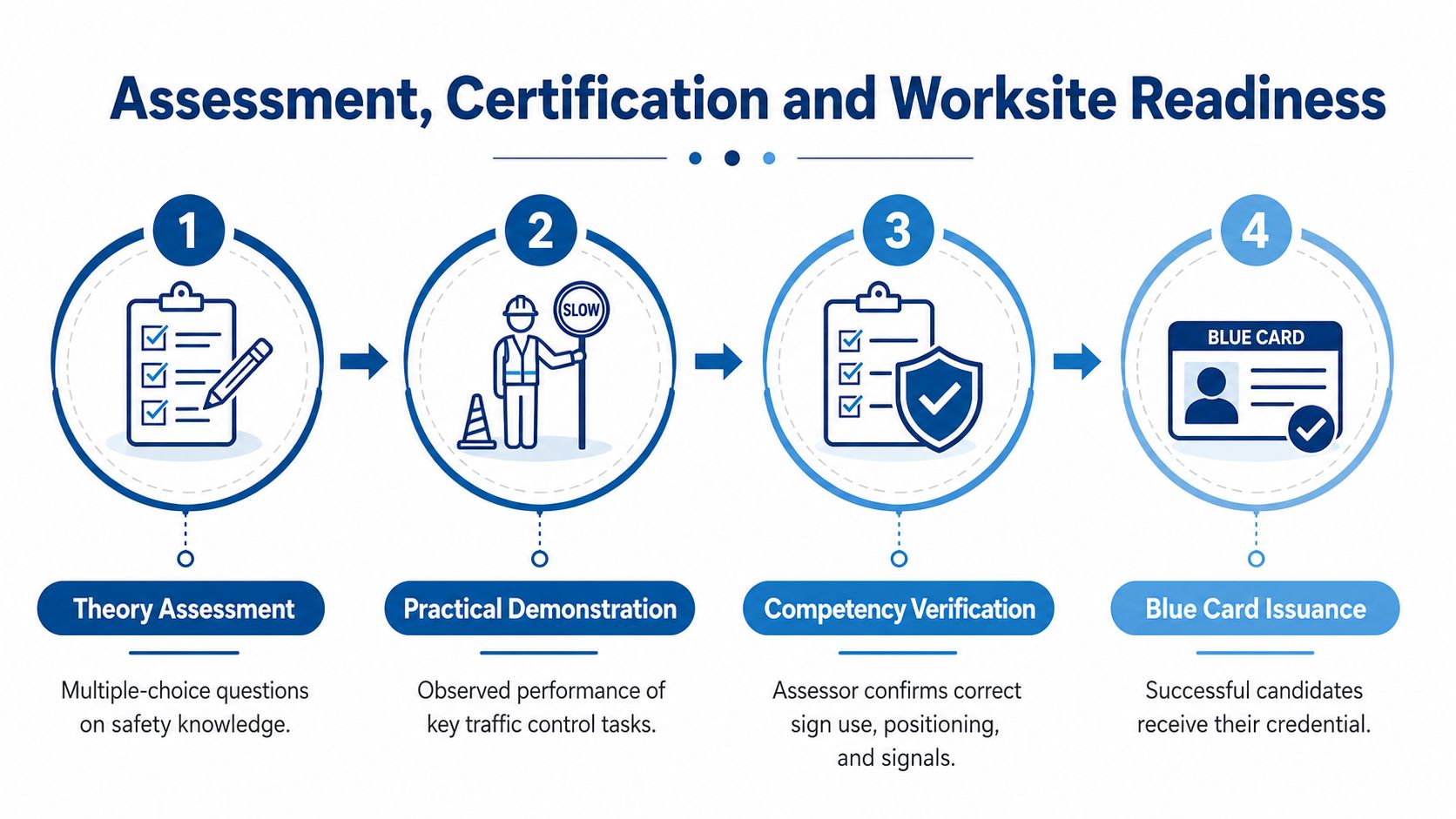
A learner may know the correct answer in class, then hesitate when a vehicle approaches or a radio message changes the plan. Assessment checks whether knowledge has become controlled, repeatable behaviour. It usually begins with questions about safety responsibilities, signs, communication and traffic movements, followed by observed tasks in a road-like setting.
The practical demonstration may include safe sign use, correct positioning, stop-slow bat signals, radio calls, hazard awareness and interaction with traffic or simulated traffic. Students must follow worksite instructions and respond appropriately when conditions change. If performance is inconsistent, the provider may require more practice or reassessment under its assessment policy.
Passing and being ready are different
Completing the course supports the issue of the Blue Card, while a live worksite adds conditions that training cannot fully reproduce. Road noise, weather, unfamiliar colleagues, changing vehicle behaviour and production pressure can affect concentration. Employers provide site induction and instructions, and a new worker may begin under supervision.
A first shift can feel like moving from a practice lane to a busy intersection. The rules remain the same, but the surroundings demand wider attention and faster communication.
Use this distinction when speaking with recruiters. Explain that you have completed the required training, then ask what the specific role and site require. The card does not cover every local procedure or employer obligation.
Before accepting a placement, check:
- PPE fit: Confirm that high-visibility clothing, protective footwear and other required equipment are suitable and comfortable.
- Outdoor tolerance: Prepare for roadside work in changing weather and noise.
- Transport planning: Know how you will reach the site, especially for early starts or regional assignments.
- Communication confidence: Practise concise radio calls and clear hand signals.
- Document control: Keep your card and training records available for employer verification.
The qualification is evidence of assessed competency. It does not guarantee employment, replace site induction or permit anyone to disregard a supervisor's traffic guidance.
Refresher training supports the longer learner journey. Workers need to maintain safe habits and respond to changed guidance over time. Information about the traffic control refresher course can help current card holders plan their next compliance step.
Renewal, Costs and Enrolment
A Blue Card should be managed like a calendar commitment, not a permanent licence. Providers state that the qualification is issued for 3 years, after which refresher or renewal is required. Record the expiry date when the card is issued and check it before accepting future work. The NSW Blue Card course pathway and renewal cycle are outlined by DLI Training.
Begin renewal planning before that date. Confirm the provider's current refresher process, leave time for assessment and check whether your employer has additional currency requirements. Regular traffic control work can maintain confidence, while the required refresher pathway remains the formal compliance step.
Build a realistic course budget
Fees vary by provider and delivery format. A published TP Training flyer lists a $300 course fee plus a $50 on-site final assessment fee. Use that breakdown as a budgeting reference, then request a current itemised quote before paying. The published course flyer provides the stated fee breakdown.
Ask these questions before enrolment:
- Provider approval: Is the RTO currently approved by SafeWork NSW for the required traffic control training?
- Course scope: Does the booking cover the current RIISS00054 pathway?
- Assessment: Is the final practical assessment included, separate or payable on site?
- Documents: Do you need identification, USI, White Card evidence or pre-course tasks before attendance?
- Payment terms: Is a deposit accepted, when is the balance due and what happens if you reschedule?
- Practical arrangements: Where will assessment occur, and which PPE must you bring?
Use this sequence to keep enrolment organised:
- Confirm the role and card you need.
- Check the provider's approval and current course information.
- Review entry requirements and fees.
- Choose a date that leaves time for preparation.
- Submit identification and USI details.
- Attend theory and practical training.
- Complete competency assessment and follow the card issue process.
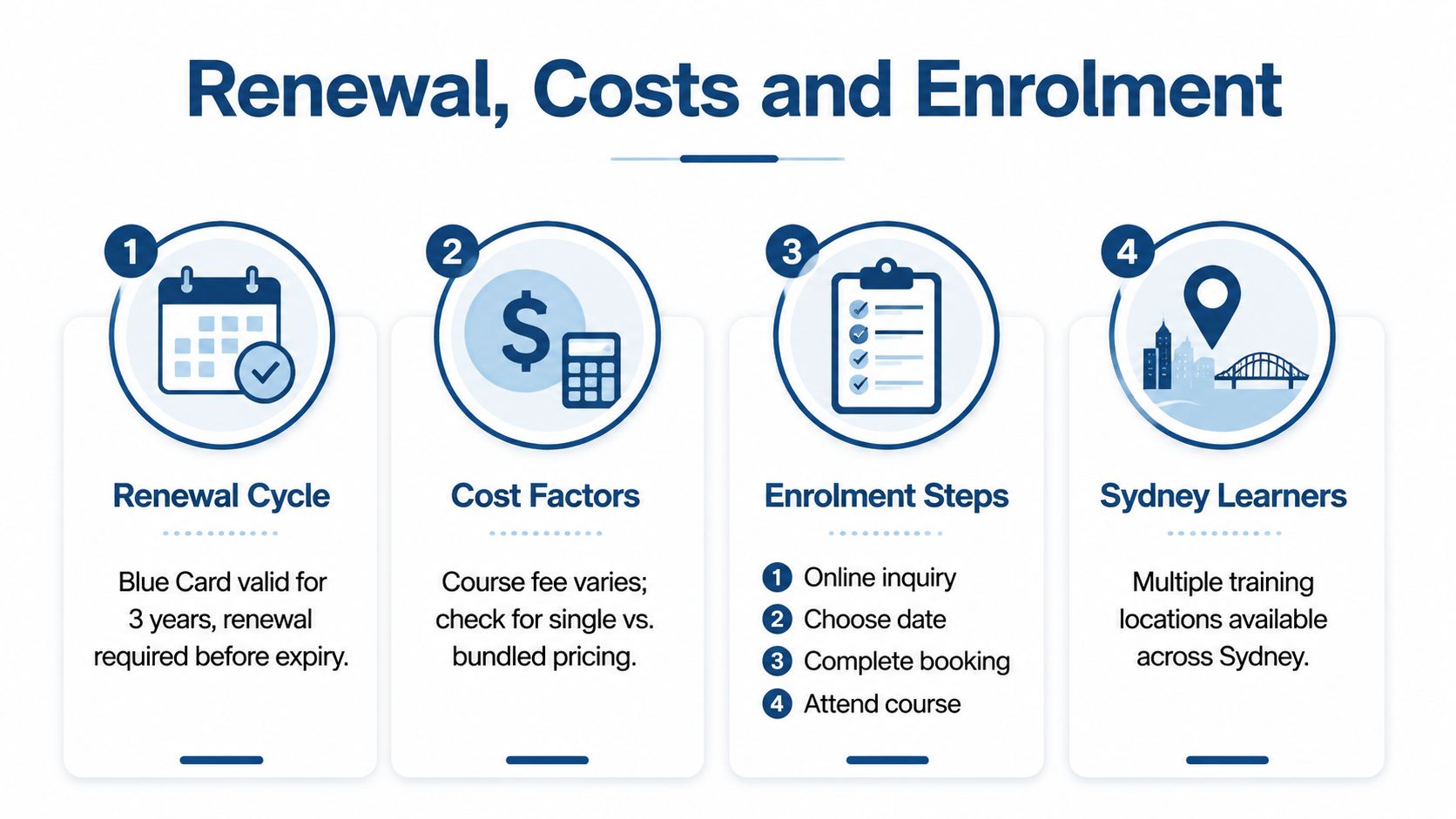
For Sydney learners, include travel time and the practical venue in your decision. A lower-priced booking can create problems if transport makes you late for assessment. Compare the full arrangement, including inclusions, location and renewal timing, before confirming your place.
Sydney Training Locations and Next Steps
Choosing a Sydney training centre involves more than selecting the nearest suburb. Start by checking that the provider is approved for NSW traffic control work training and that the relevant units sit within its current ASQA scope. Service NSW confirms that traffic control training and assessment must be completed through a SafeWork NSW approved training provider. Service NSW explains how to obtain a Traffic Control Work Training Card.
Compare the practical details
For learners considering Penrith, Burwood, Auburn, Parramatta or Sydney CBD, ask each centre:
- Assessment setting: Does the venue provide a suitable simulated-road or public-road-style practical environment?
- Class timetable: Are weekday or weekend dates available for your work and transport situation?
- Learner support: Can the provider discuss language, literacy and numeracy needs before enrolment?
- Fee transparency: Does the quote show the course fee, practical assessment fee and any separate administration charges?
- Preparation: Will you receive pre-reading, PPE guidance and instructions for identification and USI details?
Once you've selected a date, check your photo identification, confirm your USI, complete any requested pre-course tasks and arrange transport to the venue. Wear practical clothing and enclosed protective footwear suitable for outdoor work, and follow the provider's PPE instructions rather than guessing what will be accepted.
After the credential is issued, approach civil contractors, traffic management businesses and labour-hire agencies with an organised record of your training, identification and availability. Employers may still require their own induction, medical checks, site orientation or additional tickets.
For people curious about how traffic operations are coordinated beyond the roadside position, a Logivo traffic desk overview offers broader context about traffic desk functions and operational oversight. It isn't a substitute for the Blue Card, but it can help job seekers understand the wider traffic management environment.
A local comparison can make the first booking easier, particularly when you need to weigh venue, timetable and assessment arrangements. This guide to traffic controller training centres in Sydney provides another point of reference.
Frequently Asked Questions and Career Pathways
How long is the Blue Card valid?
The qualification is issued for 3 years. Check the expiry date early and arrange refresher or renewal training before the card lapses.
Does previous traffic experience replace the course?
Experience can support learning, but it does not remove the NSW requirement for a Traffic Control Work Training Card when you perform traffic control work on or beside a public road. Ask the approved provider about recognition or assessment options before enrolling.
Do I need strong English?
You need enough literacy and numeracy to complete the training and assessment tasks. Discuss language or learning support with the provider before booking.
Is public-road traffic control the same as work inside a construction zone?
No. Internal construction areas may use site-specific controls. Public-road work must meet NSW traffic control work training requirements and the employer's procedures.
Can I progress beyond the Blue Card?
Further training may lead to Traffic Management Implementer work, planning duties or specialised event traffic control. Confirm the current pathway, job scope and employer requirements before choosing a Yellow Card or Red Card course. Each credential should match the work you intend to perform, like selecting the right tool for a particular site task.
Before booking, check your ID, USI, White Card, PPE, transport and employer-ready documents. Also confirm the employer's requirements for your intended role, including any induction, medical or site-specific conditions. The same evidence-based approach applies when reviewing hiring certified HVAC technicians, though traffic control credentials must match traffic duties.
Choose a date that fits your intended project, council shutdown or major works schedule. TP Training provides the Traffic Controller Course Blue Card pathway and related safety and vocational training at centres including Penrith, Burwood, Auburn, Parramatta and Sydney CBD. Review current course and assessment details at TP Training before enrolling.

You may also like
Safety & Health Policy: A Guide for Australian Employers

Asbestos Removal Requirements in NSW: The Complete Guide