
How to Become a Traffic Controller: Your 2026 NSW Guide
You're probably here because you want work that gets you out from behind a screen, pays properly from the start, and opens the door to construction and civil jobs without spending years in study. That's exactly why a lot of people in NSW look at traffic control first.
It's one of the clearest entry points into site work. You train, you complete the practical component, you get accredited, and then you start proving you're the person a supervisor can trust at 5:30 in the morning on a live site. That last part matters more than many new starters realise. The licence gets you in the gate. Your safety habits, reliability, and communication keep you there.
If you've been trying to work out how to become a traffic controller in NSW, the confusing part is rarely the job itself. It's the pathway. White Card first, then traffic control training, then practical assessment, then accreditation, then the job hunt. Miss one step or choose the wrong course and you lose time.
Table of Contents
- Your Path to a Career in Traffic Control
- Eligibility and Essential First Steps
- Your Training Roadmap The Traffic Control Cards
- The Assessment and Certification Process
- From Qualification to Employment Practical Tips for Getting Hired
- Maintaining Your Skills and Advancing Your Career
- Frequently Asked Questions About Becoming a Traffic Controller
Your Path to a Career in Traffic Control
A common starting point looks like this. Someone has done warehouse work, hospitality, delivery driving, labouring, or casual shift work, and they want something more stable. They don't want an office role, but they do want a job with structure, proper site standards, and room to move into bigger civil and construction work.
Traffic control fits that profile well. You're doing active work, you're part of a crew, and what you do affects everyone on site. Drivers, plant operators, pedestrians, subcontractors, and emergency access all depend on the traffic setup being followed properly. That's why the job can be a strong first step rather than just a stopgap.
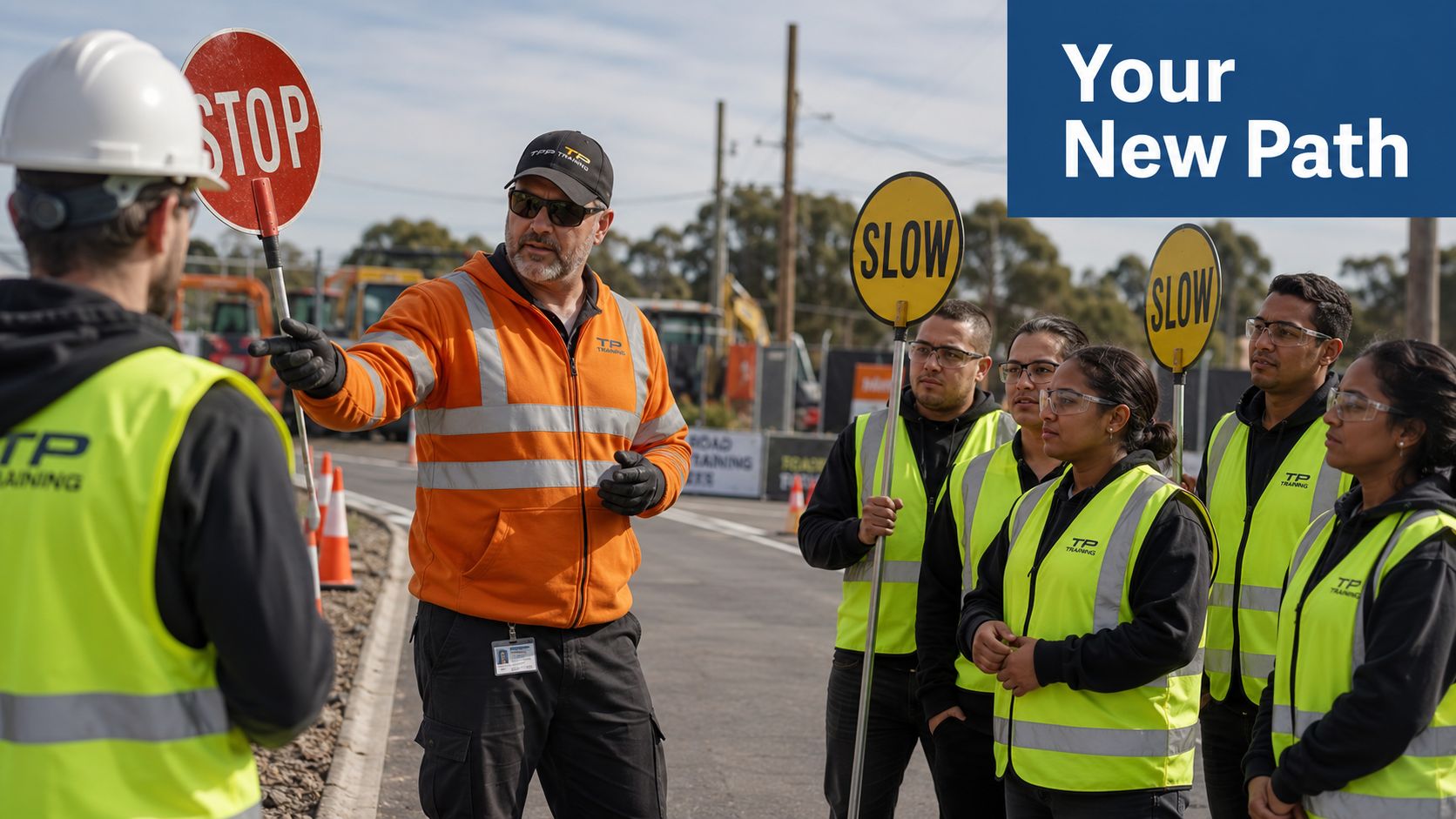
People often ask whether the work is worth getting into. A good reality check is reading honest accounts from workers already in the field, such as these career insights on whether traffic controllers enjoy the job. The pattern is usually the same. The people who do well like routine, clear rules, outdoor work, and being dependable under pressure.
Traffic control suits people who show up early, follow procedure, and keep their head clear when the site gets busy.
NSW also has a very defined pathway compared with a lot of jobs people try to enter blindly. If you follow the order properly, the process is straightforward. If you skip ahead, it isn't.
Eligibility and Essential First Steps
Turn up to your first roadwork shift without the basics sorted and you will hit problems before you even touch a stop-slow bat. In NSW, the early steps are simple, but the order matters. Get the admin and prerequisites right first, then spend money on training.
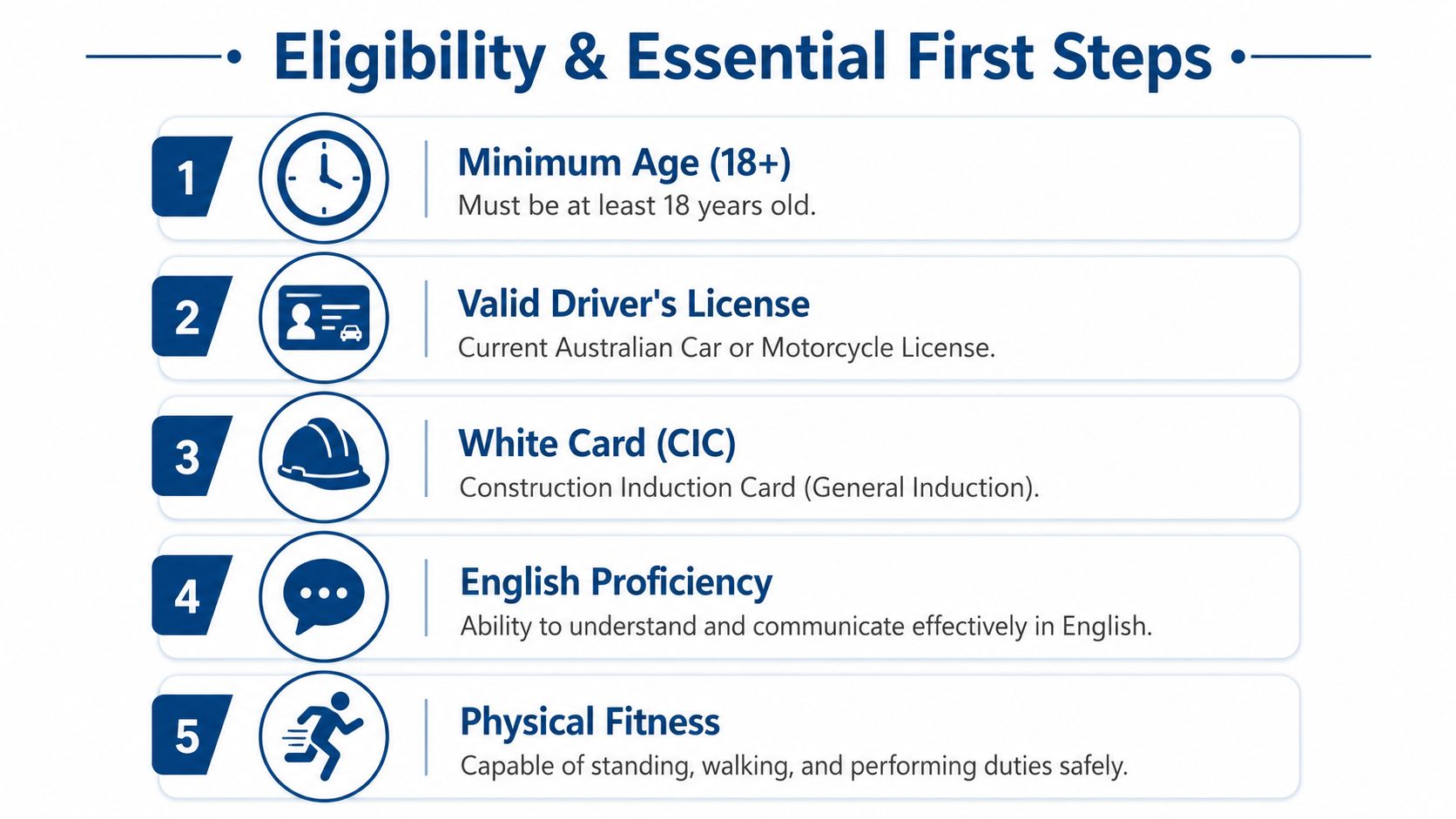
What to check before you enrol
Traffic control is entry-level in one sense, but it is not casual about safety. Trainers and employers want to see that you can work in a live site environment, follow instructions quickly, and stay switched on for a full shift.
Check these points before booking anything:
- Work readiness: You need to be ready for site-based work, early starts, weather exposure, and strict safety procedures.
- Clear English communication: You must understand directions, radio calls, site briefings, and give clear instructions to road users and crew.
- Physical capacity: The job involves standing for long periods, staying alert, watching several hazards at once, and working outdoors in heat, cold, rain, and traffic noise.
- Transport: In NSW, shifts can move between suburbs, regional roads, and short-notice sites. A current driver licence is not always listed as a course requirement, but it makes a real difference when you start applying for work.
- USI and enrolment documents: Registered training organisations will need your paperwork in order. If you have not set one up yet, this guide to creating and managing your Unique Student Identifier will save time.
One common mistake is assuming being "keen to work" is enough. It is not. If you cannot get to site reliably, communicate clearly, or cope with standing in live traffic conditions, the job will be hard to hold down even after you qualify.
Why the White Card comes first
In NSW, the first ticket to sort out is the White Card. Traffic control work happens in and around construction and civil worksites, so you need the general construction induction unit before you move into traffic management training.
That unit is CPCWHS1001 Prepare to work safely in the construction industry, usually called the White Card. If you do not already hold it, book that before anything else. It is the cleanest starting point because it removes the first barrier to course entry and site access.
If you still need that induction, the White Card Training Course is one NSW training option.
Budget for it early as part of your entry cost, not as an afterthought. Then check the full pathway with your training provider so you know what comes after the White Card, how long each step takes, and whether the course schedule lines up with when you want to start applying for jobs.
That planning matters. New entrants often lose time by booking pieces out of order, letting documents expire, or finishing training without being ready to apply for work straight away.
Your Training Roadmap The Traffic Control Cards
Turn up on a NSW road job with the wrong ticket and you will not be waved through. You will be sent home, and that is the right call. Traffic control is a safety role. The card you hold decides what work you can legally do, what supervision you need, and how useful you are to an employer on day one.
Most new entrants get stuck on the names. Blue Card, Yellow Card, Red Card, TC1, TC2, controller, implementer, planner. In practice, the pathway is straightforward once you separate site work from planning work.
Start with TC1 and the core traffic control skill set
In NSW, a common first step for those entering the industry is TC1, the entry-level traffic controller skill set used for lower-risk road environments. This is the qualification employers expect if you want to start on the bat and work under an established traffic guidance arrangement.
At the centre of that pathway is RIIWHS205E Control traffic with a stop-slow bat. That is the unit many workers still call the Blue Card. It covers the basics of the job. Positioning, clear hand signals, radio use, traffic flow, hazard awareness, and knowing when to stop work because conditions are no longer safe.
Training is usually completed over a few days, depending on the provider and timetable. Ask two questions before you book. First, what exact units and skill sets are included. Second, what happens after the classroom component so you are clear on the practical and evidence requirements.
Practical rule: If your goal is to get on site fast, start with the qualification that allows you to perform traffic control work safely and within scope.
How the cards fit together on site
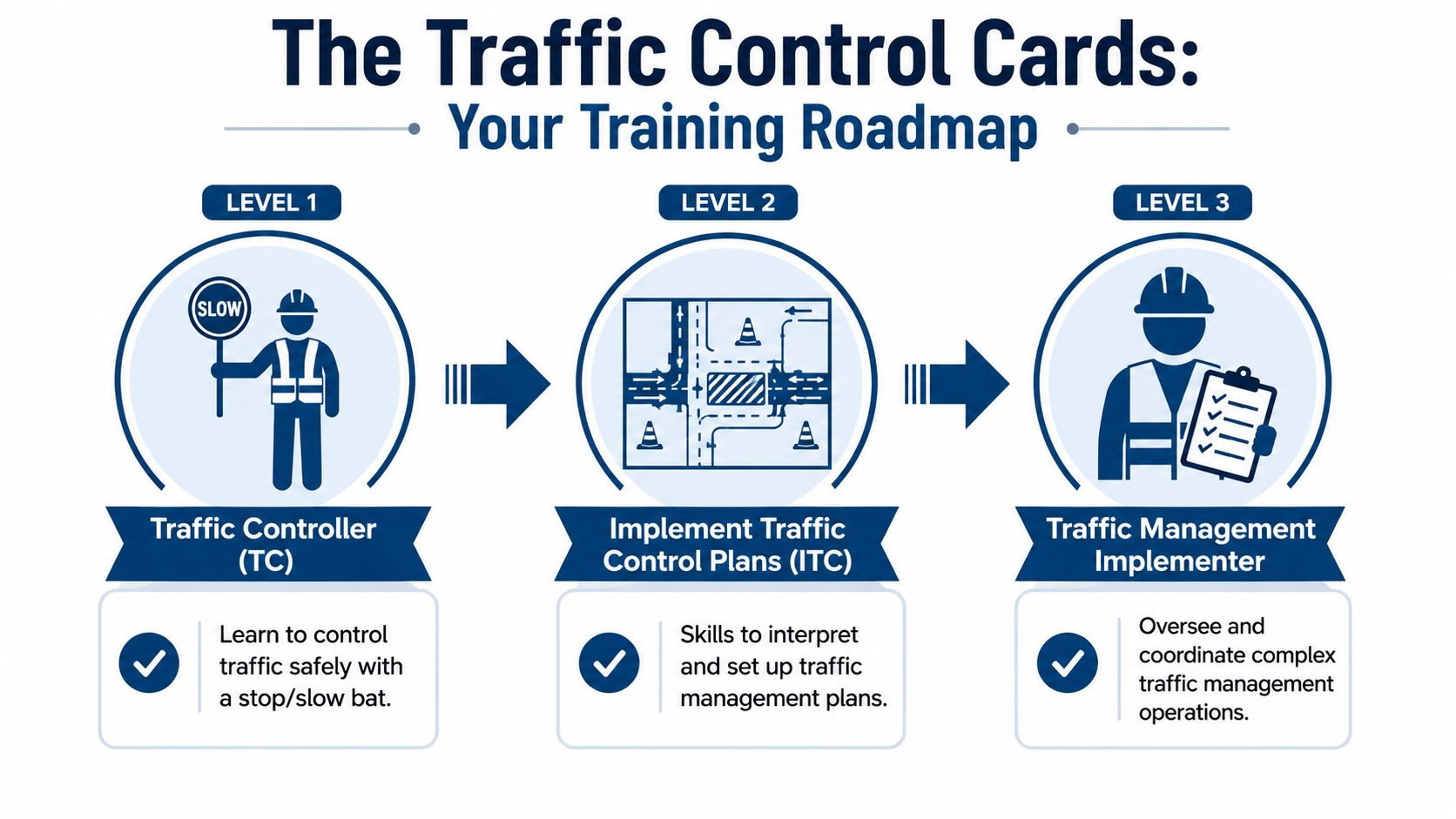
The NSW pathway usually works like this:
Traffic Controller / Blue Card pathway
Your entry point. You control traffic and work inside an existing setup under the site traffic arrangements already in place.Implement Traffic Control Plans / Yellow Card pathway
This adds site capability. You are no longer limited to standing on the bat. You can read the plan, set out signs and devices correctly, and help make sure the site matches the approved traffic control plan.Prepare Work Zone Traffic Management Plan / Red Card pathway
This is the planning step. It suits workers who want to move beyond field delivery into drafting, coordinating, and reviewing work zone traffic management documentation.
For some new starters, Blue plus Yellow is the better first move. It costs more up front, but it can make hiring easier because employers often need people who can both control traffic and help set up the job properly. If you want to compare that combined entry option, this Traffic Control Combo Course guide for Blue and Yellow Card training gives a clear breakdown.
TC2 sits further up the ladder. That ticket is generally needed before you work on busier, more complex roads, and you do not jump straight into it as a brand-new entrant. Providers and employers will expect you to complete the lower-level pathway first and build real site experience before stepping up.
NSW Traffic Control Qualifications Explained
| Card / Qualification | What It Allows You To Do | Common Role | Relevant TP Training Course |
|---|---|---|---|
| Traffic Controller / Blue Card pathway | Control traffic safely with a stop-slow bat on suitable worksites | Traffic Controller | Traffic Controller Course (Blue Card) |
| Implement Traffic Control Plans / Yellow Card pathway | Interpret and implement traffic control plans on site | Traffic Management Implementer | Traffic Management Implementer Course (Yellow Card) |
| Prepare Work Zone Traffic Management Plan / Red Card pathway | Prepare work zone traffic management planning documentation | Traffic Planner or senior traffic management role | Prepare Work Zone Traffic Management Plan Course Pwz Red Card |
The trade-off is simple. Blue only is the quicker and cheaper starting point. Blue plus Yellow usually gives you more value in the hiring market because you can do more than one task on site. Red is worth adding after you understand how real jobs run, because a good plan on paper still has to work in live traffic, with weather, access problems, delivery vehicles, and crews under pressure.
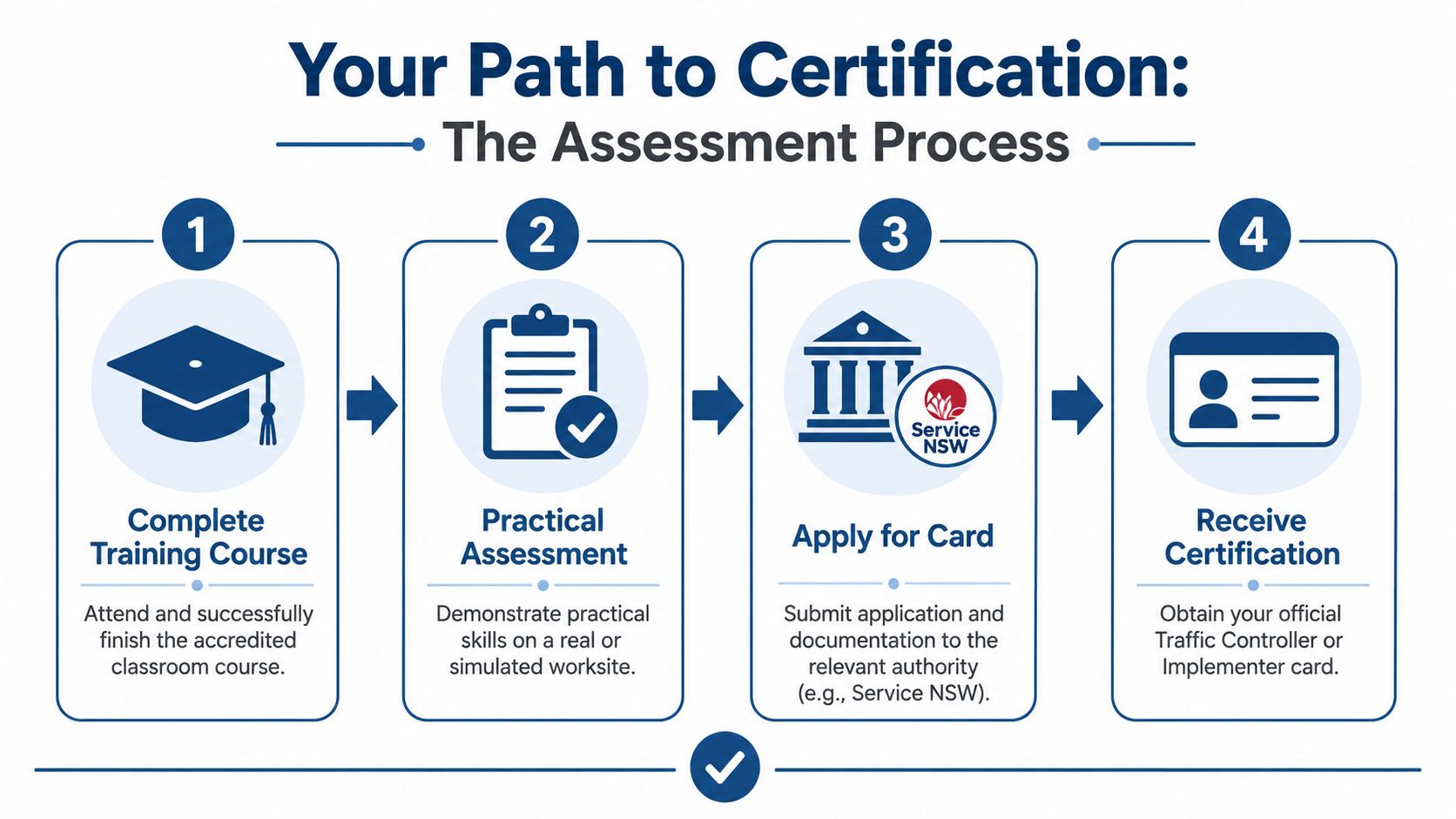
The Assessment and Certification Process
You finish the course, pass the class activities, and assume you are ready for site work. In NSW, that assumption causes trouble. The assessment stage is where providers and employers see whether you can follow procedure under pressure, not just repeat it in a classroom.
What happens after the classroom component
For entry-level traffic control pathways, the classroom is only one part of the process. You also need the practical component and the right evidence to support it. If a training provider is vague about supervised practical requirements, logbooks, or how your competency is signed off, treat that as a warning sign.
Paperwork matters more than new entrants expect.
Your Statement of Attainment is issued after you complete the required training and assessment tasks. From there, timing, identity documents, and clean records all matter. Delays usually come from missing forms, inconsistent names across documents, or practical evidence that has not been filled in properly. Good operators keep copies of everything from day one.
A simple way to stay out of trouble is to ask your provider these questions before you enrol:
- What practical assessment or supervised experience is required in NSW for this course?
- Who organises that practical component?
- What documents will I leave with on the final day?
- What mistakes delay completion or re-assessment?
- If I need a re-sit, what does it cost and how soon can I book it?
What assessors usually pick up straight away
Assessors are not looking for swagger. They are checking whether you are predictable, alert, and safe around live traffic.
The common problems are familiar to anyone who has trained new starters on road jobs:
- Rushed sequencing: New entrants move too fast with the stop-slow bat and lose control of the traffic flow.
- Poor positioning: Standing in the wrong spot reduces sight distance and cuts down your escape options.
- Weak communication: Hand signals, radio calls, and verbal instructions need to match.
- Loss of concentration: Looking away, chatting, or fidgeting is picked up quickly because it signals poor site discipline.
Those issues are fixable, but only if you treat the assessment seriously. The recruit who stays calm, follows the sequence, and keeps scanning the work area usually performs better than the one trying to look confident.
One more point. Advanced traffic management qualifications demand more judgement, not just more paperwork. This first-hand write-up on completing the Red Card course in NSW gives a realistic view of how training becomes more planning-heavy as you move beyond entry level.
Traffic control also sits inside a bigger project chain. If you want a clearer picture of where these roles fit on civil and roadwork sites, you can explore highway construction careers.
From Qualification to Employment Practical Tips for Getting Hired
A lot of people assume the hard part is getting the ticket. It isn't. The harder part is convincing a traffic company, civil contractor, or labour hire coordinator that you'll turn up properly equipped, follow instructions, and not become a headache on a live site.
That's why two people with the same entry qualification can get very different results.
What employers actually care about
Employers rarely get excited by a bare certificate. They look for low-risk hires.
They want someone who answers the phone, arrives early, keeps PPE ready, and understands that traffic control is a safety role first. If you come across as casual about fatigue, lateness, or site rules, you'll lose ground fast.
Your first roles may also involve unsociable hours, short notice, or changing locations. That's normal. Entry-level traffic controllers in Australia typically start at approximately $30 to $35 per hour, with experienced workers earning higher rates for night shifts or more complex projects, according to Workforce Training. The money can be solid, but employers expect flexibility in return.
If a recruiter thinks they'll need to chase you for every shift, they'll move to the next applicant.
How to make yourself easier to hire
The strongest approach is simple and active:
- Build a site-ready resume: Put your White Card, traffic control qualifications, licence, and any construction, warehousing, customer-facing, or safety-related experience near the top.
- Apply beyond job boards: Contact traffic management companies directly. A short, clear message with your tickets and availability often works better than waiting on online listings.
- Show availability: If you can do early starts, weekends, or night work, say so. If you can't, be upfront.
- Keep your phone on and respond fast: A lot of first shifts are offered quickly.
- Present like someone already in the industry: Clean PPE, direct communication, no inflated claims.
Interview answers should sound practical, not rehearsed. If they ask why you want the job, talk about safety, site work, teamwork, and reliability. If they ask what matters most in traffic control, say public safety, clear communication, and following the traffic guidance scheme exactly.
If you want a broader sense of where this path can lead, it also helps to explore highway construction careers. Traffic control often puts you in direct contact with the wider road construction environment, and that exposure can shape your next move.
For NSW-specific job search tactics, this guide on how to find a traffic control job in Sydney is useful because it focuses on the actual hiring process rather than just the course side.
Maintaining Your Skills and Advancing Your Career
Your first ticket gets you on site. Keeping it current, and adding the right skills at the right time, is what turns casual shifts into steady work and better roles.
Stay current or you can't stay on the roster
Traffic control work in NSW is heavily compliance-driven. If your accreditation expires, your options dry up quickly. Employers are not looking for explanations about missed refresher dates. They need people who are current and ready to work.
Treat refresher training as part of the job, not an admin task. Good workers use renewals to clean up habits that have slipped over time, especially around communication, positioning, and sticking to the traffic guidance scheme under pressure. That matters because small shortcuts in traffic control can create serious risk for workers, drivers, and pedestrians.
A simple rule helps. Track your expiry dates early, book refreshers before you are under time pressure, and keep copies of every updated credential where you can send them quickly.
Add scope if you want better pay and better responsibility
Career progression in traffic management usually comes from becoming useful in more than one part of the job.
A practical pathway looks like this:
- Start by strengthening your site performance: Show that you can follow the approved setup, stay alert for long periods, and communicate clearly without drifting into bad habits.
- Add implementation skills: Workers who can help set out signs, devices, and site controls are more valuable than workers who can only perform the entry-level role.
- Move into planning work: If you want more responsibility, planning qualifications open the door to preparing documentation and supporting more complex work zones.
- Build trust with supervisors: Reliability, calm decision-making, and clean paperwork are often what push someone toward leading hand or coordination work.
If planning is the direction you want, the first mention should point to the right course. Prepare Work Zone Traffic Management Plan Course Pwz Red Card is one NSW training option for workers stepping toward work zone planning responsibilities.
Do not rush into extra courses just to collect cards. Pick the next qualification based on the work you are being offered, the type of projects in your area, and whether you want to stay field-based or move toward planning and supervision.
That is the trade-off. Staying compliant keeps you employable. Targeted upskilling gives you more earning power and a clearer path beyond the bat.
Frequently Asked Questions About Becoming a Traffic Controller
Is traffic control physically demanding?
Yes. You'll spend long periods standing, watching traffic, communicating clearly, and staying alert in changing weather. It's not heavy labour all day, but it does demand stamina and concentration.
Do I need my own car?
It helps a lot. Many jobs start early and worksites can move. Employers value workers who can get to site without transport becoming an issue.
Will I have to do night shifts or weekends?
Often, yes. Roadwork and civil projects regularly run outside standard daytime hours because that's when crews can work with less disruption to traffic.
What PPE should I expect to use?
At minimum, expect site-appropriate high-vis clothing, protective footwear, and other PPE required by the employer or site conditions. Always confirm before your first shift rather than guessing.
Is traffic control a good first step into construction?
Yes. It gives you live site exposure, teaches discipline around safety systems, and puts you around supervisors, plant crews, and contractors who may open up your next opportunity.
If you want a practical starting point, TP Training offers nationally recognised safety and vocational training across NSW, including White Card, traffic control, and traffic management pathways. Choose the course sequence carefully, make sure the practical requirements are clear before enrolment, and treat your first job search like part of the qualification, not something that starts after it.

You may also like
Safety & Health Policy: A Guide for Australian Employers

Asbestos Removal Requirements in NSW: The Complete Guide