

7 Hospitality Jobs Sydney 2026: Roles and Qualifications
You've found a bar vacancy near your station and a kitchenhand job with shifts that fit your week. Then you reach the requirements: RSA, food safety knowledge, coffee experience. You're ready to work, but you're not sure which qualification you need before applying.
That's where a search for hospitality jobs in Sydney should start: with the duties, not just the job title. Many venues ask for specific qualifications before interview. RSA is mandatory for anyone seeking employment in an establishment that sells or serves alcohol in NSW. Food handling, gambling services and coffee preparation involve different skills, so one certificate won't cover every vacancy.
The options below include a training provider, direct employers and specialist recruiters. They serve different purposes, from preparing for your first shift to finding a management position. You can also use practical AI tools for job seekers to organise applications and tailor your CV. Keep every claim accurate, especially your qualifications, availability and practical experience.
Table of Contents
- 1. Hospitality courses – TP Training
- 2. Merivale
- 3. Frontline Hospitality Sydney
- 4. Troys Hospitality Staff
- 5. Marriott International
- 6. Accor
- 7. THE MONDAY GROUP
- Sydney hospitality employers and training options compared by role type, best fit and entry-level suitability
- Pick Your First Qualification and Apply This Week
1. Hospitality courses – TP Training
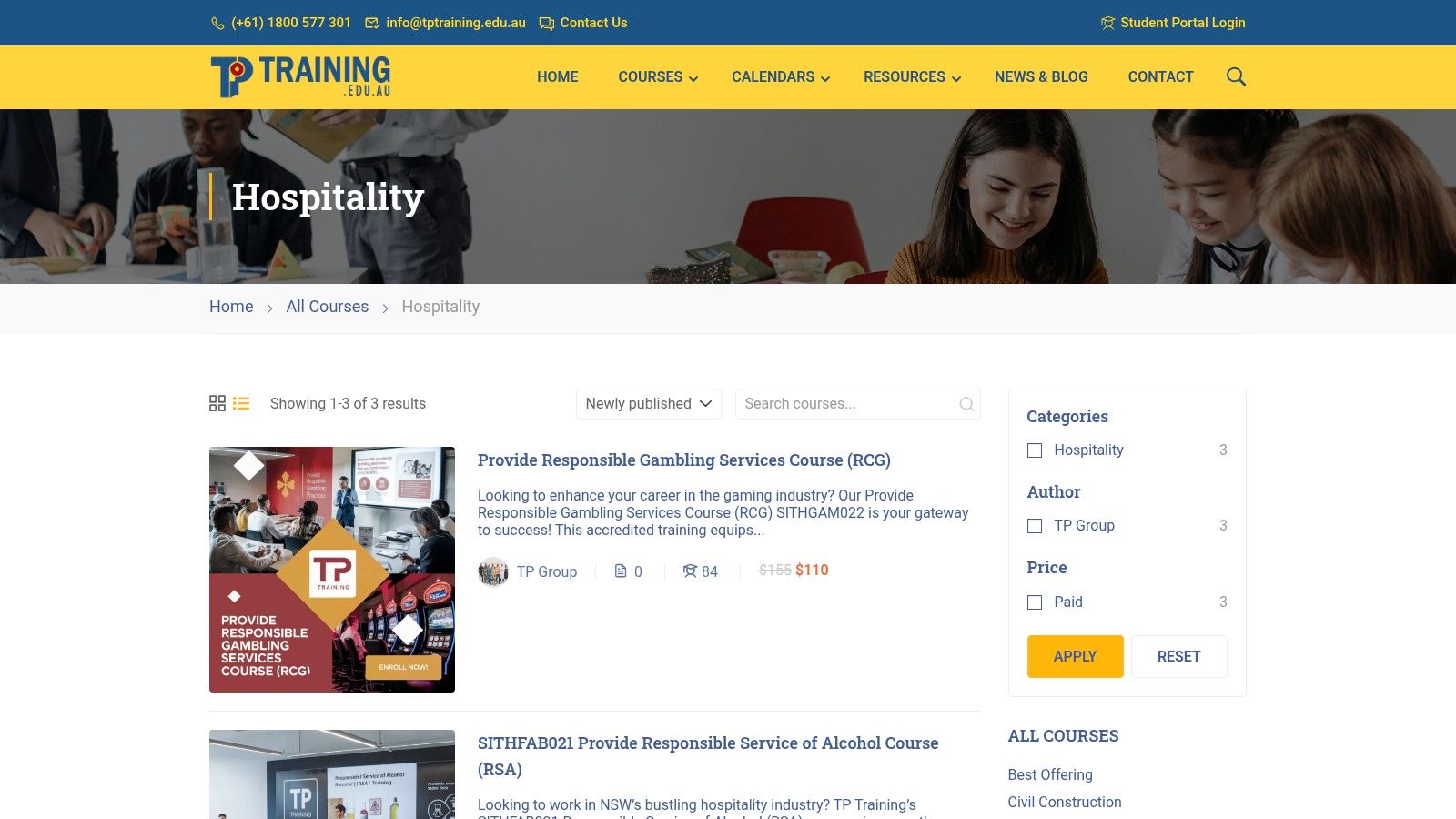
Best for applicants who need the right qualification before approaching employers. A training category isn't a vacancy board, but it can answer the question that stops a first application: what do I need to be eligible for this work?
The TP Training hospitality category brings together RSA, RCG and Food Safety Supervisor training. Our hospitality training overview helps candidates compare these areas rather than treating hospitality as a single qualification. We deliver training across Sydney locations including Penrith, Burwood, Parramatta and Sydney CBD.
Match training to the actual duties
Start with a vacancy you'd accept. Highlight the tasks involving alcohol, gambling, food handling or coffee preparation, then separate mandatory credentials from skills the employer prefers.
- Licensed venue work: Identify the RSA requirement before applying for bar, restaurant or other licensed-venue positions.
- Gambling duties: Consider the Provide Responsible Gambling Services Course Rcg, which provides practical, nationally recognised training with experienced trainers and hands-on learning across NSW.
- Food responsibilities: Distinguish general food-handling knowledge from a position carrying Food Safety Supervisor responsibilities.
The advantage is having relevant compliance pathways in one category, backed by practical vocational training. That's useful if you're changing industries and don't yet know how venue responsibilities differ.
The limitation is that a category page isn't a single hospitality qualification or a promise of employment. Course schedules and delivery arrangements belong to individual course details, not the category overview.
Practical rule: Choose training against the work you intend to perform. Don't collect unrelated certificates and assume they'll replace practical ability.
For café work, employers may also assess how you organise orders, clean equipment and prepare drinks. A qualification can support your application, but you still need to explain what you can do confidently and where you'll need supervision.
2. Merivale
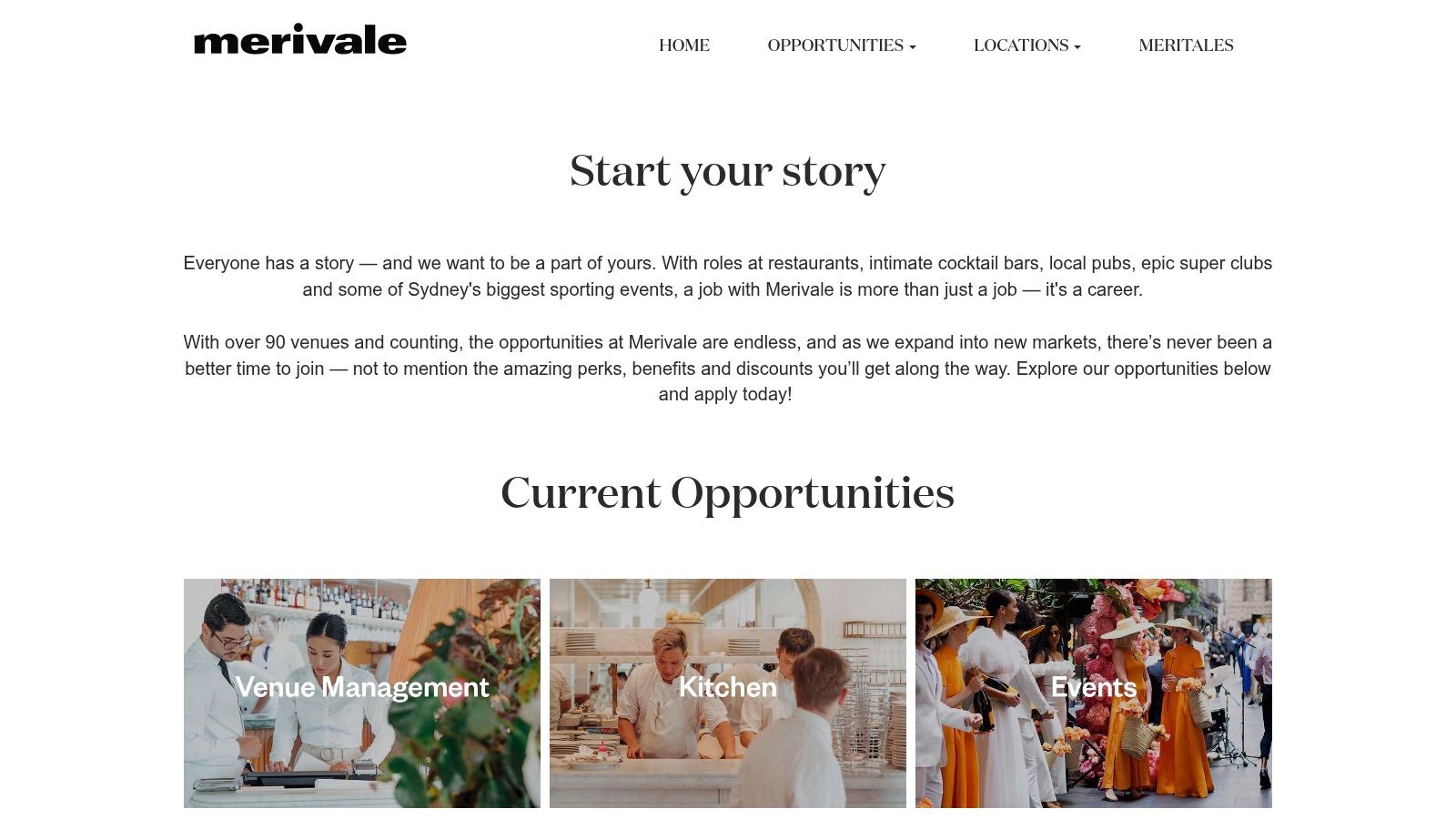
Want to compare a restaurant floor role with pub, bar or event work without searching unrelated employers? Merivale's careers site is a useful direct-employer starting point. Its portfolio includes Sydney restaurants, bars, pubs, clubs and event operations.
Search categories include the Sydney CBD, Inner West, Eastern Suburbs and Northern Beaches. That location filter matters: a venue that's convenient for lunch service may be difficult to leave after a late finish.
Merivale recruits across front of house, kitchens, bars, events, gaming, venue management and head office. Apply to the specific position that matches your skills rather than sending the same broad application everywhere.
Make the application venue-specific
A bar application should explain your alcohol-service readiness and availability. A kitchen application should describe preparation, cleaning and food-handling ability without borrowing skills you haven't practised.
- Strength: You can compare different venue types and locations within the same employer.
- Trade-off: Each venue and role can have different experience requirements, service expectations and rosters.
- Useful fallback: Join the talent network if there isn't a suitable advertised vacancy, but keep making targeted applications elsewhere.
For central-city licensed venues, our guide to RSA training in Sydney CBD explains the training pathway relevant to that search.
Before submitting, check the venue address, expected finish times and transport home. Being available for the advertised roster is more useful than claiming unrestricted availability you can't maintain. A talent-network registration also isn't a confirmed vacancy or an interview booking.
3. Frontline Hospitality Sydney
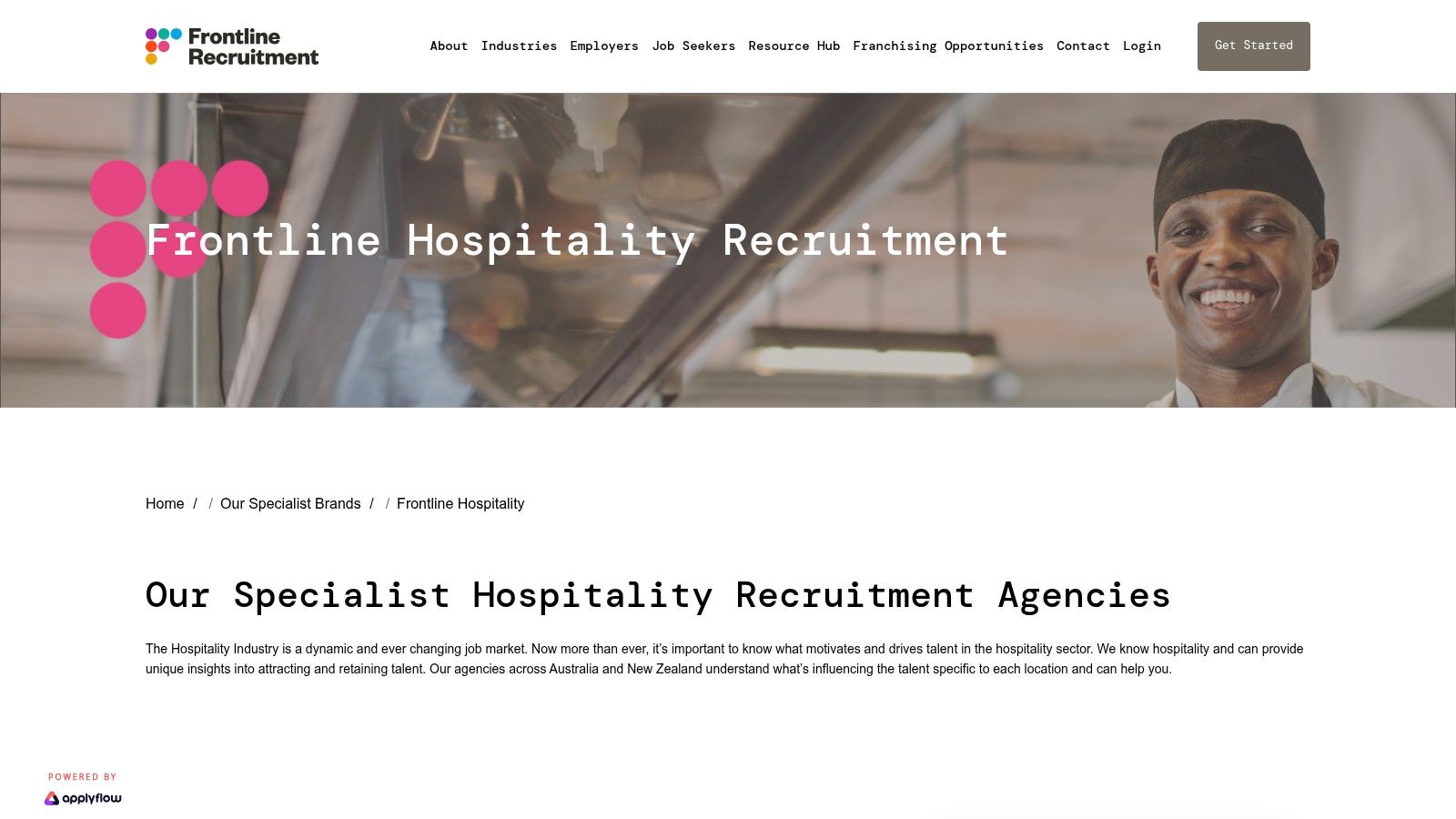
A specialist recruiter is most useful when you can explain your next move. If you already have hospitality experience, that might mean moving into supervision, changing venue type or finding a permanent position with a more suitable roster.
Frontline Hospitality has a dedicated Sydney agency and recruits across pubs, bars, restaurants, hotels and resorts. Candidates can review listings and contact hospitality-focused consultants rather than relying only on a general job board.
The benefit is a conversation about fit. The limitation is control: a recruiter can introduce candidates, but the employer still decides whom to interview and appoint.
Give the consultant usable evidence
Describe your responsibilities, not just your previous title. A café worker who can handle customer orders but still needs support on the espresso machine should say so clearly.
If coffee preparation is your target, our barista course NSW guide can help you identify the skills to develop. Be ready to discuss espresso extraction, milk texturing, cleaning and working through an order queue.
Tell a recruiter what you can perform independently, what you can do with supervision, and what you haven't learnt yet.
Best fit: Candidates seeking permanent opportunities, advice or progression into a more responsible role.
Less suitable: First-time applicants expecting immediate placement without checking the advertised experience requirements.
Send a focused CV with your preferred locations, availability and relevant qualifications. Explain any roster restrictions early, particularly if you're balancing study, family commitments or another job. That gives the consultant something practical to match against an employer's requirements.
4. Troys Hospitality Staff
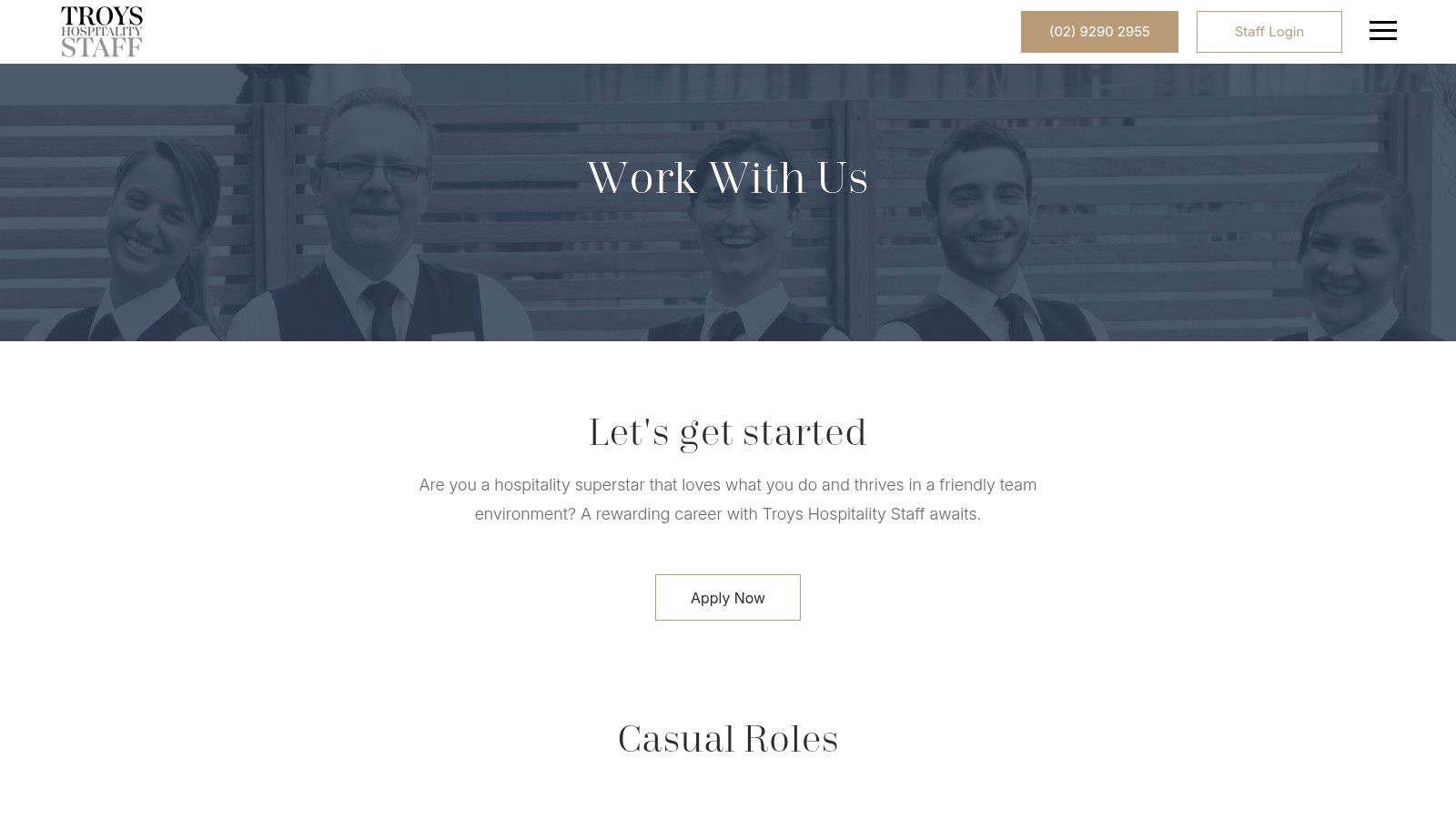
A stadium shift and a neighbourhood restaurant shift can demand very different working habits. Events may involve concentrated service periods, unfamiliar teams and detailed arrival instructions. Troys Hospitality Staff suits candidates who can prepare for that variation.
Troys' hospitality employment service advertises casual opportunities across front- and back-of-house work. Role types include chefs, wait staff, kitchen support, bar and cocktail service, with stadium, event and venue assignments.
The attraction is flexibility and variety. The drawback is that available shifts aren't the same as guaranteed weekly hours, so casual agency work needs careful budgeting.
Confirm the assignment before accepting
Don't accept a shift on the job title alone. Ask what service you'll perform, where to report and which equipment or uniform you must bring.
- Role requirements: Confirm whether the assignment requires RSA, cocktail skills, kitchen experience or other specific capabilities.
- Shift logistics: Check the start time, expected finish, travel route and reporting contact.
- Employment details: Understand the engagement terms, pay arrangements and process for confirming hours worked.
Kitchen support may be a practical starting point if you don't yet have confident table-service skills. However, it still requires safe work habits, attention to instructions and the ability to keep a work area organised.
For experienced applicants, varied assignments can broaden exposure to different service environments. For beginners, be honest about your limits so you're not placed in a role that expects independent performance from the start. Flexibility works best when both sides understand your actual capability.
5. Marriott International
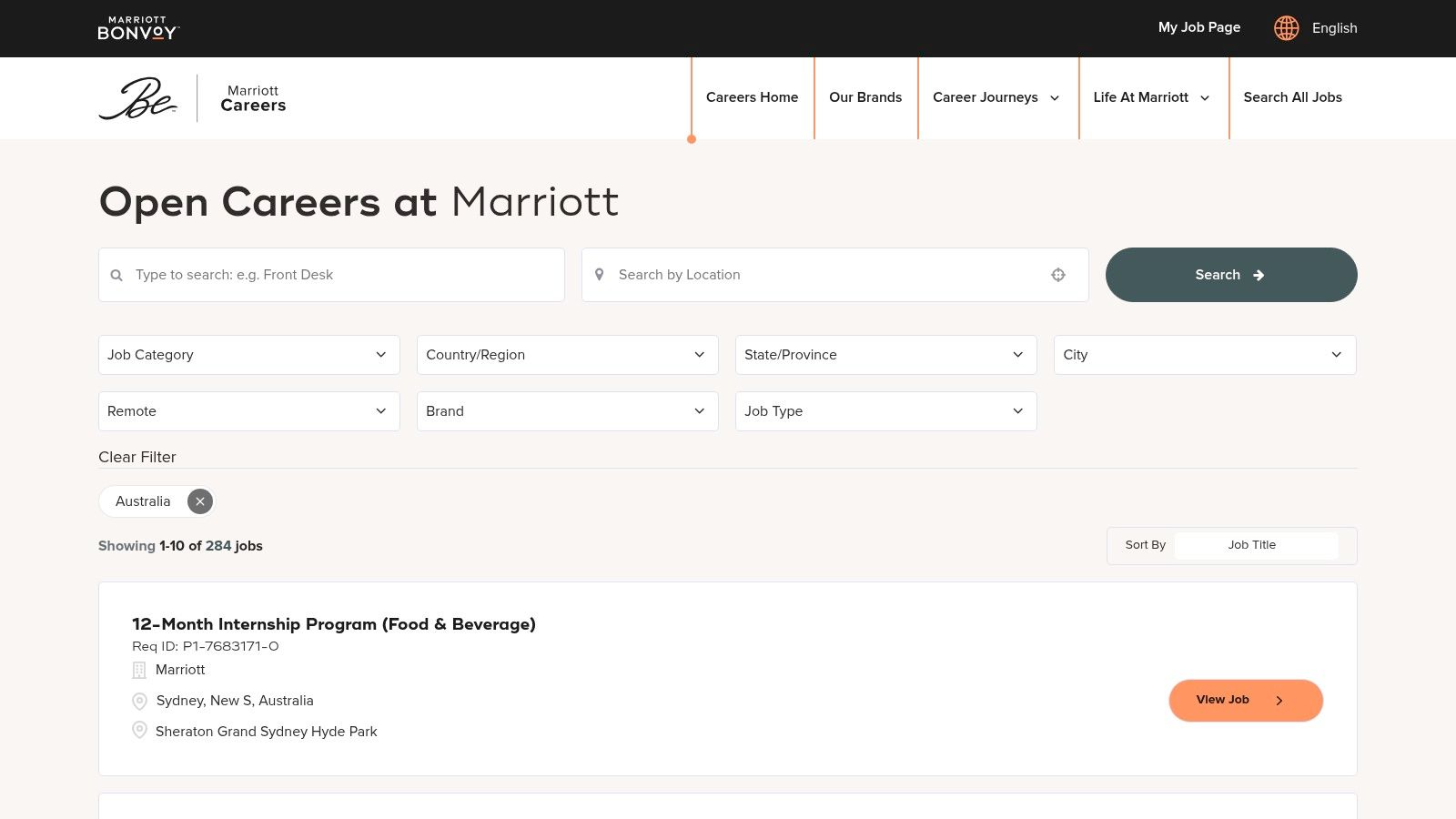
Hotel hospitality offers more than restaurant service. Marriott's Sydney opportunities can include food and beverage, culinary work, front office and other hotel operations, making it useful for applicants who want to compare guest-facing and behind-the-scenes duties.
The Marriott International careers portal allows searches by location, job category and employment type. Narrow the results to Sydney before assessing individual properties, because a global careers portal can otherwise leave you sorting through unsuitable locations.
Some properties advertise internships and early-career pathways alongside operational and supervisory positions. Read the eligibility requirements rather than assuming an early-career label means no experience is needed.
Choose a department before choosing a brand
A hotel breakfast role may require early starts and food-service readiness. Front office work places more emphasis on guest communication, accurate records and handling requests calmly.
What works: Applying directly through the employer's system to a department that matches your skills and preferred working hours.
What doesn't: Sending an identical application for reception, kitchen and restaurant positions without explaining why you suit each one.
For food-related positions, understand the difference between safe food handling and designated supervisory responsibilities. Our explanation of what a Food Safety Supervisor does helps clarify that distinction.
Marriott's range of properties gives candidates different teams and environments to consider. It doesn't make conditions interchangeable: check the individual hotel, roster, employment type and experience requirement. During interview, ask who provides induction and which duties you'll be expected to perform independently.
6. Accor
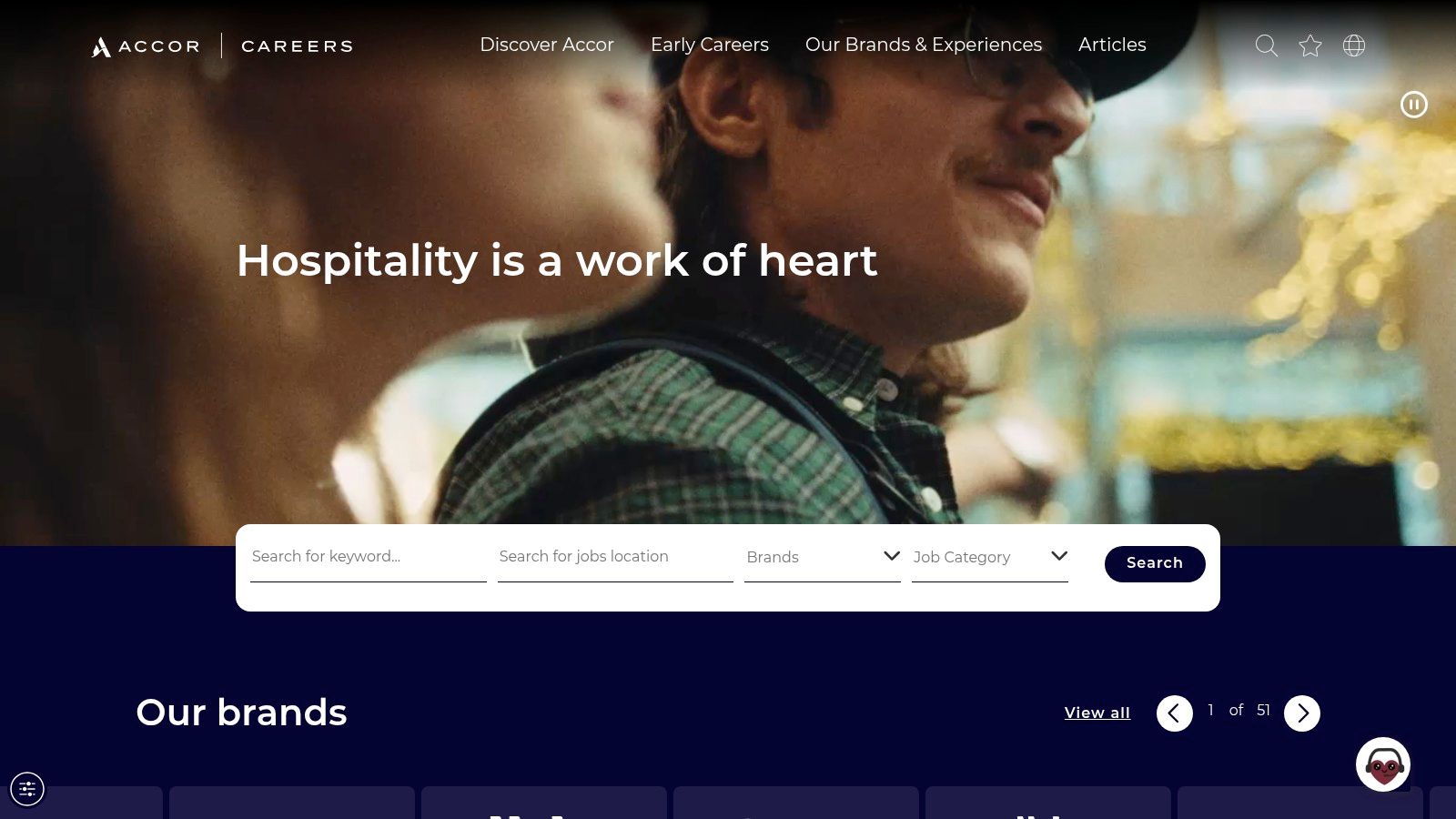
If you're open to hotel restaurant, bar, guest-service or accommodation work, Accor's careers site gives you another direct-employer search option. Filter for Sydney and then compare the duties, not just the hotel brand.
Accor's listings span food and beverage, culinary, rooms and guest services. Individual advertisements may specify RSA, Australian working rights, rotating rosters or weekend and public-holiday availability.
The main advantage is range. The trade-off is that benefits, working conditions and entry requirements vary between properties and positions.
Read requirements before benefits
A listing that mentions dining benefits or learning opportunities can be appealing. Those details don't resolve whether you can reach the property for an early shift or meet its service expectations.
- Qualifications: Separate requirements you must already hold from training the employer says it will provide.
- Roster: Check whether rotating shifts fit your transport and personal commitments.
- Responsibilities: Establish whether you're joining a service team or taking responsibility for supervising others.
For food-service supervision, our Food Safety Supervisor certificate NSW guide explains the qualification area to consider.
Before accepting: Confirm the property, department and roster in the offer. A group-wide careers page doesn't mean every hotel offers the same conditions.
Accor is a useful comparison with Marriott if you're considering a hotel career rather than a single casual shift. Keep your applications distinct: explain why the advertised department suits you, and use examples of relevant service, cleaning, food preparation or customer-support skills. Don't claim every hotel benefit applies unless it appears in that position's terms.
7. THE MONDAY GROUP
Experienced candidates need a different search strategy from first-time applicants. A venue manager, head chef or hospitality leader should demonstrate responsibility for people, service standards and daily operations, not list years spent in venues.
THE MONDAY GROUP's hospitality recruitment service covers restaurants, pubs, bars, hotels, resorts and event venues. Its focus includes management, culinary and hospitality leadership, with permanent and temporary recruitment divisions.
That makes it more relevant to career progression than to finding your first casual shift. Sydney listings and a local office provide a starting point, but suitability depends on the current recruitment brief.
Prepare evidence of responsibility
A management CV needs to explain your scope. Describe whether you supervised a section, allocated duties, coordinated service, handled complaints or supported stock control.
- Service leadership: Explain how you organised staff and maintained standards during busy periods.
- Operational responsibility: Identify the ordering, rostering, handover or reporting tasks you performed.
- Compliance awareness: State relevant qualifications and the responsibilities you held, without implying authority you didn't have.
The advantage is a specialist conversation about a more substantial career move. The limitation is that a boutique recruiter can't make a specialist position suitable for someone without the required background.
If you're moving from industrial, warehousing or construction work, distinguish transferable skills from hospitality-specific experience. Supervising people, following safety procedures and coordinating tasks are useful foundations, but they don't automatically establish restaurant or hotel management competence.
For applicants already in hospitality, be precise about your desired progression. A clearer brief helps avoid interviews for jobs with an impressive title but unsuitable hours, duties or location.
Sydney hospitality employers and training options compared by role type, best fit and entry-level suitability
| Item | Main Roles | Best For | Entry-Level Suitability |
|---|---|---|---|
| Hospitality courses, TP Training | RSA, RCG and food safety training | Hospitality qualifications and workplace requirements | Suitable for people starting out; provides training, not job placement |
| Merivale | Front of house, kitchen, bar, events, gaming and management | Finding roles across Sydney venues and hospitality settings | Varies by vacancy; check experience requirements |
| Frontline Hospitality Sydney | Roles in pubs, bars, restaurants, hotels and resorts | Specialist recruitment support and career progression | Some roles may require experience |
| Troys Hospitality Staff | Service, kitchen, bar, stadium and event work | Flexible casual shifts and event experience | Some roles suit newcomers; experience or specific skills may be required |
| Marriott International | Food and beverage, culinary, front office and hotel operations | Hotel work and longer-term career development | Suitable options may include entry-level roles and internships |
| Accor | Food and beverage, culinary, guest service and hotel operations | Exploring roles across hotel brands and properties | Varies by role; some require experience or RSA certification |
| THE MONDAY GROUP | Hospitality management, culinary leadership, hotels and events | Experienced candidates seeking professional or management roles | Generally not suited to first jobs or casual entry-level shifts |
Pick Your First Qualification and Apply This Week
Start with the work you want to do, not the longest list of certificates you can find. Choose between café service, licensed-venue work, kitchen duties, hotel operations or a more experienced supervisory role. Then read current advertisements and identify which qualifications employers require.
RSA, food safety and barista training serve different purposes. RSA addresses alcohol-service requirements. Food safety knowledge supports safe handling and preparation, while Food Safety Supervisor responsibilities need separate attention. Barista training develops coffee-making skills, but employers may still assess your practical ability.
Turn preparation into applications
Save suitable vacancies and compare their duties, location and roster. Enrol in the relevant training where you have a genuine qualification gap, then prepare a CV that clearly separates completed credentials from planned study.
TP Training offers RSA, Food Safety Supervisor and hospitality courses across our Sydney centres. Our RSA course costs $190, reduced from $220, including the NSW RSA Competency Card fee. Choose the course relevant to your intended duties rather than assuming every hospitality applicant needs the same pathway.
Apply to two or three Sydney employers or agencies from this list. Use direct employers for specific advertised positions, casual staffing agencies for suitable shift work, and specialist recruiters when your experience supports a more targeted career move.
- Show readiness: Put relevant credentials, practical skills and realistic availability where recruiters can find them quickly.
- Check job quality: Ask about employment type, expected hours, pay arrangements, supervision and transport-compatible finish times.
- Track progress: Record the position, application date and follow-up contact so you don't lose track of conversations.
Before interview, build a recruiter-friendly online presence and check that your public profiles agree with your CV. Keep your application honest and specific. You don't need to pretend you can already do everything, but you do need to show that you understand the role and are preparing for it properly.
TP Training offers practical hospitality training with experienced trainers across Sydney and NSW. Visit TP Training to compare relevant course options and prepare for the qualifications Sydney hospitality employers ask for.

You may also like

4 Construction Jobs Sydney Workers Can Start in 2026

Construction Labourer Jobs: Duties and Pathways Explained