Childcare First Aid Training: What Services Need in 2026
Children aged 1–4 had Australia's highest emergency-department presentation rate for injury or poisoning, at 12,200 per 100,000 population, according to the Australian Institute of Health and Welfare's child injury factsheet. That's the age group many early childhood educators work with every day. These are national figures, not childcare incident rates, but they make the need for age-appropriate emergency skills clear.
For a centre director, childcare first aid training is also a rostering responsibility. A folder full of certificates doesn't establish that a qualified person will be immediately available when an emergency happens. You need to connect each person's current credentials to their actual attendance, including opening shifts, breaks, excursions and unexpected absences.
Table of Contents
- Required Qualifications by Role and Renewal Cycle
- What a Childcare First Aid Course Covers
- Coverage Checks and Certificate Register
- Why Age-Specific Injury Skills Matter for Young Children
- Choosing a Course Format That Still Proves Hands-On Skill
- Book Childcare First Aid Training Before Your Renewal Date
Required Qualifications by Role and Renewal Cycle
Centre-based services must have a staff member or nominated supervisor with a current approved first aid qualification present and immediately available whenever children are being cared for, with equivalent coverage for approved anaphylaxis and emergency-asthma training, as explained in ACECQA's administration of first aid guidance. One person can hold all three credentials, or the service can spread them across different qualified people on the roster.
The practical question is whether the people you count towards coverage are attending and can respond immediately. A qualified director working off-site cannot fill a gap merely because their certificate is stored at the centre.
Family day care has an individual qualification requirement. Every educator and educator assistant must personally hold current approved first aid, anaphylaxis-management and emergency-asthma-management qualifications. The centre-based shared-coverage approach does not apply there.
Required qualifications and renewal cycles by role
ACECQA's administration of first aid guidance sets three-year renewal as the industry standard for first aid, anaphylaxis and asthma training, with annual CPR refreshers. The categories below separate the broader qualification cycle from CPR currency, because the two run on different clocks.
| Role or service | Qualifications required | Renewal cycle |
|---|---|---|
| Centre-based service, on duty at all times | At least one current first aid, one anaphylaxis and one emergency-asthma qualified person, with credentials potentially held by the same person | First aid, anaphylaxis and asthma generally every 3 years |
| Family day care educator or educator assistant | First aid, anaphylaxis and emergency asthma, all three held individually | First aid, anaphylaxis and asthma generally every 3 years |
| Any staff member delivering CPR | Current CPR training | Refresh annually |
Treat these as three separate checks during onboarding. Confirm the qualification is approved for the intended childcare role, confirm it is current, then map where that person appears on the roster. An applicant who says they are "first-aid trained" has answered none of those questions yet.
Emergency-response credentials also sit apart from an educator's other qualifications. A credential such as how early childhood teachers support school readiness supports pedagogy and practice, and it does not count towards first aid coverage. Keeping the registers separate stops a strong result in one column from masking a gap in another.
When a credential stops counting
A lapsed credential means that person no longer contributes coverage for that qualification. Experience, seniority or a booked renewal does not replace current evidence.
ACECQA's administration of first aid guidance also treats CPR and emergency life support completed more than 12 months earlier as not current for approval purposes, so an educator whose refresher is booked for next month contributes nothing this week. Our explanation of how often CPR should be refreshed can help staff understand why CPR needs its own reminder rather than being bundled into the broader first aid renewal.
Practical rule: Check the qualification, CPR currency and actual attendance separately. Passing one check does not settle the others.
What a Childcare First Aid Course Covers
Paediatric resuscitation requires age-specific instruction. For practitioners trained in paediatric basic or advanced life support, the Australian Resuscitation Council sequence described in the childcare first aid programme requirements uses two initial ventilations, followed by 15 chest compressions to two ventilations, rather than the 30:2 approach commonly taught for adults. That practitioner-specific distinction isn't a reason to improvise during an emergency: educators should follow the protocol taught and assessed for their qualification and emergency-dispatch instructions.
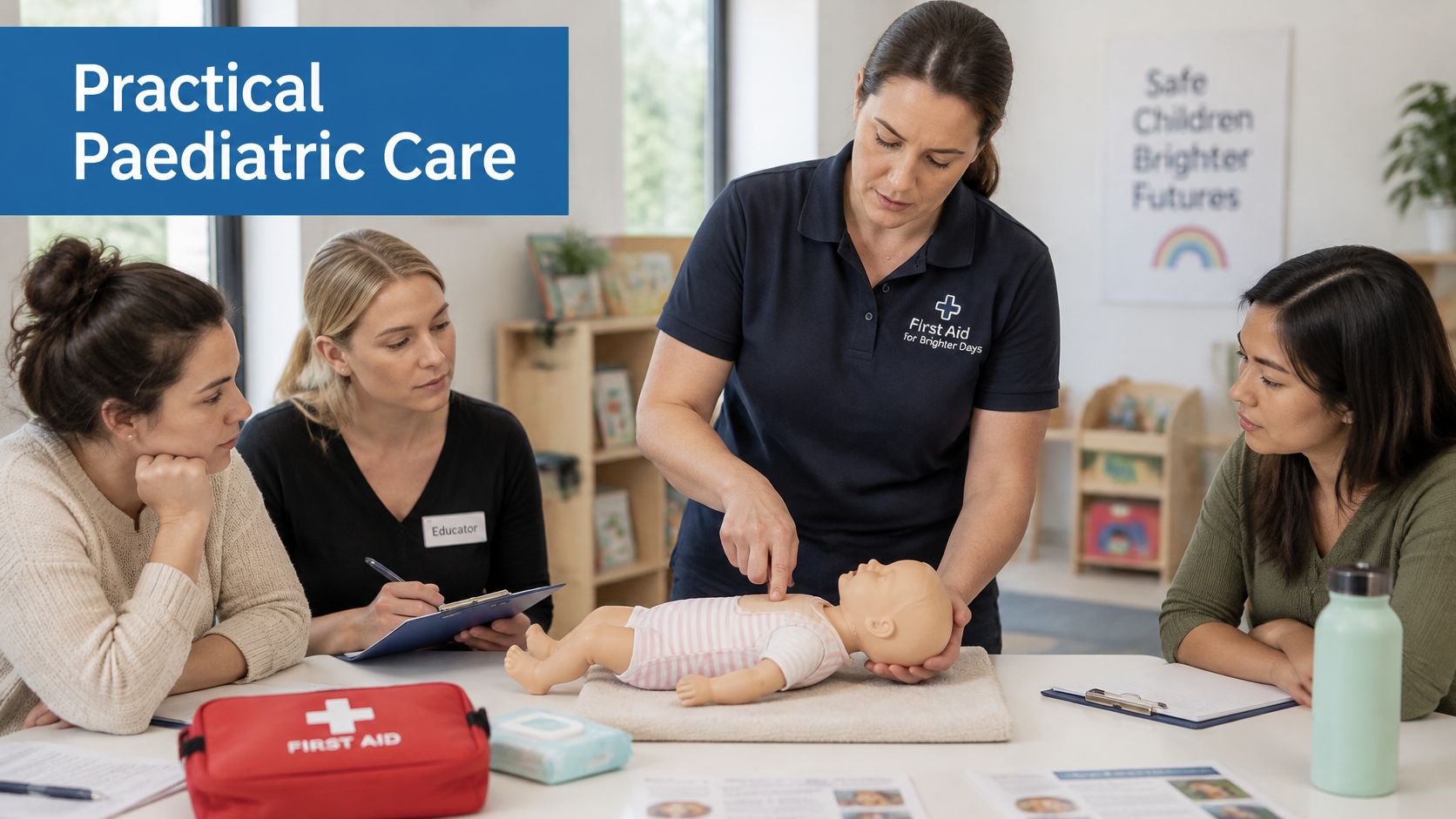
A suitable course must demonstrate more than familiarity with adult CPR theory. ACECQA expects practical assessment using adult, child and infant manikins, together with hands-on use of approved adrenaline-injector devices and emergency-response skills.
Core course modules and the evidence each must show
Use this checklist to discuss practical assessment with a trainer. A course should allow learners to demonstrate their response, not merely select the correct answer on a screen.
| Module | Core skill | How competence is assessed |
|---|---|---|
| Infant and child CPR | Two initial ventilations, then 15 compressions to 2 ventilations for paediatric-trained practitioners | Manikin performance under supervision |
| Choking response | Age-appropriate response for infants and children | Scenario practice on child and infant manikins |
| Anaphylaxis | Recognise signs and give an approved adrenaline injector | Practical administration on a trainer device |
| Asthma emergency | Recognise respiratory distress and respond | Scenario assessment |
| Injury and wound care | Severe bleeding, fractures, head injury and burns | Practical wound care and scenario |
| Poisoning, convulsions and drowning | Respond, escalate and monitor until help arrives | Scenario performance and escalation |
CPR and choking practice should make differences between infants and children visible. Learners need to demonstrate positioning, airway management and ventilation, rather than assume that reducing the force used on an adult manikin establishes paediatric competence.
Anaphylaxis and asthma scenarios should require the learner to recognise deterioration, locate the relevant equipment and act. For adrenaline-injector practice, handling a trainer device matters: knowing what an injector looks like isn't the same as using it correctly.
From recognising danger to handing over care
Injury scenarios should include severe bleeding, suspected fractures, head injuries and burns. Poisoning, convulsions and drowning exercises should test whether learners recognise urgency, call 000, monitor the child and communicate clearly with emergency services.
Paediatric medicine decisions require particular care because dosing may depend on weight and paediatric length or weight charts. That doesn't authorise educators to calculate or administer unfamiliar medicines independently; training must reinforce their scope, the child's management plan and the applicable emergency instructions.
For an international perspective, Cura Academy's discussion of paediatric first aid for UK carers explains the value of child-focused learning. It isn't evidence that a qualification meets Australian approval requirements.
Our overview of general first aid course content is useful when comparing broader workplace skills with childcare needs. A successfully assessed learner should be able to recognise the emergency, perform the appropriate practical response, summon help and give a clear handover under realistic supervision.
Coverage Checks and Certificate Register
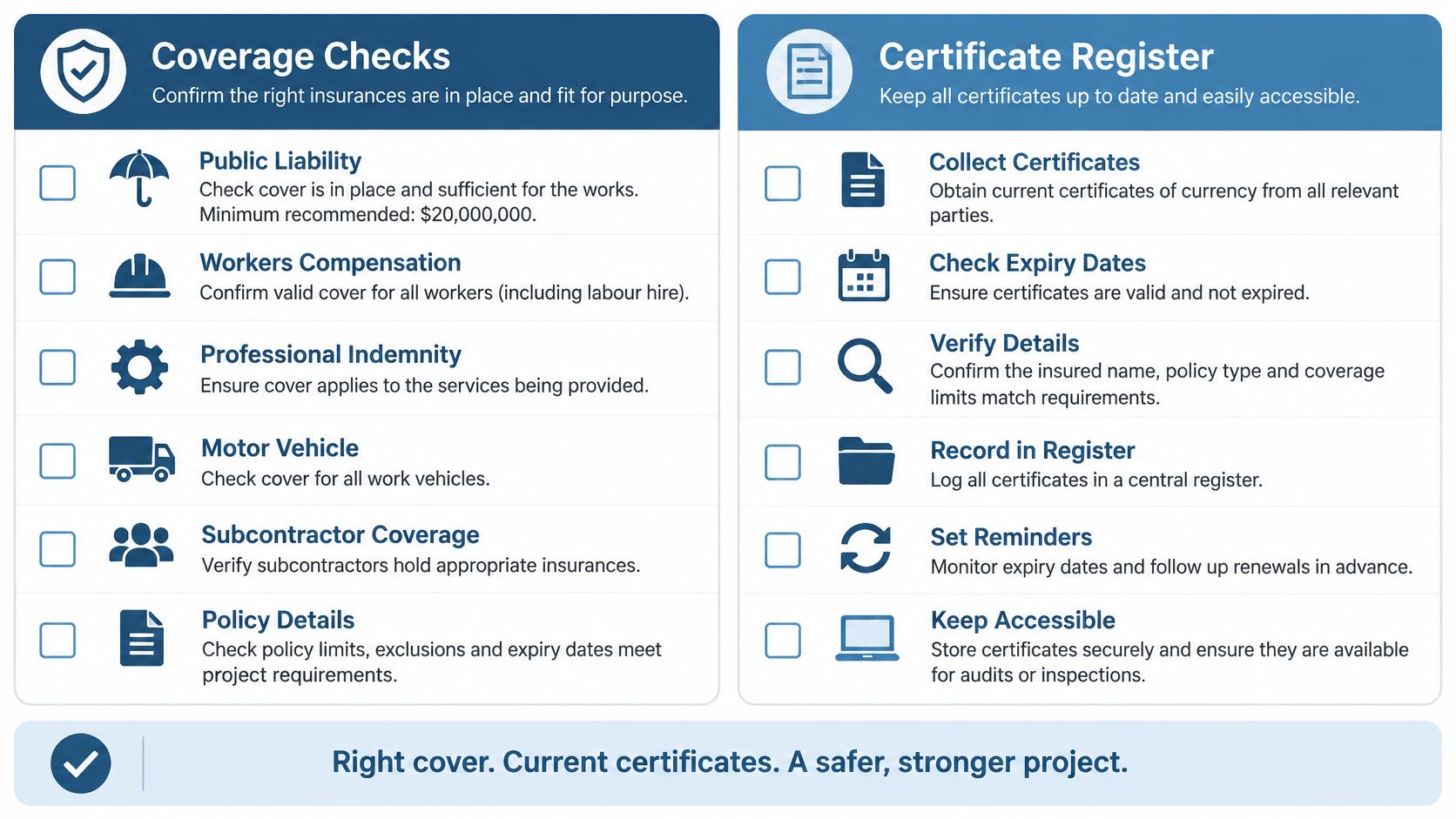
Coverage must continue while children are being educated and cared for. ACECQA's first aid qualification guidance makes presence and immediate availability central to the requirement, alongside current asthma and anaphylaxis competence. A staffing spreadsheet that lists trained employees without showing when they attend doesn't establish that continuity.
A full training wall can still leave an uncovered hour. A credential may have lapsed unnoticed, a qualified staff member may leave with an excursion group, or the only immediately available credential holder may finish before the last child leaves.
Run a coverage check against the working roster
Map every care period. List opening and closing periods, room arrangements, breaks, early and late shifts, excursions and any split groups. Use the roster as it runs, not an idealised template.
Assign named credential holders. For each time block, identify who holds current first aid, anaphylaxis and emergency-asthma credentials. Record names, rather than a general notation that the shift is covered.
Test immediate availability. Consider where those people will physically be and whether their duties let them respond at once. An educator counted for coverage who is absorbed in a task away from the children may not be able to act quickly when an incident starts.
Name a qualified backup. Decide who replaces the nominated person during sickness, an appointment or an unexpected early departure. Check the backup's relevant credentials before relying on them.
Match renewal bookings to expiry dates. Identify credentials approaching their renewal point and arrange training while existing coverage remains valid. Allow for an employee missing the practical session or needing further assessment.
Recheck after changes. Repeat the check whenever the roster changes and before an excursion departs. A previously approved roster doesn't establish coverage for a different staffing arrangement.
Keep the check simple enough that the responsible person can use it during a busy handover. A complicated workbook that only its creator understands is fragile when that person is absent.
Where the gaps open
An uncovered break: Say the educator counted for all required credentials leaves the premises during lunch. Other educators remain with the children, but nobody has checked whether those staff hold current approved credentials. Resolve the cover before the break begins, rather than relying on a phone call to bring someone back.
A break itself isn't automatically a compliance failure. The issue is whether the person remains present and immediately available, or whether another appropriately qualified person provides cover.
An excursion changes both groups: A qualified educator accompanies children to a local activity. The director checks the excursion team but overlooks the children remaining at the service. Assess the departing group and the remaining group separately, including the arrangements during departure and return.
A roster is only useful evidence when it reflects who actually attended. Record replacements and early departures, not just planned shifts.
You don't necessarily need a separate credential holder in every room. Room layout, separate buildings and staff duties can affect immediate availability, so test the arrangement rather than treating a name on the premises as sufficient.
Keep a person-by-person certificate register
Maintain a register row for each staff member you may count towards coverage. Store the underlying certificates where authorised staff can retrieve them without depending on someone's personal email account.
| Register field | What to record or verify |
|---|---|
| Staff identity | Name matched to the roster and certificate |
| First aid | Qualification or training code, issue date and expiry or renewal date |
| Anaphylaxis | Approved training evidence, issue date and expiry or renewal date |
| Emergency asthma | Approved training evidence, issue date and expiry or renewal date |
| CPR | Completion date and next refresher due |
| Renewal status | Booking confirmation, practical assessment status and outstanding evidence |
| Verification | Who checked the documents and when the register was updated |
Update the register when new evidence arrives, ideally on the day it's issued. Check the training code, the person's name and the dates against the actual certificate rather than transcribing an employee's recollection.
Review the CPR column at least annually, with reminders early enough to arrange attendance. Don't wait until the review date to discover that a refresher has already become overdue.
For larger teams, LearnStream explains LMS certification management, including the role of centralised tracking. Software can organise reminders, but the director still needs to verify certificate evidence and actual attendance.
Our guidance on first aid training in the workplace provides broader planning context. We're accredited by SafeWork NSW and are an authorised provider recognised by ASQA; those organisational credentials don't replace your check that a particular staff qualification is approved for childcare.
Prepare for an inspection by keeping current certificates for everyone counted towards coverage alongside rosters showing who was on duty. The useful evidence is the connection between the person, the credential and the care period.
Why Age-Specific Injury Skills Matter for Young Children
A certificate on file does nothing for the child who falls during the 10am outdoor session unless the educator supervising that session holds the skill. National injury data is useful precisely because it shows which emergencies a rostered team is most likely to meet, so practice can be planned around the ages and the moments a service covers each day.
The Australian Institute of Health and Welfare publishes child injury indicators that help with this planning. Treat them as a map of the broader Australian risk environment. They can't tell you how often an incident will occur inside your service, and emergency presentations and hospital admissions measure different things that shouldn't be combined or relabelled.
Injury indicators and what they mean for training
AIHW's child injury reporting separates emergency department presentations from hospital admissions. Read the middle column as patterns to prepare for, since national data describes the whole child population rather than any single centre.
| Indicator | What the data show | Training implication |
|---|---|---|
| Emergency presentations for injury or poisoning, children 0–18 | Injury and poisoning are among the most common reasons children reach an emergency department | Broad first aid coverage across ages |
| Emergency presentation rate, children aged 1–4 | The preschool years carry one of the highest presentation rates of any childhood age band | Toddler and preschool scenarios |
| Cause of child injury hospitalisations | Falls are the leading cause of hospitalised injury in children | Fall response and head injury care |
| Fall-related injuries | Fractures are the most common type of fall injury | Fracture first aid and immobilisation |
| Injury hospitalisations, children 0–18 | Admission for injury is an everyday occurrence across Australia | Escalation to emergency services |
| Choking and suffocation hospitalisations | Infants carry the highest hospitalisation rate of any age group | Infant choking response |
| Drowning and submersion, children aged 1–4 | Young children face a markedly higher drowning risk than adults | Drowning response and CPR |
Keep the same distinction in mind when reading the visual below, which summarises hospitalisation and death data rather than emergency presentations.
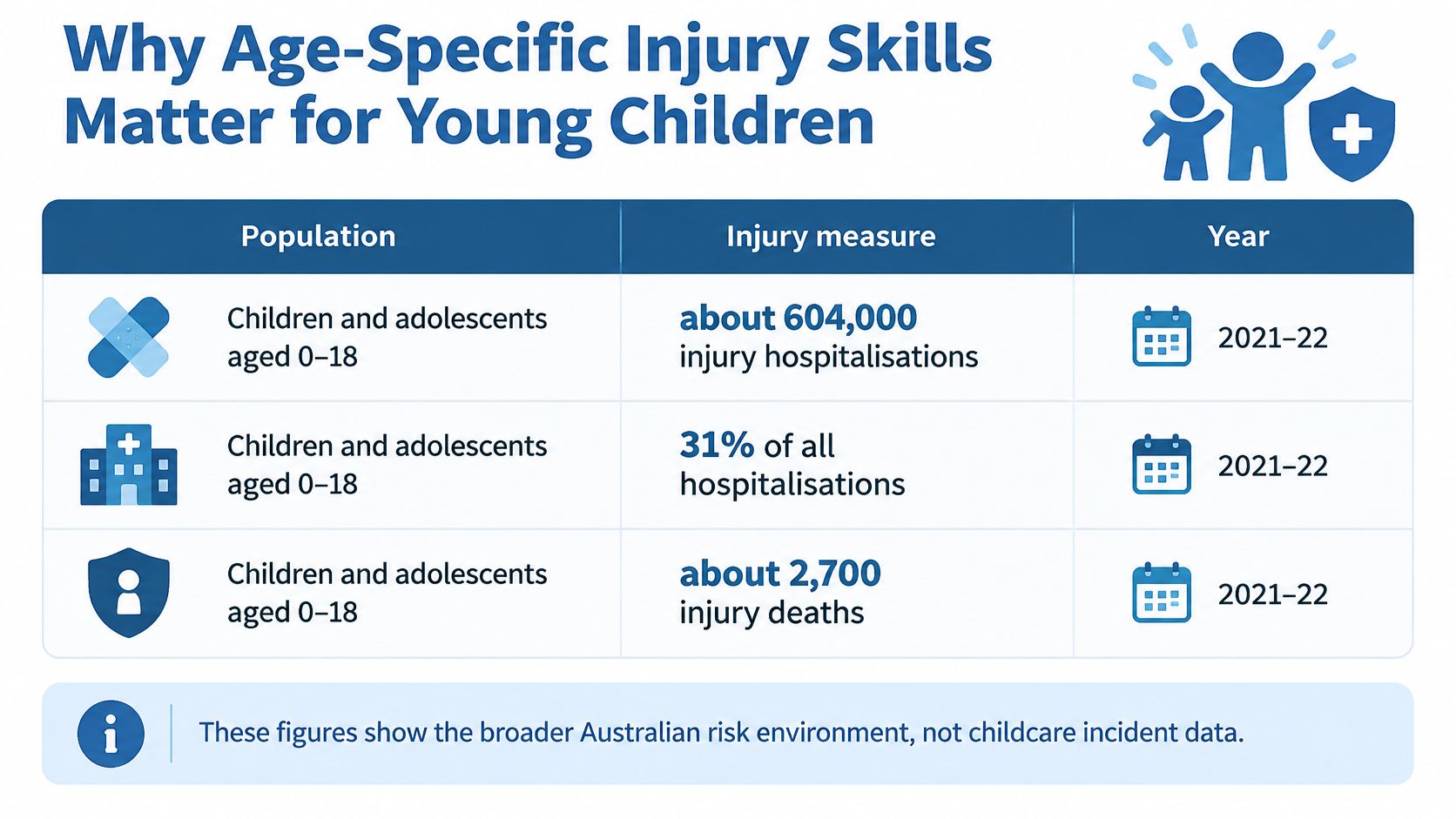
Turn injury patterns into practice priorities
Falls call for more than wound cleaning. A playground scenario should ask the educator to recognise a possible head injury, support an injured limb and avoid unnecessary movement, then decide what triggers escalation. Run it with the staff who supervise outdoor play on each shift, because the response belongs to whoever is on duty when a child lands badly. If the only confident fall responder is on a break, the certificate register looks compliant while the playground is not.
For infants, choking practice deserves specific attention. Learners should distinguish an effective cough from an airway emergency and demonstrate the infant response on suitable training equipment. Mealtimes are the relevant coverage window, so include every educator who feeds the babies, room leaders included.
Drowning preparation should connect prevention with emergency action. A water scenario, whether an excursion near a creek or water play on a hot day, can test safe access, recognition of abnormal breathing, emergency escalation and the resuscitation skills assessed in training.
Choose scenarios that test a decision. Ask the learner what they noticed, what they would do next and what would make them escalate.
The overall injury burden points to broad paediatric competence on every shift, with skill spread across the roster instead of sitting with one or two senior staff. Condition-specific emergencies sit on top of that base, and our guide to asthma and anaphylaxis training covers that layer in detail.
Choosing a Course Format That Still Proves Hands-On Skill
Childcare first aid courses are commonly delivered in one of three ways. The difference that matters for compliance is where the practical assessment happens.
| Format | Hands-on assessment | Suits |
|---|---|---|
| Face-to-face, single day | Yes, on manikins and trainer adrenaline devices | Services seeking assessment in one attendance session |
| Blended, online theory with in-person practical | Yes, the practical component is in person | Staff who can complete theory before the practical day |
| Fully online | No, a theory-only course cannot evidence manikin or device skill | Not suitable as the sole childcare qualification |
What matters is whether learners demonstrate skills on equipment under direct observation. Single-day attendance and blended delivery can both provide that. A theory-only course shows what a learner knows, while leaving their physical technique unassessed.
A video lesson can explain an adrenaline injector clearly. Confirming the learner can handle a trainer device correctly during a scenario takes supervised, hands-on practice with feedback.
Check the assessment before enrolling
The practical requirements already covered still apply: infant and child manikins, trainer-device practice and scenarios that test decisions. Before enrolling, confirm the details that vary between providers:
- Course components. Verify the anaphylaxis and emergency-asthma components and the qualification's suitability for childcare roles.
- Qualification evidence. Check the training code, nationally recognised status and current approval requirements.
- Attendance and preparation. Confirm the practical attendance requirements and any pre-study that must be finished before the session.
- Assessment records. Establish how outcomes, further assessment and certificates will be documented.
Our First Aid training requires pre-study, with course materials and modules sent after enrolment. Build that preparation into staff arrangements so an educator doesn't arrive at the practical session with the required learning incomplete.
We issue temporary certificates immediately for First Aid courses. Your register should still show what evidence has been received and verified; attendance alone doesn't mark a credential complete.
Fit attendance around safe staffing
Learning through scenarios together suits a team that benefits from shared discussion. Completing theory before attendance suits educators who organise their own preparation. Neither arrangement helps if the director books every credential holder into the same session and leaves the service uncovered.
Coverage gaps open between shifts, breaks and excursions even when every educator on paper is trained. Training days create the same gap if they pull the only qualified person out of ratio.
Use the same approach you'd apply to other workplace safety training: stagger attendance across different sessions, keep a qualified educator on each shift and confirm how outcomes will be recorded. Course completion and roster coverage are connected tasks that still need separate checks.
Attendance never guarantees a certificate. Learners must successfully demonstrate competence, so plan for the possibility that someone needs a further attempt before their credential renews.
Book Childcare First Aid Training Before Your Renewal Date
Start with the next potential staffing gap. A booking secures a seat; the renewal only counts once the new certificate is issued and entered in the register.
- Pull the roster and register together. Mark everyone whose first aid, anaphylaxis, asthma or CPR credential approaches its renewal point, then confirm each date against the register rather than relying on memory or a reminder email.
- Allocate a suitable format. Choose arrangements that retain in-person practical assessment and allow staff time to complete their preparation.
- Book before coverage is lost. Keep qualified relief available and allow for an absence or an incomplete assessment.
Work through the enrolment checks covered in the previous section before confirming attendance. For the session itself, confirm with the provider which location your group will attend and that practical equipment such as manikins will be available for the hands-on assessment.
Our childcare first aid training runs one day and costs $120. Book early enough that attendance, assessment and record updates all finish before the existing qualification lapses.
We provide practical, nationally recognised Childcare First Aid Course training with experienced trainers and hands-on learning across NSW. Visit TP Training to organise training around your renewal dates and staffing needs, so educators can build emergency-response skills without leaving a gap in daily coverage.

You may also like

How to Build a Falls Prevention Programme at Work

Construction White Card Online: Is It Valid in NSW?