
Trade Courses Sydney: 3 Career Pathways Worth Exploring
A worker at a Sydney site gate can feel stuck with the wrong question, which ticket first, which course first, which pathway actually gets them onto site. Trade courses Sydney usually split into civil plant, high-risk work, and site safety pathways, and the right start depends on the job you want. A general course catalogue builds broad entry skills, a dogging licence pathway prepares you to work around lifts and load movement, and a silica and asbestos awareness combo focuses on keeping yourself, and the crew, safer around dust and hazardous materials.
Table of Contents
- 1. Courses
- 2. Cpccldg3001 Perform Dogging Licence Course And Training In Sydney
- 3. 10830Nat 11084Nat Crystalline Silica Exposure Prevention Asbestos Awareness Combo Courses
- Sydney Trade Courses, 3-Course Comparison
- Matching Your Ticket to Your Next Site Role
1. Courses
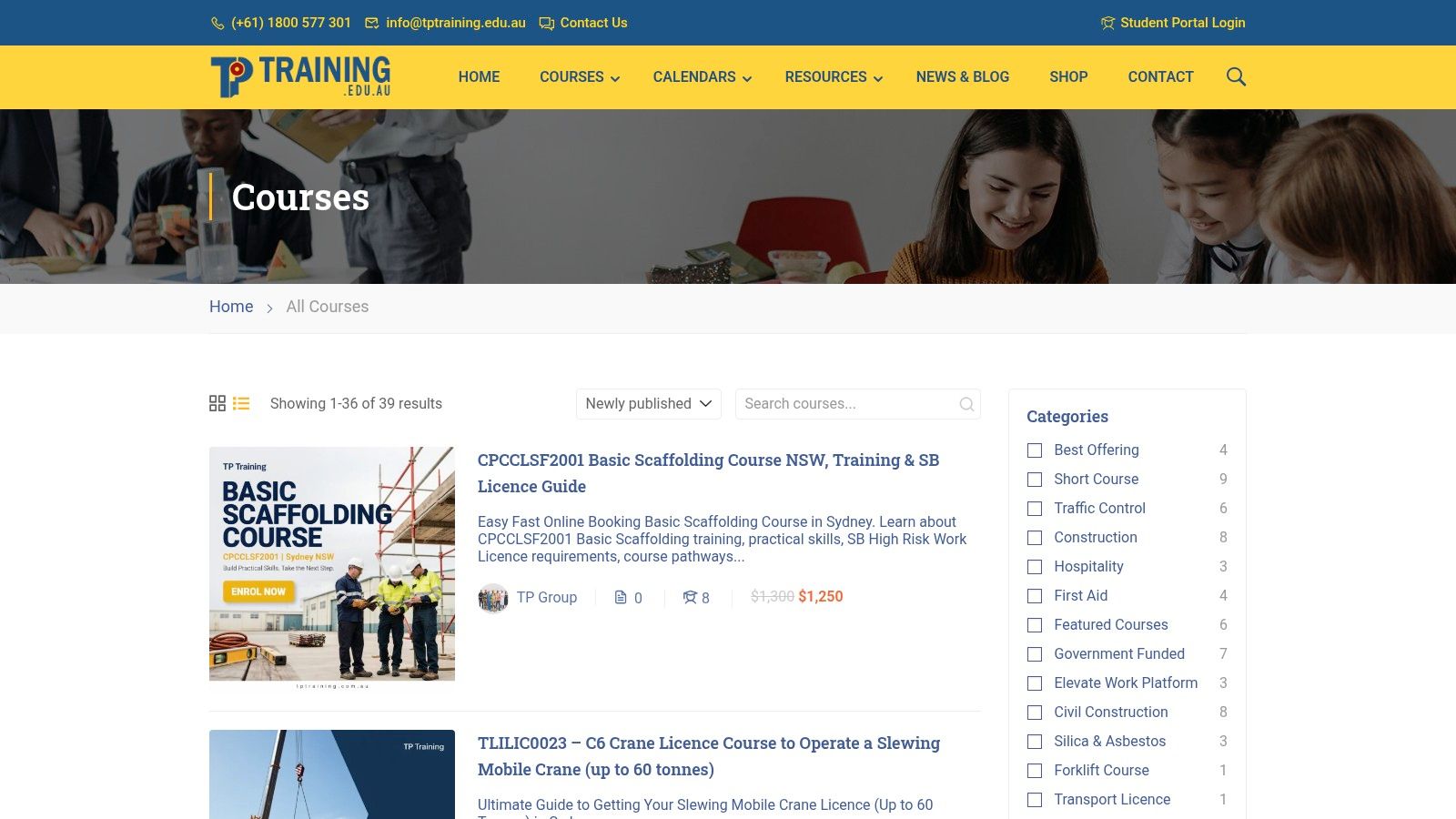
A broad courses catalogue is the right fit when you're still matching your job target to the correct ticket. In Sydney, that matters because employers want more than enthusiasm. They want site-ready people who can show the right induction, the right competency, and the right paperwork before they step through the gate.
TP Training's Courses page works like a practical starting point for that process. It pulls together entry compliance, civil construction, high-risk work, and safety training in one place, which is useful when you're trying to move from interest to a real plan. If you're starting from zero, the White Card Training Course is often the first screen to clear because New South Wales requires a White Card before construction work begins, and SafeWork NSW says the RTO submits the application after training is completed, not the student (SafeWork NSW White Cards).
What a broad course catalogue does well
A good catalogue helps you avoid wasting time on the wrong ticket. It also lets you compare pathways side by side, which matters when one role asks for site access and another asks for a licence or a high-risk work outcome. On Sydney sites, that difference is not academic, it decides whether you can start next week or keep waiting.
Practical rule: start with the job ad, not the course name. If the employer asks for construction induction, go straight to that requirement first, then add the next ticket only when the role actually needs it.
This kind of catalogue suits job seekers, career changers, and workers who want to build step-by-step. A person entering civil construction can begin with compliance, then stack on traffic, plant, or equipment training as the work becomes clearer. That is a better use of time than signing up for a long list of short courses with no site outcome in mind.
What to watch before you enrol
- Check the outcome first. Some courses lead to a nationally recognised unit, some to a licence class, and some to an industry card. Those are not interchangeable.
- Match the course to the site task. A ticket is only useful if it maps to the work the employer is asking for.
- Ask about prerequisites. For many pathways, the entry conditions matter as much as the class itself.
- Think about location and scheduling. Sydney learners often need a centre that fits work, transport, and start times without adding friction.
The trade-off is simple. A broad catalogue gives you flexibility, but it can also feel crowded if you don't already know the site role you want. Used well, it becomes a clean way to compare your options without making assumptions about your next job.
TP Training short courses in NSW gives a useful example of how short-form training can fit around work, rather than forcing you to pause a job search while you figure out the whole pathway.
2. Cpccldg3001 Perform Dogging Licence Course And Training In Sydney
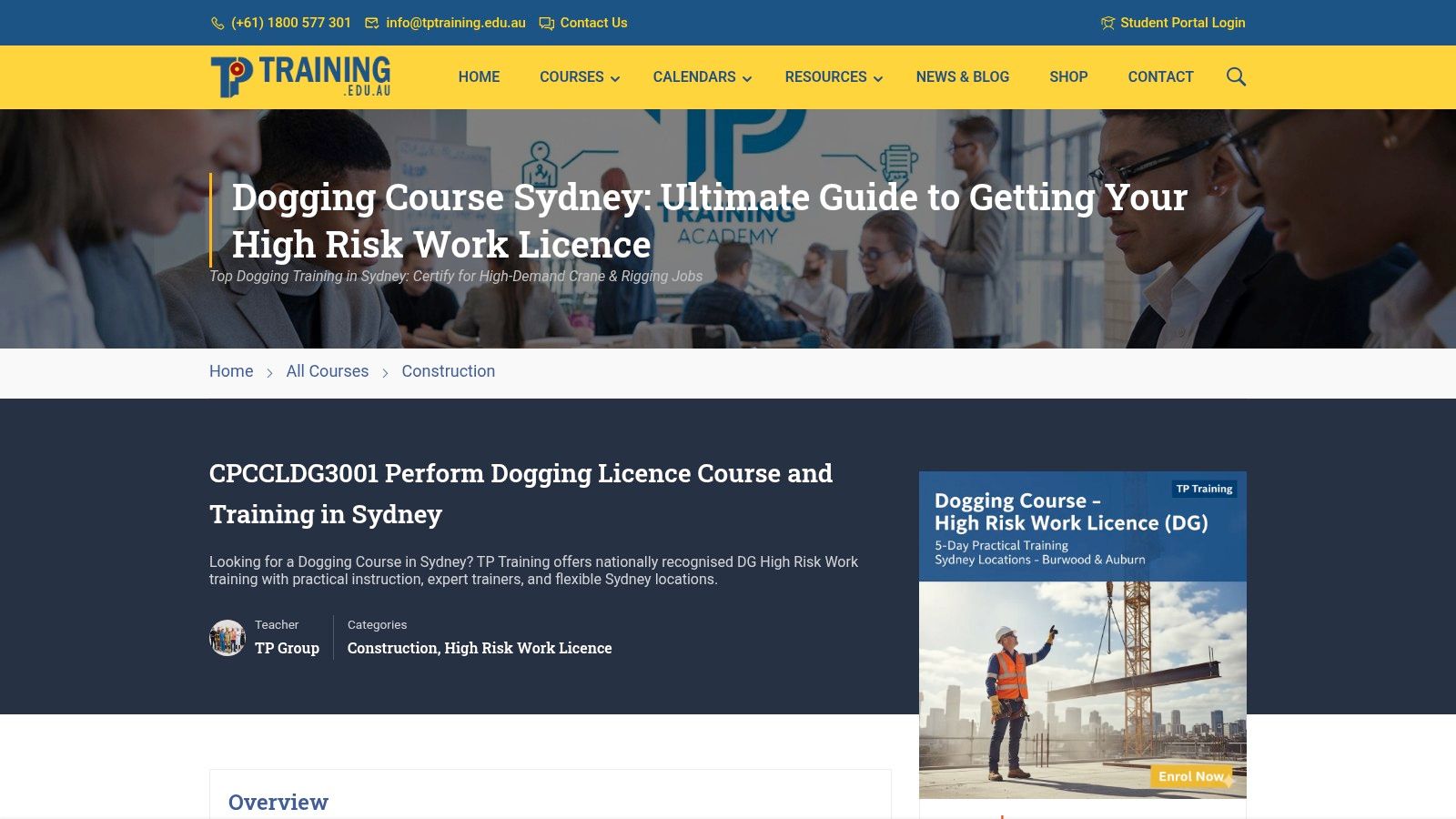
Dogging is not a general construction add-on. It's a focused pathway for workers who need to help move loads safely, communicate with the operator, and work in the lift environment with discipline. That makes the Cpccldg3001 Perform Dogging Licence Course And Training In Sydney a better choice when the job is around cranes, lifts, rigging support, and controlled site movement.
Sydney employers care about this sort of ticket because the high-risk work environment is tightly defined. Safe Work Australia lists dogging as one of the high-risk work licence classes, and says the worker must hold the appropriate high-risk-work licence and be over 18 to perform high-risk work (Safe Work Australia high-risk work licence classes). That means dogging is less about “getting another ticket” and more about being cleared to work in a role where mistakes can shut down a lift or put people at risk.
Why dogging is a site skill, not just a classroom skill
Dogging sits close to crane operations, but it isn't the same thing as operating the machine. A good dogging course teaches how load movement works, how communication matters, and how to stay alert to the shape, weight, and path of the load. On a busy Sydney project, that matters because delays usually come from poor coordination, not from a lack of machinery.
The trade-off is that this pathway is narrower than a general catalogue. That's a strength if you already know you want to move into lifting operations, because the training aligns tightly with the job. It's a weakness if you're still undecided, because dogging won't replace a broader construction induction or other compliance ticket where the site asks for it first.
A dogging ticket is most valuable when it sits inside a real work path, not when it's bought as a random credential.
The course is also useful for workers who want to progress from labouring into more technical site support. That can include people who are already around plant and lifting gear and need formal competence before taking on more responsibility. For employers, the appeal is obvious. They can place someone in a role that requires careful signalling and load awareness instead of relying on informal experience.
When dogging makes sense, and when it doesn't
Dogging makes sense if your target role includes lifts, crane zones, or material movement around heavy equipment. It's also a sensible next step for workers who already understand site discipline and want a ticket that aligns with a clearer technical function. It does not make sense if you only need general entry to a construction site, because that problem is solved elsewhere.
TP Training's dogging ticket guidance is worth checking if you're comparing where dogging sits beside rigging and other lifting-related pathways.
The best applicants for this course are usually the ones who already know what site role they're moving toward. They don't need a broad overview. They need a direct route into controlled work around loads, cranes, and movement on site.
3. 10830Nat 11084Nat Crystalline Silica Exposure Prevention Asbestos Awareness Combo Courses
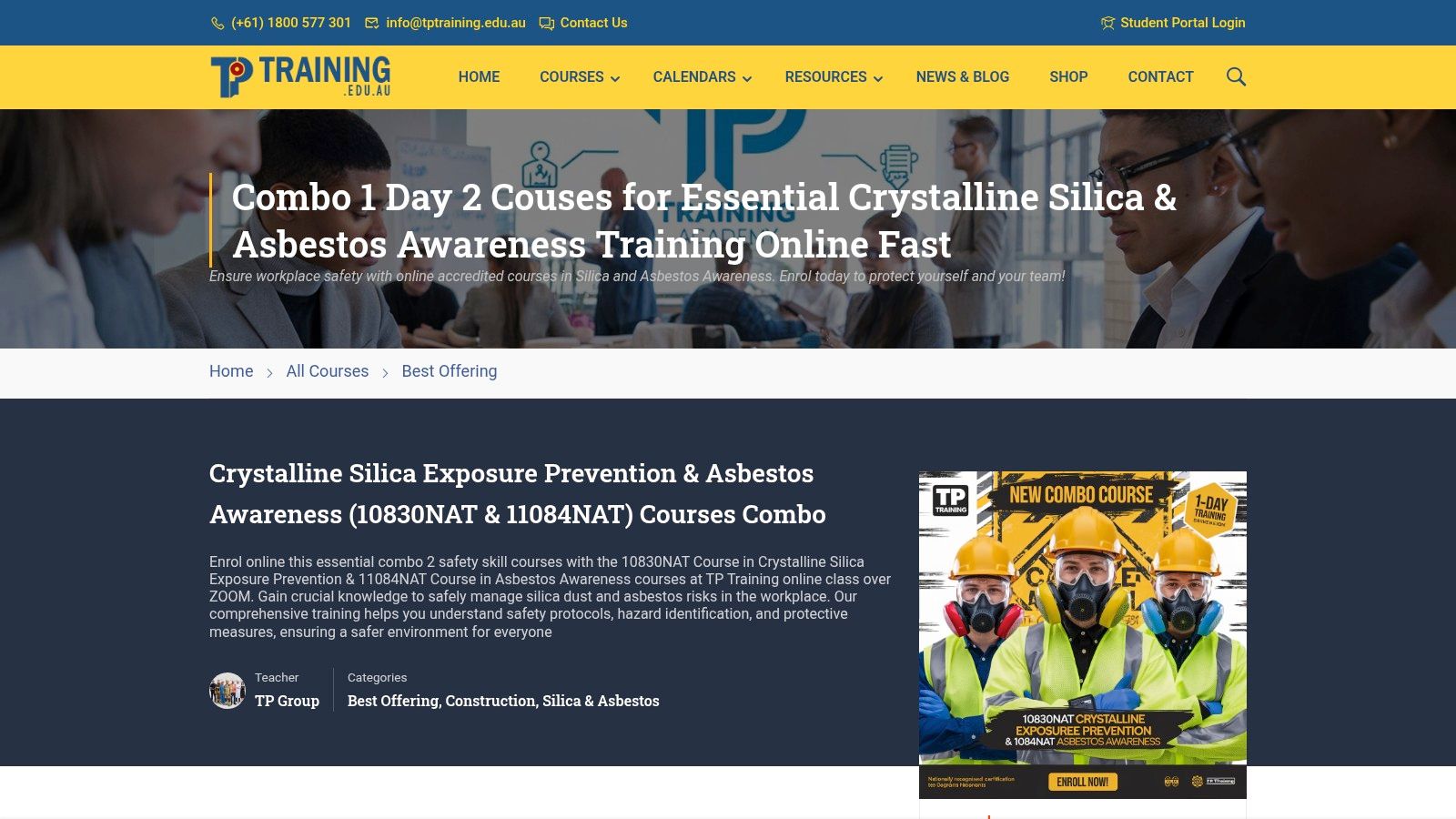
Some tickets open doors. Others stop you from walking into avoidable harm. The 10830Nat 11084Nat Crystalline Silica Exposure Prevention Asbestos Awareness Combo Courses belong in the second group, because they're built for site safety around two materials that show up across construction and civil work.
This is the right choice when the worksite exposes people to dust, cut materials, demolition residue, or older building stock. It's not a high-visibility “power ticket” like a licence class, but it's often the kind of training that keeps a worker employable and alert. On the ground, that matters because crews need people who understand when a task creates exposure risk and when to stop, check, and control the work.
What this combo actually prepares a worker to do
The biggest value is recognition. Workers learn to identify hazardous situations earlier, rather than after the job has already started. That can influence how they cut, handle, clean, store, and move materials. It also gives them a clearer idea of when additional controls or site procedures are needed.
The practical trade-off is that safety awareness training won't replace a site entry ticket or a licence. It complements them. A worker might still need a White Card, a plant ticket, or a traffic-control requirement, but this combo helps them understand the hazards that sit underneath the work.
Site rule: if the task creates dust, disturb the material before you disturb the schedule.
That's why employers often value awareness training even when the job ad doesn't make it the headline requirement. They want workers who can work safely without constant correction. On a live site, that saves time, reduces confusion, and helps supervisors keep the job moving.
Who gets the most out of it
This pathway suits new entrants, labourers, trades assistants, and experienced workers who want to refresh site safety habits before moving into a different kind of job. It also makes sense for subcontractors who hop between projects, because hazard awareness is portable across settings. A worker who understands silica and asbestos risks can adapt faster when the site changes.
The course is also a strong fit when you're trying to build a layered qualification set. A White Card gets you through the gate. A safety combo like this helps you stay sharp once you're inside. That combination is practical in Sydney, where construction, civil, and demolition-related work all overlap.
TP Training's silica and asbestos course guidance helps people compare the course format with the safety outcome they actually need.
If you're weighing up a general course catalogue against this combo, the difference is purpose. Catalogue training helps you choose a path. This training helps you work more safely within one. Both are useful, but they solve different problems.
Sydney Trade Courses, 3-Course Comparison
| Course / Program | Implementation complexity 🔄 | Resource requirements ⚡ | Expected outcomes 📊⭐ | Ideal use cases 💡 | Key advantages ⭐ |
|---|---|---|---|---|---|
| Courses (TP Training – general) | Low, structured, trainer-led sessions suitable for beginners | Moderate, course fees, scheduled class time, basic tools/materials | Nationally recognised certificates; practical trade skills; job-ready outcomes | General trades training, upskilling, entry-level certification across NSW | Hands-on learning, experienced trainers, broad course selection |
| CPCCLDG3001 Perform Dogging Licence (Sydney) | Medium, licence-specific practical assessments and safety tasks | High, rigging equipment, practical site time, assessor supervision | Dogging licence; demonstrated rigging competence; regulatory compliance | Aspiring doggers/riggers, crane support roles, construction sites requiring ticket | Licence-focused training, intensive hands-on practice, industry-recognised |
| 10830Nat & 11084Nat Crystalline Silica + Asbestos Combo | Low–Medium, awareness + prevention modules with demos | Low–Moderate, training time, PPE demonstrations, minimal specialised gear | Awareness and prevention certification; reduced exposure risk; compliance | Workers in demolition, construction, maintenance; health & safety teams | Combined compliance training (efficient), practical prevention guidance, nationally recognised |
Matching Your Ticket to Your Next Site Role
The right choice starts with the employer's requirement, not with the most popular course name. Confirm which licence, unit of competency, or site card the target role asks for, then check any prerequisites with the training provider before you enrol. That simple step saves time, especially when the course outcome is tied to compliance rather than just classroom learning.
A broad course catalogue is the best starting point if you're still comparing options and want to map the pathway before you commit. A dogging licence course is the cleaner choice if your target role involves lifts, load movement, and crane-zone work. A silica and asbestos awareness combo suits workers who need practical hazard awareness for dusty, older, or demolition-heavy sites.
Compare course formats and locations across Sydney as well. The best provider is the one that fits your job goal, your schedule, and the kind of work you want to do next. If you're also thinking about crew readiness and practical site gear, this guide on buying safety apparel for crews is a useful companion read.
TP Training's catalogue brings those pathways into one place, which makes it easier to compare what's current and what fits your next role. Review the current options, then choose the ticket that matches the work, not the guess.
TP Training offers practical, nationally recognised courses that line up with real Sydney site requirements, from entry compliance to high-risk and safety training. If you're choosing between a general trade pathway, dogging, or silica and asbestos awareness, visit TP Training to review the current options and book the course that fits your next job.

You may also like

Mock Interview Online Preparation Guide

Government Fund Courses in Australia: A Practical Guide