Confined Space Training in NSW: A Practical Guide
You're standing beside a tank, pit, or manhole with a crew waiting on you, and the question is simple: do you know what has to happen before anyone goes in? Confined space training is for that moment. It teaches workers how to spot the hazard, decide whether the space is permit-required, test the air properly, and keep a rescue plan ready before the first foot crosses the opening.
Table of Contents
- What Confined Space Training Actually Prepares You For
- The Legal Definition and the Four-Part Hazard Test
- Course Modules and What You Will Learn on the Day
- Air Monitoring Decisions Most Articles Skip Over
- Rescue Plans, Standby Roles, and Emergency Response
- How to Choose a Confined Space Training Provider in NSW
- Enrolment, Practical Sessions, and Preparation Tips
What Confined Space Training Actually Prepares You For
A maintainer is at a tank hatch. A civil crew is staring into a deep pit. A utilities worker is about to climb down a manhole. In each case, the job looks routine right up until the point where the space starts controlling the work instead of the worker.
What the training day usually includes
Good confined space training is not a generic safety chat. It builds a working habit, which is why the day usually moves from legal basics to hazard recognition, permit steps, air testing, communication, and rescue readiness. The aim is simple, workers leave knowing what to do before entry, who takes each role, and what stops the job if conditions change.
That's also why the standby person matters so much. This isn't a passive “watch and wait” role. The standby person keeps contact with the entrant, controls access, and is part of the response chain if something changes inside the space.
Practical rule: if the job can't be explained clearly before entry, it isn't ready for entry.
For people comparing work-ready pathways, a useful context is best vocational training jobs, because confined space competency sits in the same practical, job-focused lane as other hands-on qualifications. It's one of those skills employers look for when a role involves maintenance, utilities, civil works, or plant access.
How the course feels from arrival to certificate
Expect a mix of short theory and practical demonstrations rather than long classroom blocks. Learners usually need to show they can identify a hazard, use the equipment properly, and follow the permit process without skipping steps. That's the point, the training is testing whether you can work safely in the actual conditions that enclosed spaces create.
If you've already done broader site induction training, the white card helps explain how general construction rules sit beside specialist entry controls, and TP Training's white card overview is a useful reference for that distinction. Confined space training goes beyond induction, because the hazards change from site to site and the entry process has to match the space itself.
A lot of people come in thinking the course is mainly about gas detectors. It's broader than that. The detector matters, but it only works when the crew understands the space, the permit, the ventilation, and the rescue plan as one system.
The Legal Definition and the Four-Part Hazard Test
A confined space call starts with the space itself, not with the gear on the trolley. A tank, pit, duct, or vault may look ordinary from the outside and still meet the legal test once you look at how people get in, get out, and breathe inside it. In Australian WHS practice, the starting point is whether the space is large enough to enter, has limited or restricted entry and exit, and is unsuitable for continuous occupancy. That definition stops crews from relying on guesswork based on size alone. Safe Work Australia's model Code of Practice also sets the control sequence, employers should eliminate entry where reasonably practicable, then use risk assessment, permit systems, atmospheric testing, isolation, ventilation, communication, and rescue arrangements before anyone goes in. A practical summary of that control logic appears in OSHA's confined-space construction outline, which matches the way many training programs explain the work (OSHA outline on confined-space hazards in construction).
The test that decides whether a permit is needed
Once the entry definition is met, the next question is whether the space becomes a permit-required confined space. The four-part hazard test looks for a hazardous atmosphere, a material that could engulf an entrant, an internal shape that could trap or asphyxiate a person, or another recognised serious hazard such as unguarded machinery, exposed live wires, or heat stress (OSHA confined spaces overview). That is the decision point the supervisor has to answer before anyone climbs in with a harness and a gas monitor.
A stormwater pit on a Sydney civil works job shows how this plays out. The pit may be deep enough to enter, the access may be vertical and awkward, and the atmosphere can change after rain, pumping, or nearby work. If any recognised serious hazard is present, permit controls apply. That is why the legal definition is not a paper exercise. It tells the crew what level of control the space demands.
A similar hazard check shows up in other high-risk training, including asbestos awareness training, where the nature of the hazard drives every later control. Confined space work follows the same logic. Identify the hazard first, then choose the controls that match it.
Why space design matters more than guesswork
A standard doorway or hatch can make a space look straightforward, but appearance does not decide legality or safety. The questions are whether a person can move in and out without getting stuck, and whether the space is meant for people to stay in for any length of time.
If you are planning a work area, it helps to design OSHA compliant layouts with access, clearance, and emergency movement in mind, because layout affects more than convenience. It affects whether the crew can enter, exit, and rescue without the space itself becoming part of the problem.
For workplaces that need related high-risk competencies, TP Training's Cpccldg3001 Perform Dogging Licence Course And Training In Sydney is an example of practical, nationally recognised training delivered with experienced trainers and hands-on learning across NSW. Dogging and confined space work often sit close together on busy sites, especially where lifting, access control, and rescue gear have to be coordinated.
Course Modules and What You Will Learn on the Day
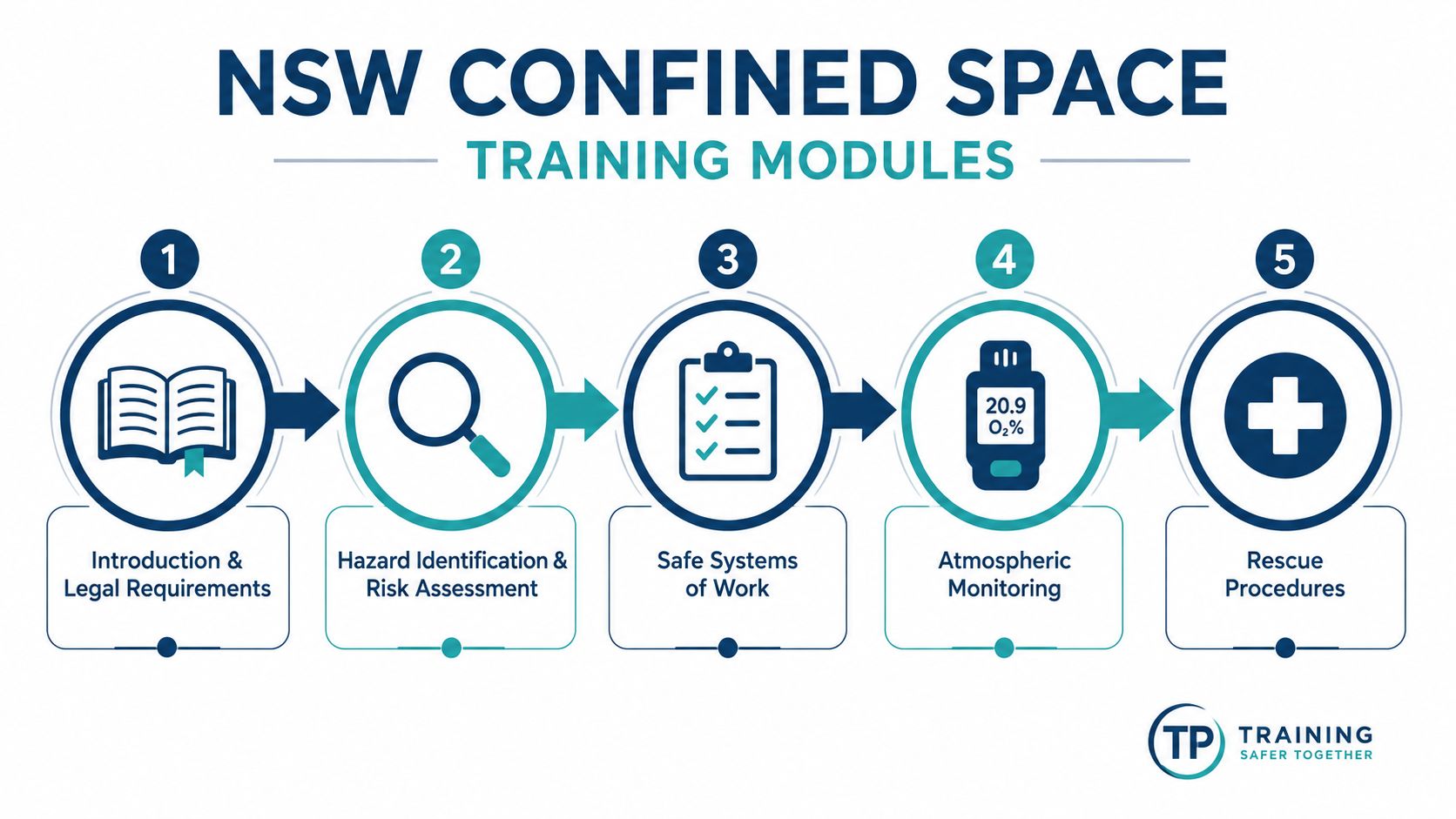
The classroom part usually starts with the question, “Who is responsible for what?” That takes you straight into WHS duties, duty holders, and the permit chain. Once that makes sense, the course shifts to hazard identification, because nobody can manage a space they haven't properly assessed.
From paperwork to practical control
The permit-to-work system is the backbone of the practical side. It sets out who checks the space, who authorises entry, what isolation is needed, and what has to be confirmed before the hatch opens. After that, atmospheric testing and ventilation come into focus, because the question on site is never “Have we filled in the form?” It's “Is the space safe enough for people to enter now?”
A calibrated four-gas monitor is central to that decision-making. Training usually covers how to use it, where to test, why readings at different heights matter, and why a single number doesn't tell the whole story. The point is to give learners a working routine they can repeat on a wet Monday in a treatment plant or a hot afternoon beside a trench box.
Trainer's rule: if the atmosphere can change, the first reading is only the beginning.
The modules people remember best
The most memorable sessions are usually the practical ones, because that's where the abstract rules become habits. Learners practise the standby role, speak through communication protocols, and watch how emergency response fits into the rest of the job. That's also where confusion clears up, because many new entrants realise the rescue plan is not separate from the permit, it sits beside it.
A few organisations now lean harder into continuous monitoring and remote sampling, which matches the newer emphasis in training materials on unstable environments and changing atmospheres (confined space training and monitoring guidance). That's especially useful in sewers, tanks, pits, and plant maintenance spaces where conditions can shift after the job begins. TP Training's working at heights course is often relevant in the same operational settings, since access tasks and edge protection can sit alongside confined-space work on the same job.
Assessment usually includes written questions, practical demonstrations, and observation of how the equipment is used. If a learner can explain the process but can't stage the gear or follow the permit steps under supervision, the assessor will pick that up quickly. That's deliberate, because the work is judged by the same standard on site.
Air Monitoring Decisions Most Articles Skip Over
A crew can test the air, get a safe reading, and still be in trouble a short time later. That happens in tanks, pits, sewer work, and plant maintenance spaces where the atmosphere changes as soon as work starts, ventilation shifts, sludge is disturbed, or hot work adds a new hazard.
What the monitor's readings mean
A typical four-gas monitor checks oxygen, lower explosive limit, carbon monoxide, and hydrogen sulfide. Those readings do not tell you everything, but they do tell you whether the atmosphere is behaving normally enough for entry to continue. When alarms trigger, the right response is to stop work, withdraw if needed, and treat the reading as a decision point, not a nuisance beep.
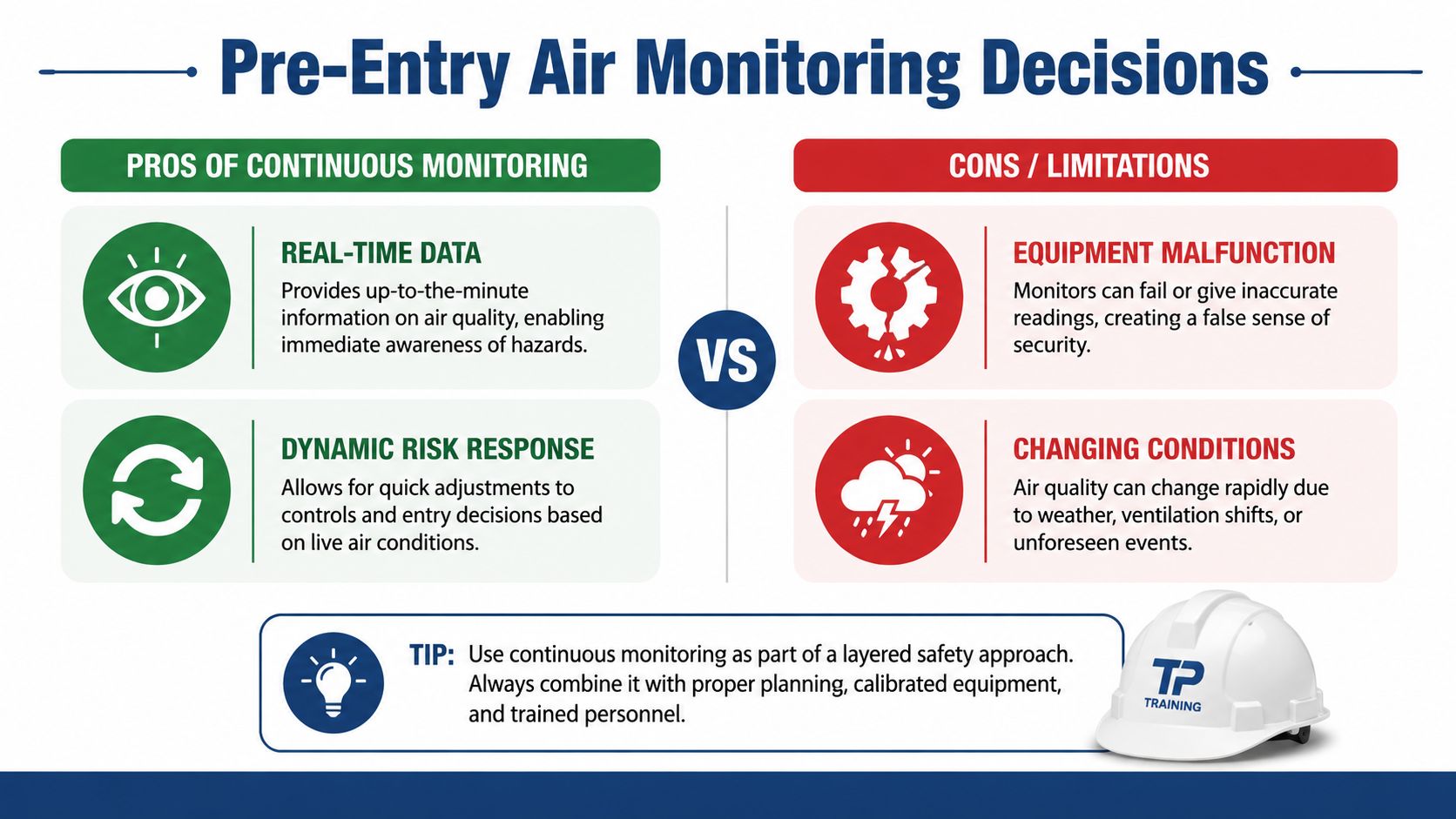
Continuous monitoring matters because the air can turn unsafe after the first test. A solvent vapour can build up, hot work can reduce oxygen, or disturbed sludge can release hydrogen sulfide. In live or unstable spaces, a safe pre-entry reading can lose its value quickly.
How to treat a changing atmosphere
Read the trend, not just the number on the screen. If the monitor starts drifting or the alarm sounds, the entrant and standby person need to act at once, not argue with the result. That response should already be set out in the permit and rescue plan, because a confined space rewards discipline and exposes hesitation fast.
The newer emphasis in training materials on continuous monitoring, remote sampling, and alarm-response discipline matches the way many crews now work in environments where conditions change after entry (updated confined space training guidance). TP Training's crystalline silica awareness course notice fits the same prevention mindset, because it points to tighter hazard control before the job starts.
If the alarm changes the plan, the plan changes immediately.
A practical way to sort it is simple. A pre-entry test answers whether entry may begin, while continuous monitoring answers whether entry can safely continue. Those are different questions. Mixing them up is how workers end up trusting a number that no longer matches the space.
Rescue Plans, Standby Roles, and Emergency Response
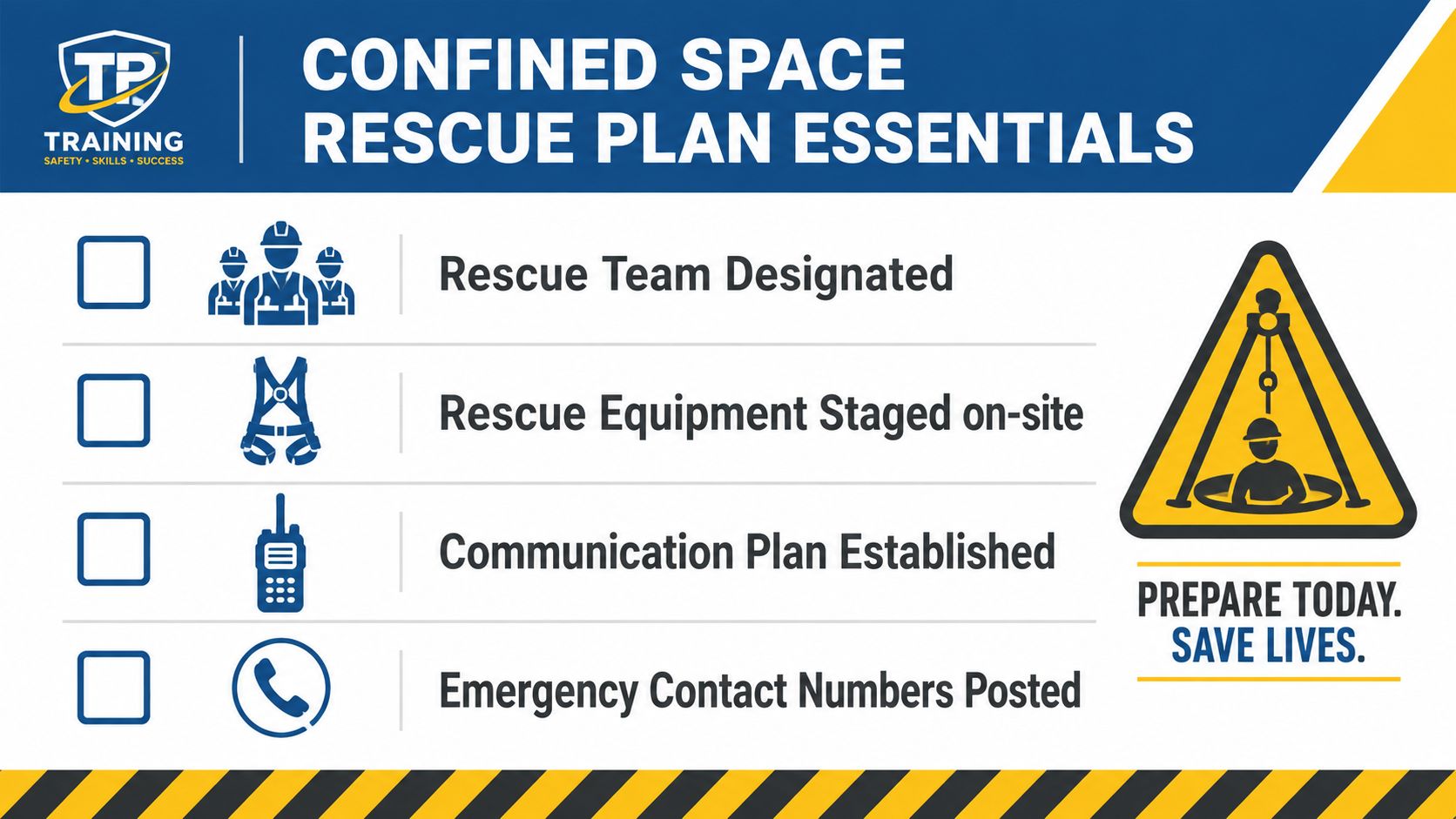
Rescue planning has to be settled before anyone opens the hatch. A permit that only mentions rescue in passing is not enough, because the crew still needs to know who is going in, who is staying out, what equipment is already on site, and what happens if the job turns bad in a hurry. In a confined space, the first question is whether the site has its own trained rescue capability and equipment, or whether the work has been set up so emergency services can reach the entrant in time.
What has to be ready before the hatch opens
The rescue gear needs to suit the space and the method of rescue. That may include a tripod and winch, harnesses, retrieval lines, supplied-air equipment where the atmosphere calls for it, communication tools, and barriers that keep unauthorised people away from the opening. Rescue planning also needs to name the nearest emergency services contact and make clear how they are notified if the situation goes beyond the site crew. The point is simple, the equipment and the plan have to match each other before entry starts.
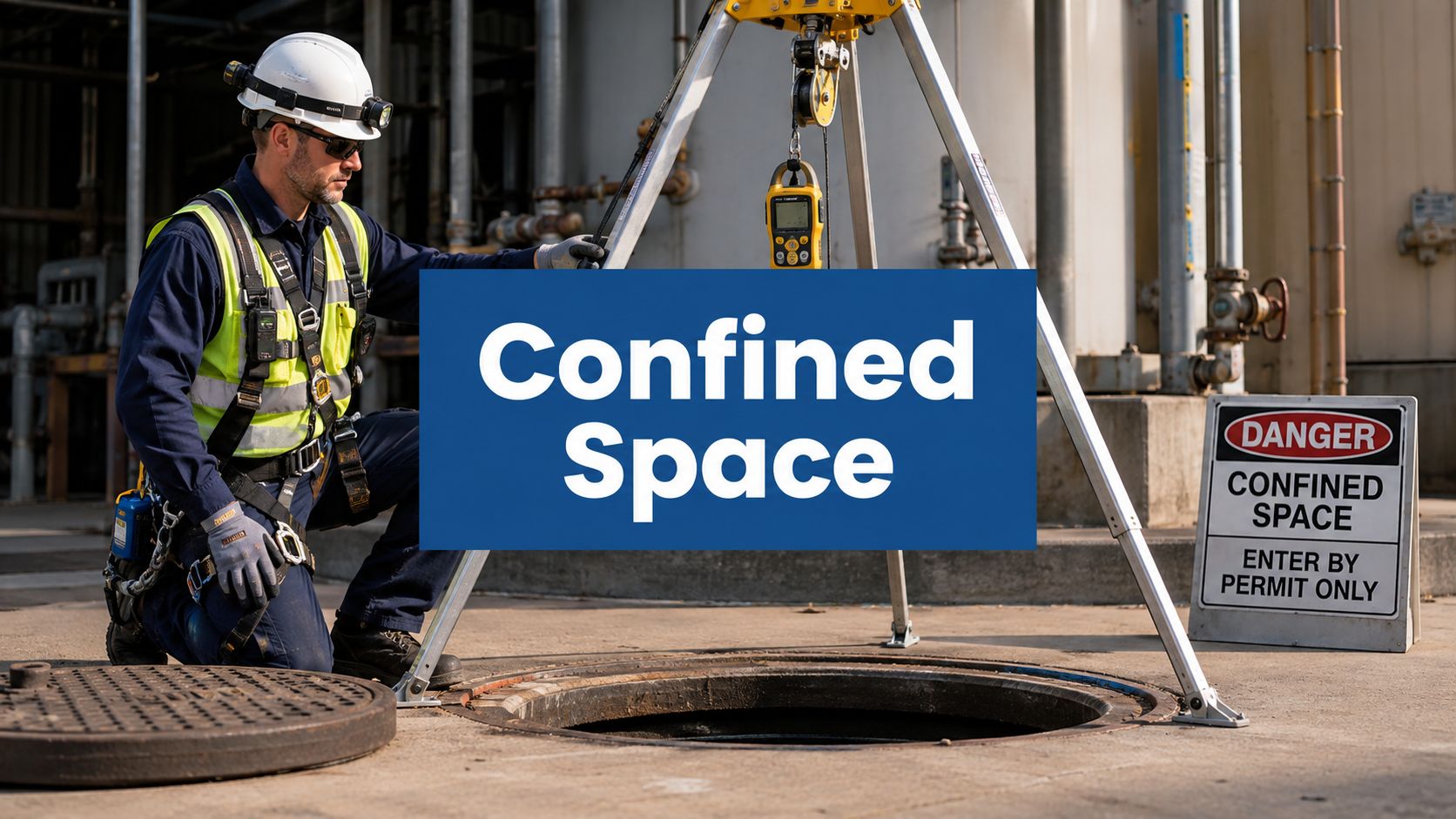
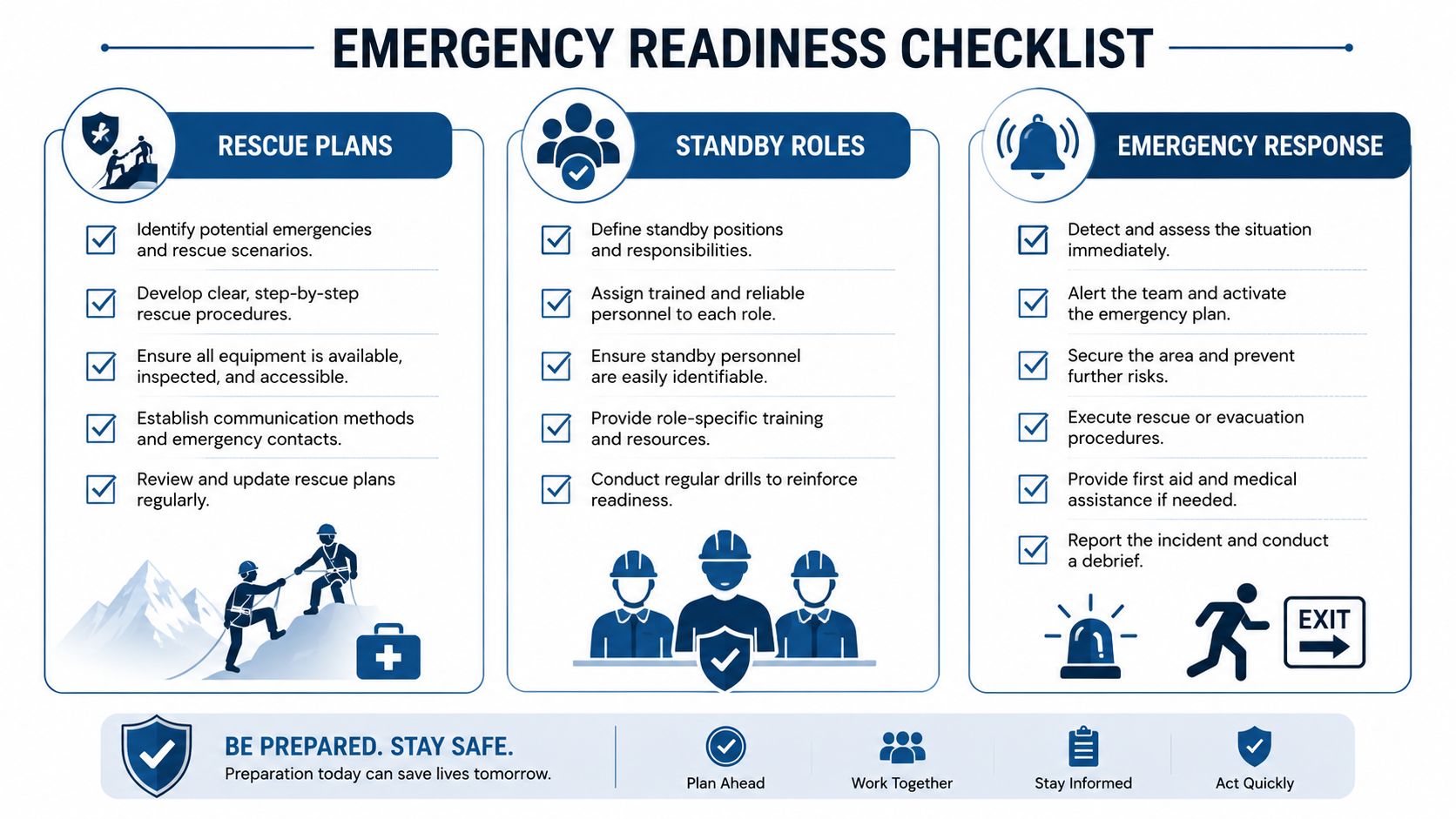
The standby person is not there to watch casually from the side. That role includes keeping communication open, monitoring conditions, controlling access, and starting the rescue process if contact is lost or the atmosphere changes. If the attendant leaves the entry point, the control setup weakens straight away. On a civil job, that might mean a worker in a pit with a line down to the surface while a second person keeps eyes on the opening and the monitor. In a tank or vault, it might mean the attendant stays positioned where they can hear the entrant, see the permit setup, and stop anyone else from wandering in.
What happens when an alarm triggers
The response has to be practised before the actual job. The entrant stops work, the standby person responds to the alarm or loss of contact, and the rescue plan is activated under the site procedure. If emergency services are part of the arrangement, they need to be called early enough to matter. A late call is little use if the crew has already spent the available time trying to decide what to do.
The common mistake is hoping someone can work it out under pressure. In a confined space, the rescue sequence needs equipment staged, roles assigned, and communication tested before entry begins. That is what turns a rescue plan into something the crew can use when a tank goes wrong, a pit fills with fumes, or a worker stops responding in a maintenance vault.
How to Choose a Confined Space Training Provider in NSW
A training provider should look ready to teach the job, not just the theory. If the practical session happens in a real training space with proper equipment, that's a good sign. If everything is reduced to slides and a generic quiz, the course may tick a box but still leave workers underprepared for an actual pit, tank, or maintenance vault.
What to check before you enrol
Trainer experience matters because confined space work is full of judgement calls. A good trainer can explain why a space is permit-required, why one gas reading isn't enough, and why a rescue plan needs staging before entry. They should be able to answer questions in plain language and link the rules to NSW work sites, not to a perfect textbook scenario.
Practical facilities matter just as much. Look for real equipment, not just pictures of equipment, and check whether the assessment mirrors the work learners will face. If the provider uses genuine monitors, rescue hardware, and permit-style documentation, the learner gets closer to site reality.
A few selection signals are worth checking together:
- Trainer background: look for instructors who can explain the why, not just read the rule.
- Practical setup: check for monitors, tripods, winches, harnesses, and access controls that match field use.
- Assessment style: make sure there's observed performance, not just theory questions.
- Location fit: pick a centre that works for your team's travel, especially if people are coming from western Sydney, inner Sydney, or surrounding industrial areas.
- Certification process: ask whether the statement of attainment is issued promptly after successful completion.
A provider earns trust when the practical session looks and feels like the job.
Why the provider's process matters
Clear enrolment support tells you a lot. If the provider explains identification requirements, the booking steps, and what learners need to bring, the course delivery usually runs more smoothly too. Multilingual support can also help if the crew includes workers who know the task but need more clarity around the written assessment.
For NSW employers, consistency counts. The right provider should be able to train new entrants, refresh experienced workers, and give supervisors a course structure that fits real confined-space tasks across maintenance, utilities, civil construction, and plant access. That's the kind of delivery model that helps a team use the training on Monday, not just file it away.
Enrolment, Practical Sessions, and Preparation Tips
TP Training runs courses across Penrith, Burwood, Auburn, Parramatta, and Sydney CBD, which helps if your team is spread across different parts of NSW. The practical session should feel hands-on from the start, with learners using a four-gas monitor, setting up a tripod and winch, practising harness and retrieval line drills, and working through observed rescue exercises.
How to prepare before you walk in
Wear gear that lets you move safely and comfortably. Bring the identification the provider asks for, expect to handle PPE, and be ready to work through the assessment without rushing. The practical part is where learners often discover that climbing, communicating, and managing equipment take more attention than they expected.
The easiest way to prepare is to review the Code of Practice sections on confined spaces before class and arrive ready to ask questions. If you already know where the permit logic, atmospheric testing, and rescue steps fit together, the practical session becomes much easier to follow.
The USI guidance from TP Training is also worth checking before you book, because enrolment details can slow people down if they leave them to the last minute. Once those basics are sorted, the course can focus on competence rather than admin.
Common beginner questions
Does the certificate count nationally? Yes, when it's a nationally recognised statement of attainment issued through the training system.
Do I need refresher training? Many workplaces require retraining when duties change, the space changes, or knowledge gaps appear, so it's best to follow your employer's WHS process.
What if I don't pass the practical assessment first time? You'll usually need to show the required skill again under assessment conditions, because the course is measuring safe performance, not attendance.
If you're ready to build a real understanding of confined space work, TP Training can help you get there with practical, hands-on delivery across NSW. Visit TP Training to check course options, plan your enrolment, and choose the location that suits your work or team.

You may also like

Yellow Card Requirements in NSW: A Practical Guide
LV Rescue Training Explained What It Covers and Who Needs It