
White Card Course Sydney CBD: Get Certified in 2026
You've found a job ad, spoken to a recruiter, or had a mate tell you there's work available, but there's one condition before you can set foot on site. You need a White Card. For most new starters, that's the point where the confusion begins. Which course is valid in NSW, how long does it take, what do you need to bring, and where can you do it without losing half a day travelling across Sydney?
If you're searching for a White Card course in Sydney CBD, you're usually trying to solve a practical problem fast. You want a clear path from “I need this card” to “I'm ready to start work”. That's exactly what matters. The White Card isn't just a compliance box. It's the entry requirement that gets you through the gate and onto a construction site with a basic understanding of how to work safely.
Table of Contents
- Your First Step into the Construction Industry
- What Is a White Card and Why Is It Mandatory
- A Breakdown of the White Card Course Content
- Get Your White Card in the Sydney CBD with TP Training
- Enrolling and Preparing for Your Course Day
- Frequently Asked Questions About the White Card
Your First Step into the Construction Industry
If someone's told you, “Get your White Card first”, they're pointing you to the standard starting point for construction work. Whether you're aiming for labouring, an apprenticeship, trade support, site deliveries, or traffic-related site work, this is usually the first requirement employers ask about. It tells them you've completed general construction induction training and understand the basics of site safety before you arrive.
That matters more than many first-timers realise. A worksite moves quickly, multiple trades operate at once, and even simple tasks can put you close to plant, power tools, live services, edges, trenches, or moving vehicles. The White Card gives you a foundation so you don't walk in cold.
A lot of people also assume this is only relevant for long-term builders or qualified tradies. It isn't. If your role puts you on a construction site, the card is often part of your pathway in. That's why it sits alongside bigger career decisions such as licences, trade pathways, and site-specific tickets. If you're mapping out the broader picture, this guide to trade licensing in Australia helps put the White Card in context.
Practical rule: Don't treat the White Card like admin. Treat it like your first site safety tool.
For job seekers in the city, convenience matters. A Sydney CBD training location can cut down travel friction, make public transport easy, and help you book a course around work, interviews, or other commitments. When you're trying to move quickly, that convenience isn't minor. It often decides whether you book this week or keep putting it off.
What Is a White Card and Why Is It Mandatory
A White Card is the proof that you have completed the nationally recognised unit CPCWHS1001 Prepare to work safely in the construction industry. In practical terms, it is the ticket that gets you through the first gate. If an employer wants you on a construction site, they will usually expect you to already have it sorted.
That is why people who want to start quickly should deal with it early, not after the job call comes in.
The card shows that you have been trained in the basic safety knowledge expected on Australian construction sites. It does not make you trade-qualified, and it does not replace site induction or supervision. It shows you can step onto site with a baseline understanding of hazards, safe work practices, and your responsibilities.
Who needs one
Anyone whose job puts them on a construction site may need a White Card. That includes:
- Labourers and apprentices starting their first role
- Qualified tradespeople working across residential, commercial, or civil projects
- Subcontractors and supervisors who need recognised general induction training
- Workers in adjacent roles who still need site access because construction activity is part of the job
A lot of new starters assume the requirement only applies to builders or long-term tradies. On real worksites, that is not how it works. If you need access to the site, the White Card is usually part of the entry requirement.
Why it is mandatory
Construction sites carry obvious risks. People work around power tools, mobile plant, heights, trenches, traffic movements, suspended loads, and changing ground conditions. A worker who does not understand basic site safety can put themselves and others in danger very quickly.
The White Card requirement exists so every person entering that environment starts from the same safety baseline.
In practice, employers and site managers need to know that workers can recognise common hazards, follow directions, report risks, and respond properly if something goes wrong. That is the standard the course is designed to set. If you want to see the unit delivered in a practical format, the White Card training course in Sydney CBD shows what that pathway looks like.
A White Card is your starting point for site access. It is often the first requirement between wanting construction work and being allowed on the job.
A Breakdown of the White Card Course Content
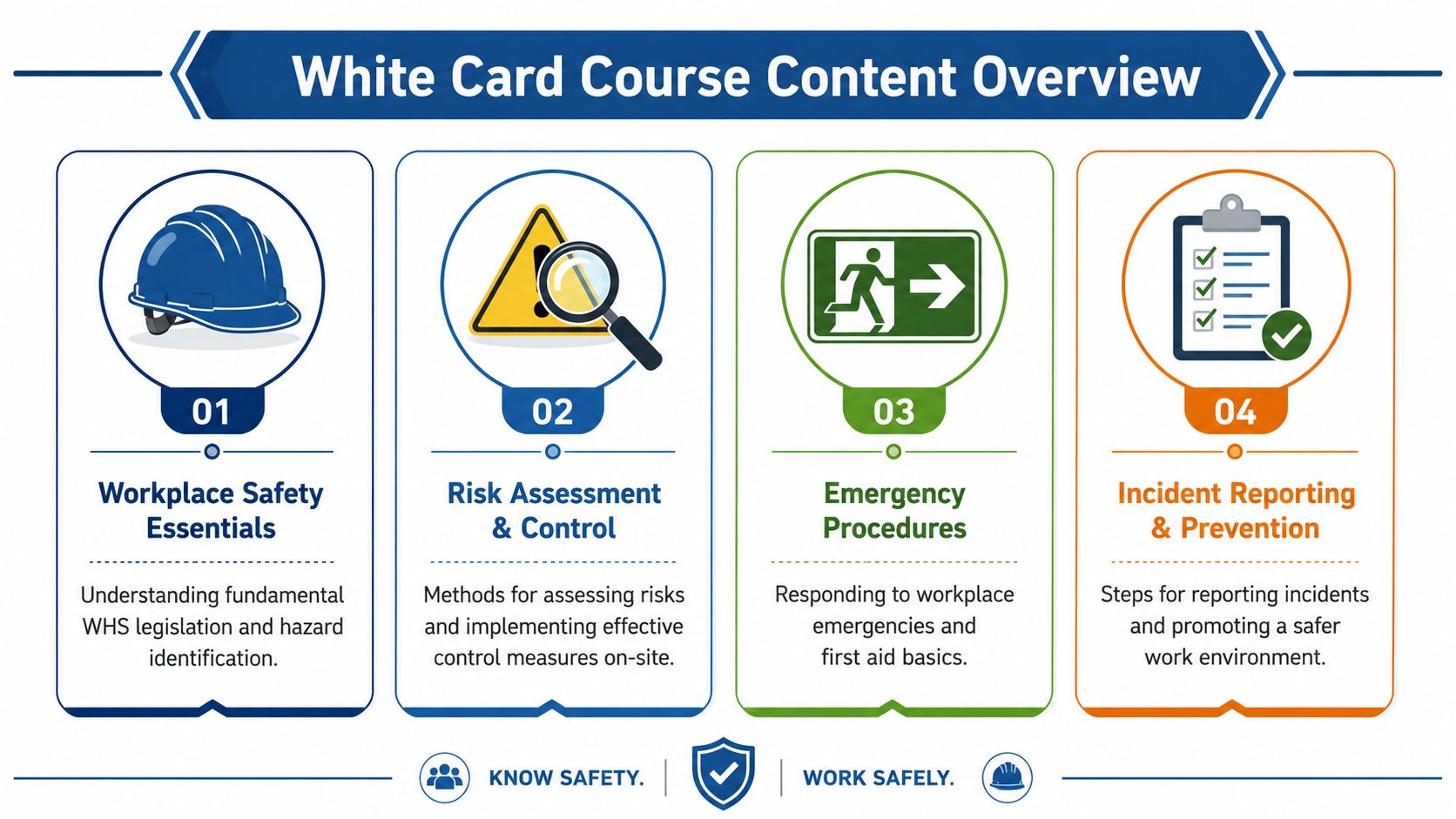
Individuals often feel more confident booking once they know what happens in the room. The course isn't designed to trip you up. It's designed to make sure you can recognise common site risks, follow safe instructions, and respond properly if something goes wrong.
If you want the official course page for a provider example, this White Card training course overview shows the kind of training this unit covers in practice.
The four areas that matter most
Most White Card training in NSW revolves around four practical themes.
Safety responsibilities on site
You'll learn the basics of workplace health and safety obligations. That includes why rules exist, who gives directions on site, and what your responsibilities are as a worker. New starters often underestimate this part, but it's what stops people from making avoidable mistakes in the first hour on site.Hazard identification and risk control
This is the part that most directly affects your day-to-day safety. You'll look at common construction hazards such as working at height, electrical exposure, slips, trips, moving plant, falling objects, and unsafe access areas. More importantly, you learn how to spot a hazard before you walk into it and how control measures reduce the risk.Emergency procedures
Workers need to know what to do when there's a fire, medical incident, evacuation, or another urgent safety issue. This area covers the practical response. Not heroics. Clear action, prompt reporting, and following the site's emergency process.Incident reporting and prevention
Sites depend on workers speaking up early. You'll cover how incidents, near misses, and unsafe conditions should be reported, and why that matters for everyone else on site.
What the assessment usually looks like
The course typically combines explanation, discussion, and practical tasks. Expect to take part, not just sit passively. A good trainer will use site examples, signage, PPE demonstrations, and scenario-based questions so the content feels connected to real work.
Common learning activities include:
- Reading signs and symbols so you can recognise restricted areas, mandatory PPE, and danger warnings
- Looking at job scenarios and identifying what the hazard is, who could be harmed, and what control should come first
- Handling PPE correctly so you understand fit, purpose, and when gear must be worn
- Answering knowledge questions that confirm you understand the key safety concepts
What usually doesn't work is turning up unprepared, assuming it's just paperwork, and switching off during examples. The learners who get the most from the day are the ones who ask practical questions such as, “What should I do if a supervisor tells me to enter an area I'm not sure about?” or “How do I raise a hazard without causing trouble?” Those are real site questions, and the course is there to help you answer them.
Get Your White Card in the Sydney CBD with TP Training
You get the call on Tuesday. The employer can put you on site soon, but only if your White Card is sorted first. In that situation, a Sydney CBD course makes practical sense. It is easier to reach, easier to commit to, and easier to complete without losing another week to travel or poor planning.
That convenience is not a small detail. For a new worker, the fastest path to a construction job usually starts with removing friction. A central venue helps with that. If you are coming from Western Sydney, the Inner West, the South, or anywhere along a major train line, getting into the CBD is often simpler than trying to reach an outer industrial area with limited transport and awkward parking.
A CBD location suits learners who need to act quickly and get the admin out of the way. It also suits people already travelling into the city for interviews, labour hire appointments, or other training. One direct trip matters when you are trying to line up work, organise documents, and keep momentum.
Why a CBD course can be the better choice
The location should help you finish the course properly the first time. That means less stress about getting there, less chance of arriving late, and less risk of putting off the booking because the travel feels like a project on its own.
A Sydney CBD venue is often the better option if:
- You use trains or buses and want a straightforward route
- You are booking around work or interviews and need a central stop
- An employer wants your White Card sorted quickly before they confirm a start
- You want the shortest practical path from booking to being ready for site
That last point matters more than many first-time learners expect.
People entering construction often assume the hard part is the course itself. Usually, the hard part is getting all the pieces lined up at the same time. A central training venue will not fix everything, but it can remove one common delay and make it easier to get from "I need this card" to "I am ready to start."
What to check before booking
A good location helps. A good provider matters just as much.
Before you book, check whether the course is delivered face to face in NSW, whether the trainer explains safety clearly, and whether the booking process is easy to follow. You also want the provider to explain what happens after successful completion so there are no surprises about interim proof of training and next steps.
If you want to check upcoming White Card course dates in Sydney CBD, the Sydney CBD White Card course calendar gives you a clear view of available sessions.
TP Training offers nationally recognised White Card training in Sydney CBD and other NSW locations. For learners who want a central venue and a straightforward booking process, that setup is practical. Its true value is not the postcode by itself. It is having a reliable course in a place that is easy to reach when timing matters.
Course quality still comes first. A useful trainer does more than read through slides. They explain what new workers need on site: how to follow instructions safely, when to speak up, what common hazards look like, and how to avoid simple mistakes that can get a worker removed from a job before they have properly started.
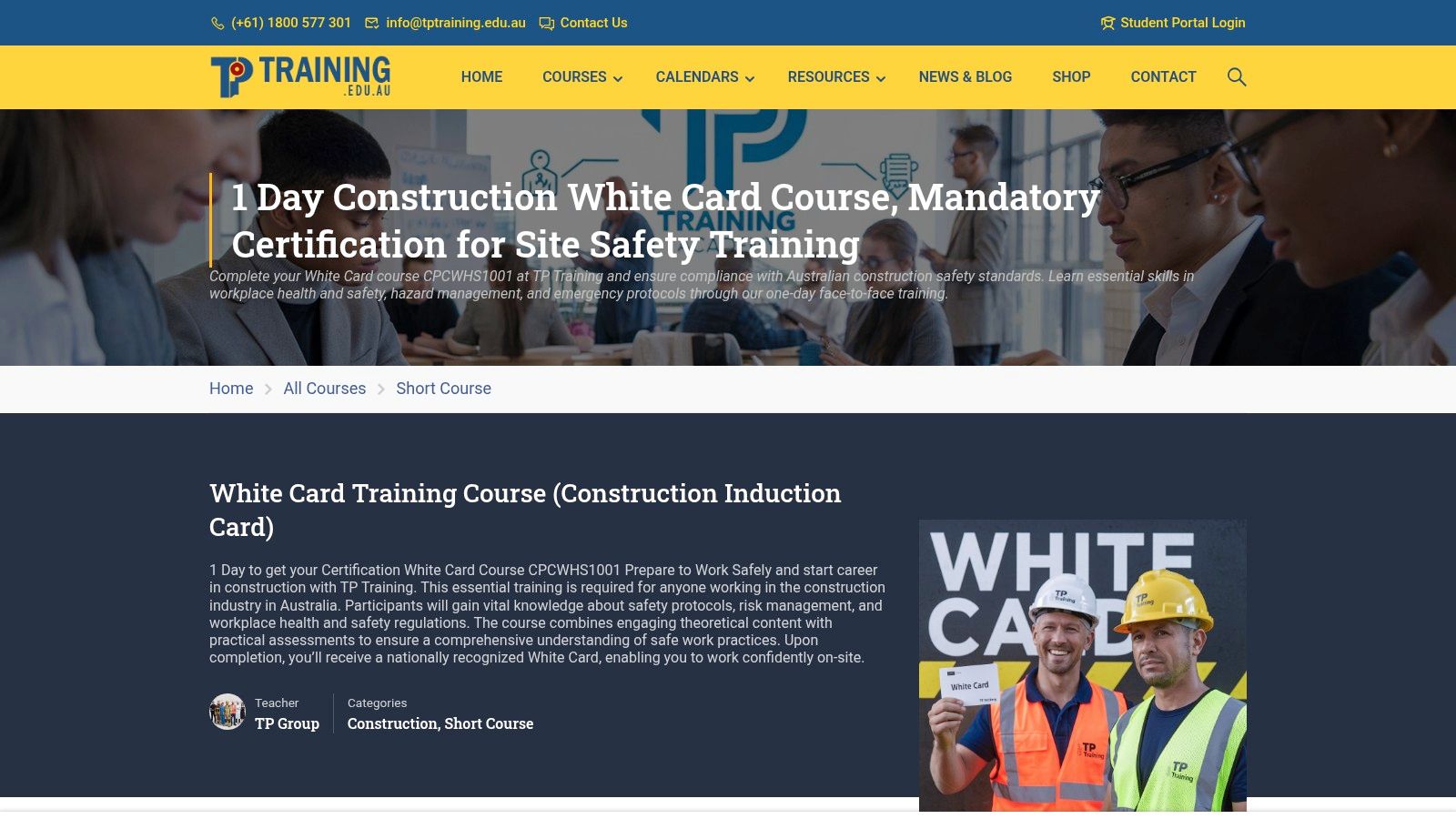
Here's a look at the type of training environment many learners want before they book.
The quickest way onto a worksite is to book a valid course in a location you can reach easily, complete it properly, and walk away knowing what is expected on day one.
Enrolling and Preparing for Your Course Day
Most enrolment problems are avoidable. The usual issues are missing ID, forgetting to set up a USI, or booking without checking the course format and location. If you handle those basics early, the day itself is straightforward.
How to enrol without delays
Keep the process simple.
Choose your location and date
If Sydney CBD is the easiest trip for you, book there rather than choosing a course you'll struggle to reach on time.Complete the enrolment details carefully
Enter your legal name as it appears on your identification documents. Small mismatches can create admin issues later.Sort out your USI before the course
Your Unique Student Identifier is part of the training administration process. Don't leave it until you're standing at the front desk.Check the student instructions
A provider's pre-course information usually answers the common questions about arrival time, ID, footwear, and assessment. This comprehensive student guide is a useful example of the type of information to review before attending.
Your Course Day Checklist
Use this checklist the night before rather than scrambling in the morning.
| Item | Details & Notes |
|---|---|
| Photo identification | Bring original ID documents that meet the provider's requirements. Make sure names match your enrolment details. |
| 100 points of ID | Check in advance which documents are accepted and bring enough to meet the requirement. Don't assume one document will be enough. |
| USI | Have your Unique Student Identifier ready before arrival. Save it on your phone and write it down as backup. |
| Closed-toe shoes | Wear practical footwear suitable for a training environment where PPE and safety demonstrations may be part of the day. |
| Comfortable clothing | Choose neat, practical clothes you can move in easily. |
| Water and basic supplies | Bring what you need to stay focused and comfortable through the session. |
| Arrival plan | Know your route, train stop, parking option, or bus connection before the day starts. |
| A ready-to-learn attitude | Expect simple written and practical assessment tasks. Listen, ask questions, and follow instructions. |
Best habit: Get your documents together the night before and put them in one folder or bag pocket.
The day usually feels much easier once you're in the room. Most new students find the hardest part is the uncertainty before they arrive, not the training itself.
Frequently Asked Questions About the White Card
A few questions come up again and again, especially for first-time workers in NSW. Clear answers save you from booking the wrong course or turning up unprepared.
Can I do my White Card online in NSW
Be careful here. NSW has specific rules around valid training delivery, and you should confirm that the course format you choose is acceptable for working in this state. If you're unsure, check directly with the provider before booking rather than assuming any online option will be recognised.
The safest move is to choose a clearly compliant course format and avoid vague listings that don't explain how training is delivered.
How long does a White Card stay valid
A White Card is generally treated as an ongoing construction induction credential rather than something you renew every year. What matters in practice is keeping your safety awareness current and making sure your card remains recognised and usable for the work you're doing.
If you've been away from the industry for a long period, ask whether refresher training is appropriate before returning to site work.
Can I use an interstate White Card in NSW
In many cases, workers use White Cards across state lines because the training unit is nationally recognised. Still, if your card was issued elsewhere and you're about to start on a NSW site, it's worth checking acceptance with your employer or the relevant authority first. That removes uncertainty before day one.
This is especially important if the card is old, damaged, or tied to records you can't easily verify.
What if I lose my card
If you lose your White Card, act early. Don't wait until the night before a site start. Contact the issuing authority or your training provider to find out the correct replacement process and what proof of identity or previous completion records you'll need.
If you've lost the physical card but completed the training properly, the problem is usually administrative, not career-ending. Handle it promptly and keep copies of any training records you receive.
The key with all of these questions is to verify before you commit. A short check now can save you from missing work later.
If you need a clear, compliant path into construction work, TP Training offers practical safety and vocational training across NSW, including White Card training in Sydney CBD. If the city is your easiest location, check the current course details and book the session that fits your schedule so you can move from “I need my card” to “I'm ready for site” without unnecessary delays.

You may also like

Asthma and Anaphylaxis Training in NSW
First Aid Training for Construction Workers NSW